Discovering Istanbul: Where Continents and Cultures Meet
Few cities capture the imagination quite like Istanbul, a place where Europe and Asia meet across the Bosphorus and layers of empires shape daily life. This sprawling metropolis, once known as Byzantium and Constantinople, bridges two continents with dazzling contrasts — ancient mosques beside modern towers, timeless bazaars beside sleek shopping malls, and ferries gliding between continents as commuters sip tea.
As Türkiye’s cultural and economic heart, Istanbul draws travellers year-round for its extraordinary mix of heritage, cuisine, and urban energy. Its skyline blends Ottoman domes and minarets with 21st-century skyscrapers, and each neighbourhood tells its own story — from the historic Sultanahmet district, home to the Hagia Sophia and Blue Mosque, to Beyoğlu’s buzzing Istiklal Avenue, where cafés, art galleries, and rooftop bars overlook the Golden Horn.
Whether you’re exploring by tram, ferry, or foot, this Istanbul travel guide will help you uncover experiences beyond the guidebook: fragrant spice markets, hammam rituals, call to prayer echoing over the rooftops, and sunset cruises past Ottoman palaces. You’ll also find countless smartphone apps to make city life easier — from Moovit for public transport to BiTaksi for ride-hailing, GetYourGuide for tours, and Airalo for instant eSIMs.
Istanbul is a city of stories — where every alley, aroma, and azan (call to prayer) connects travellers to its layered past and vibrant present.
Key Neighbourhoods, Areas & Regions
Istanbul stretches across two continents, split by the Bosphorus Strait, and each side offers distinct experiences. On the European side, history dominates; on the Asian side, local life and tranquillity reign.
Sultanahmet & Fatih form the city’s ancient core, home to icons like Topkapı Palace, the Hagia Sophia, and Blue Mosque. Wandering its cobbled streets feels like stepping through centuries of Byzantine and Ottoman grandeur. Nearby Eminönü and the Grand Bazaar overflow with spices, lamps, and souvenirs — perfect for travellers who love sensory overload.
Beyoğlu and Karaköy bring a contemporary vibe with boutique hotels, rooftop terraces, and tram connections to Taksim Square. Across the Galata Bridge, you’ll find street musicians, seafood restaurants, and panoramic views of the Golden Horn.
Cross the Bosphorus by ferry and you enter the Asian side: Kadıköy is laid-back and youthful, known for its art scene and street markets, while Üsküdar exudes Ottoman charm with elegant mosques and waterfront promenades.
Further afield, Beşiktaş, Ortaköy, and Nişantaşı offer upscale dining and nightlife, while the Princes’ Islands (accessible by ferry) deliver a car-free escape of pine forests and seaside mansions.
Understanding Istanbul’s neighbourhoods helps travellers plan efficiently — combining historic sightseeing, modern shopping, and local immersion in a city that’s truly vast. Most visitors stay on the European side, but venturing to Asia offers a richer, more complete Istanbul experience.
Quick Facts Table
| Category | Details |
|---|---|
| Country | Türkiye |
| Region | Marmara Region |
| Continent(s) | Europe & Asia |
| Population | Approx. 15.9 million (2025) |
| Language | Turkish (English widely spoken in tourist areas) |
| Currency | Turkish Lira (TRY) |
| Time Zone | TRT (UTC +3) |
| Electric Plug Type | Type F (Europlug, 230V) |
| Drives On | Right |
| Airport Code | IST (Istanbul Airport), SAW (Sabiha Gökçen Airport) |
| Flag Carrier | Turkish Airlines |
| Climate | Mediterranean with humid summers, mild winters |
| UNESCO Sites | Historic Areas of Istanbul (1985) |
| Famous For | Hagia Sophia, Bosphorus, Grand Bazaar, Turkish baths |
| Local Transport Apps | Moovit, BiTaksi, Trafi |
| Best Time to Visit | April–June & September–October |
| Local Calling Code | +90 |
| Emergency Number | 112 |
| Visa Info | eVisa available online |
From a traveller’s perspective, Istanbul tourism thrives on accessibility and infrastructure. This Istanbul travel guide should help you plan with precision — from downloading public transport apps to checking ferry timetables. Most visitors enter via Istanbul Airport (IST), one of the world’s busiest hubs, or Sabiha Gökçen (SAW) on the Asian side.
The city’s intercontinental nature is central to its identity: you can breakfast in Europe and dine in Asia, all within an hour’s ferry ride.
It’s this cross-continental experience, coupled with modern tech and traditional hospitality, that makes visiting Istanbul unlike anywhere else in the world.
Brief History & Background
Few destinations embody the meeting of civilisations like Istanbul, a city whose story stretches back nearly 3,000 years. Founded as Byzantium in the 7th century BC by Greek settlers, it rose to prominence under Emperor Constantine in AD 330, who renamed it Constantinople and declared it the capital of the Eastern Roman Empire.
For over a millennium, Constantinople flourished as a global centre of trade, art, and faith, bridging Europe and Asia along the Silk Road. Its awe-inspiring monuments — most notably the Hagia Sophia, once a cathedral, later a mosque, and now again a mosque — reflect the changing tides of empire and religion.
In 1453, Sultan Mehmed II and the Ottomans captured the city, marking the dawn of the Ottoman Empire, which would dominate regional politics and culture for centuries. Istanbul remained the empire’s beating heart, filled with mosques, palaces, and bazaars that defined Ottoman artistry.
After the founding of modern Türkiye in 1923, Ankara became the capital, yet Istanbul retained its status as the country’s cultural, commercial, and spiritual hub. The 20th and 21st centuries have brought massive urban expansion, transforming Istanbul into a megacity of over 15 million residents, where ancient minarets rise beside glass towers.
Today, Istanbul tourism thrives on this fascinating juxtaposition. Travellers explore Byzantine ruins one moment and sip Turkish coffee overlooking the Bosphorus the next. Every stone, call to prayer, and seagull cry tells part of a story still unfolding — a timeless reminder that Istanbul travel is a journey through living history.
Getting There & Around – Airport Overview & Transfers
Istanbul welcomes travellers through two major international gateways: Istanbul Airport (IST) on the European side and Sabiha Gökçen International Airport (SAW) on the Asian side. Together they handle tens of millions of passengers each year, linking the city to nearly every continent.
Istanbul Airport (IST), located about 40 km northwest of the historic centre, is one of the world’s largest and most modern. Arrivals are greeted with efficient immigration, extensive duty-free shopping, and excellent onward transport links. The M11 metro line connects directly to Kağıthane and the city’s metro network, offering an affordable and reliable option for those visiting Istanbul. A taxi to Sultanahmet takes roughly an hour depending on traffic, while private transfers and shuttle buses (Havaist) run frequently to major districts such as Taksim, Beşiktaş, and Kadıköy.
Sabiha Gökçen (SAW) serves many low-cost carriers and is about 45 km southeast of the city. Airport buses operated by Havabus and municipal IETT services provide direct access to Kadıköy and Taksim, making transfers simple for travellers staying on either continent.
For a smoother Istanbul travel experience, apps such as Moovit, BiTaksi, and Uber help you plan connections or book cabs seamlessly. Both airports also support Istanbulkart, the city’s integrated contactless travel card usable on buses, metro, and ferries.
Whether arriving from Europe, the Middle East, or further afield, these airports offer a world-class first impression — blending Turkish hospitality, modern facilities, and efficient links into one of the most vibrant cities on earth.
Getting to the City Centre by Metro
The easiest and cheapest way to reach central Istanbul from Istanbul Airport (IST) is via the M11 Metro Line, opened in 2023. It’s clean, air-conditioned, and fully integrated with the Istanbulkart system.
Step-by-Step:
Follow signs for “Metro / M11” after baggage claim — the entrance is directly connected to the terminal.
Buy an Istanbulkart from the yellow vending machines near the metro gates (cash or card accepted).
Start at Istanbul Airport (İGA):
Take the M11 Metro Line toward Kağıthane.
Journey time: approximately 35 minutes.
At Kağıthane Station:
Transfer to the M7 Line .
Board the M7 eastbound train toward Yıldız / Beşiktaş.
Kağıthane → Şişli–Mecidiyeköy: around 8 minutes.
Get off at Şişli–Mecidiyeköy Station.
Here you’ll find a direct interchange to the M2 Green Line (Yenikapı ↔ Hacıosman).
Follow the green “M2” signs through the transfer corridor to reach the connecting platforms.
From Şişli–Mecidiyeköy (M2 Line):
- Travel southbound two stops to Taksim for the city’s main hotels and nightlife.
- Continue further to Vezneciler, then walk 5 minutes to the T1 tram for Sultanahmet and the Old City’s key attractions.
Total journey time to central districts is about 50–60 minutes. Trains operate every 8–10 minutes from 6:00 AM to midnight, providing the fastest, most affordable route for travellers visiting Istanbul from the airport.
Tips for Travellers:
– Trains run roughly every 5–8 minutes from 6:00 AM–midnight.
– If arriving late at night, consider Havaist airport buses or BiTaksi for door-to-door transport.
– Download the Moovit or Metro Istanbul app for live departure updates and route mapping.
– For Sultanahmet hotels, transfer at Vezneciler or Eminönü to reach the tram network (T1 line).
Travel time summary:
- IST → Kağıthane: 30 min
- Kağıthane → Taksim (via M7/M2): 15 min
- Kağıthane → Sultanahmet (via M7/M2 + T1): ~25 min more
This metro route is the best balance of cost, comfort, and reliability — ideal for those visiting Istanbul who want to avoid city traffic.
Flag Carrier: Turkish Airlines
The pride of the nation, Turkish Airlines (THY) is Türkiye’s flag carrier and one of the world’s most extensive international airlines. Based at Istanbul Airport (IST), it connects over 340 destinations across 120+ countries, making it a powerful gateway for anyone travelling to Istanbul or beyond.
Founded in 1933 with a single aircraft, the airline has grown into a Skytrax five-star carrier, regularly earning awards for its onboard cuisine and attentive service. Travellers choosing Turkish Airlines often remark on the distinctive “Fly Good Feel Good” experience — a blend of efficiency, comfort, and Turkish hospitality that reflects the spirit of the country itself.
For those planning an Istanbul vacation, the airline’s network opens vast possibilities. Regional routes cover the Balkans, Middle East, and North Africa, while long-haul services reach every major hub from New York and São Paulo to Tokyo and Sydney. Layovers at Istanbul Airport can easily become mini city breaks thanks to the Turkish Airlines Stopover Programme, which provides free hotel stays and tours for eligible passengers connecting through the city.
Passengers can manage every stage of their trip via the Turkish Airlines mobile app, which supports real-time flight tracking, digital boarding passes, and Miles & Smiles loyalty management. The app also integrates smoothly with Istanbul Airport’s smart systems, helping travellers move through security and gates with minimal stress.
In short, Turkish Airlines doesn’t just bring you to Istanbul — it embodies the essence of Istanbul tourism, offering global reach with a uniquely local touch.



Trains
Rail travel in Türkiye is expanding rapidly, and Istanbul is once again positioning itself as a major intercontinental rail hub. For travellers the city offers a mix of high-speed trains, regional routes, and suburban commuter services, connecting the metropolis with the rest of the country and even Europe.
The main terminal for intercity services is Söğütlüçeşme Station (on the Asian side), while the Marmaray rail tunnel links it directly under the Bosphorus to Halkalı Station on the European side. This underwater link unites Asia and Europe in just 15 minutes, a remarkable symbol of Istanbul’s cross-continental identity.
High-speed trains (YHT) operated by TCDD Taşımacılık run from Istanbul to Ankara, Konya, and Eskişehir, reaching the capital in around 4½ hours. Tickets can be booked online through TCDD’s website
Within the city, Marmaray functions as a suburban commuter line, serving key stops such as Üsküdar, Sirkeci, and Yenikapı, seamlessly connecting with metro, ferry, and tram lines. The network is fully integrated with the Istanbulkart system, making transfers simple for those visiting Istanbul.
Looking ahead, international services are being restored. Trains to Sofia (Bulgaria) operate nightly, while new cross-border links to Bucharest and Thessaloniki are in development — reinforcing Istanbul’s historic role as the gateway between Europe and Asia. For travellers seeking sustainable, scenic journeys, rail remains one of the most memorable ways to explore Istanbul tourism and Türkiye beyond.



Buses & Coaches
Buses form the backbone of Istanbul’s domestic and regional transport, serving both locals and international travellers. The city’s immense size and modern infrastructure mean that reliable coach travel is available to nearly every part of Türkiye — and many cities across the Balkans.
The main terminals are Esenler Otogarı on the European side and Dudullu Terminal on the Asian side. Both host dozens of operators, including Kamil Koç, Metro Turizm, and Pamukkale, offering frequent departures to destinations like Ankara, Izmir, Antalya, and Cappadocia. Journeys are typically punctual and comfortable, with reclining seats, Wi-Fi, refreshments, and onboard entertainment.
For those planning an Istanbul vacation, long-distance coach travel can be excellent value — often cheaper than flights, and with frequent overnight options. Tickets can be purchased online through apps such as Busbud and Obilet, or at station counters. Many coach apps allow e-ticket storage, live seat selection, and mobile boarding, making planning through an Istanbul travel guide effortless.
Within the city, the public bus network managed by İETT complements metro and tram services. Buses run around the clock, including night routes marked “N”, and fares are fully compatible with Istanbulkart. Key routes link Taksim, Beşiktaş, Kadıköy, and the airport corridors, giving budget-minded travellers flexible, round-the-clock connectivity.
For real-time arrivals and route planning, use the Moovit app or the official İETT Mobil app. Although traffic can be heavy during rush hour, bus lanes help shorten travel times along major arteries.
When visiting Istanbul, buses are more than a necessity — they’re a window into everyday local life, filled with the rhythm, conversations, and energy that define this extraordinary city.



Local Public Transport
Efficient, affordable, and surprisingly comprehensive, Istanbul’s public transport network is one of the most advanced in the region — covering metro lines, trams, funiculars, buses, and ferries. For anyone visiting Istanbul, understanding how these systems connect is essential for exploring both the European and Asian sides with ease.
At the heart of the system is the Istanbulkart, a reloadable contactless card that works across all public transport — including metro, tram, buses, ferries, and even cable cars. Travellers can buy or top up cards at vending machines in stations or use the Istanbulkart mobile app for digital payments.
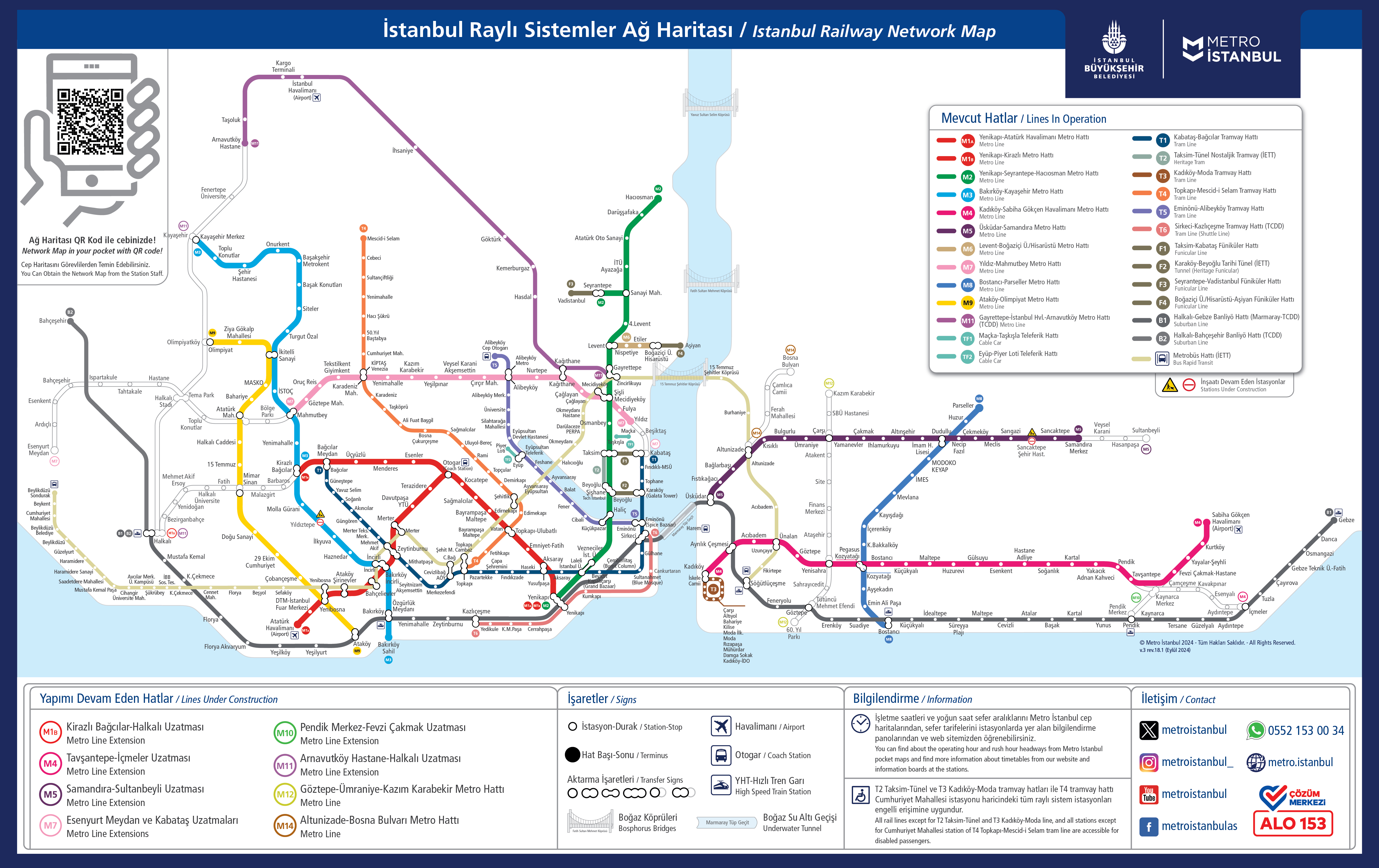
The metro network continues to expand rapidly. Major lines include:
- M1A (Yenikapı – Atatürk Airport),
- M2 (Yenikapı – Hacıosman via Taksim),
- M7 (Mahmutbey – Mecidiyeköy – Yıldız), and
- M11 (Istanbul Airport – Kağıthane).
Together they form the backbone of the city’s Istanbul tourism infrastructure, connecting key business districts and cultural landmarks.
Complementing the metro are the T1 and T4 tram lines, with T1 linking Kabataş, Sultanahmet, and Bağcılar, offering easy access to the city’s most iconic sites. Two short funicular lines — F1 (Taksim–Kabataş) and F2 (Karaköy–Beyoğlu) — bridge steep terrain, seamlessly linking trams and ferries.
Fares across Istanbul’s transport system remain extremely affordable, especially compared with other major world cities. As of 2025, a standard metro, tram or bus ride costs around ₺35 with an Istanbulkart. Transfers within two hours receive a small discount (around ₺8–₺10), making it economical for multi-leg trips.
Ferry rides usually cost ₺38 to 50, while Marmaray commuter trains range between ₺17–₺30 depending on how many zones you cross. Night buses and premium services like Havaist airport shuttles are slightly higher, averaging ₺80–₺120, but still represent great value.
Travellers visiting Istanbul for several days should load at least ₺200–₺300 onto their Istanbulkart to cover daily metro, tram, and ferry rides comfortably. Machines accept both cash and card top-ups.
These low fares, combined with the city’s efficiency and coverage, make public transport one of the best bargains in Istanbul tourism — reliable, clean, and ideal for experiencing the city as locals do. For seamless navigation, pair your Istanbulkart with the Moovit or Trafi apps for live route updates, delays, and fare details across all modes.
Metro, Tram & Bus Fares (as of September 2025)
All metro, tram, bus, funicular, and nostalgic tram services in Istanbul share a unified fare system managed by İETT and the Istanbul Metropolitan Municipality (İBB). Travellers simply tap their Istanbulkart at station or vehicle readers — no paper tickets are required.
| Ticket Type | Price (₺) | Details |
|---|---|---|
| Full-Fare (Adult) | ₺35.00 | Standard one-way fare on metro, tram, or city bus. |
| Student Card | ₺17.08 | Valid for full-time students under 30. |
| Over-30 Student | ₺31.50 | Reduced rate for postgraduate or mature students. |
| Social / Teacher Card | ₺25.06 | Discounted for teachers and eligible social cardholders. |
Transfers:
When using the same Istanbulkart, fares automatically decrease for additional rides taken within two hours:
- 1st transfer: ₺26.06
- 2nd transfer: ₺20.02
- 3rd–5th transfers: ₺13.02–₺17.02
Electronic single-use tickets (sold at vending machines) cost ₺50 each — almost 40 % more than using an Istanbulkart — so visitors are strongly advised to buy the reloadable card instead.
Operating hours: roughly 06:00 – 00:00 for metro and tram lines, and 24 hours for selected night buses.
For most travellers visiting Istanbul, the Istanbulkart remains the cheapest, easiest, and most flexible way to move between metro, tram, bus, and ferry networks — all within a single contactless system that’s ideal for any Istanbul vacation.
Prices across the Istanbul network change frequently, but up to date prices can be found on the Official IETT Public Transportation Fee Schedule.

Map of the Istanbul Metro Network

Click here to download the official map.
The Istanbulkart: Your Key to the City
No Istanbul travel guide would be complete without mentioning the Istanbulkart — the city’s all-in-one contactless travel card that unlocks the entire transport network. It’s the smartest, simplest, and most affordable way to pay for metros, trams, ferries, buses, funiculars, and even public toilets in some areas.
Travellers can purchase the card from yellow vending machines (marked Biletmatik) at airports, metro stations, and ferry terminals. The card costs around ₺165, plus your chosen balance top-up. Tap it on the reader when entering and exiting gates; fares automatically deduct from the balance. Each tap gives a small discount on transfers within a two-hour window — making it perfect for those visiting Istanbul who rely on multiple connections daily.
You can top up using cash, bank cards, or the Istanbulkart mobile app, which allows balance checks, digital payments, and even NFC top-ups if your phone supports it. The app’s interface is available in English, and digital cards can be added directly to your device for contact-free travel — a huge benefit for modern Istanbul tourism.
For group trips, one card can serve multiple passengers by tapping once per person, though each tap incurs a full fare. Lost cards cannot be refunded, so register your Istanbulkart in the app for extra protection.
Pro tip: keep at least ₺200 loaded for a day’s travel across ferries, trams, and metro rides. Combine it with apps like Moovit or Trafi to plan your routes seamlessly.
Affordable, universal, and convenient, the Istanbulkart isn’t just a payment card — it’s the gateway to an efficient, stress-free Istanbul vacation.
Taxis & Ride Shares
When convenience and comfort are priorities, taxis and ride-share apps offer excellent door-to-door service throughout Istanbul. The city’s yellow, turquoise, and black cabs operate 24/7, and prices are regulated by the municipality — making taxis a practical part of Istanbul tourism, especially for airport transfers or late-night travel.
Traditional taxis can be hailed from stands or booked through apps like BiTaksi or Uber, both of which allow you to see fares upfront, track your driver, and pay by card. The BiTaksi app integrates directly with Istanbul’s regulated taxi fleet, ensuring licensed drivers and fair pricing. It’s widely used by both locals and visitors, offering bilingual support for English-speaking travellers.
Average fares start around ₺25, with a per-kilometre rate of roughly ₺17–₺20 (2025 figures). From Istanbul Airport to Sultanahmet, expect to pay around ₺350–₺400, depending on traffic. Payment by cash is standard, but cards and mobile apps are increasingly accepted.
Ride-share platforms, including Uber Türkiye, use official taxis rather than private cars — ensuring legality and reliability. For solo travellers, shared taxi routes (dolmuş) remain a cheap and authentic local experience. These yellow minibuses operate fixed routes, hopping between districts for just a few lira.
If you’re visiting Istanbul during rush hour (7:00–10:00 AM and 4:30–7:30 PM), expect heavy traffic on bridges and main roads. Apps like Yandex Maps or Google Maps are invaluable for predicting journey times before booking.
Taxis in Istanbul remain a comfortable, fast, and safe option for travellers who value flexibility — and when paired with digital tools like BiTaksi, they fit perfectly into the modern, app-connected Istanbul travel guide experience.



Scooter & Bike Rentals
For travellers who love freedom and flexibility, Istanbul’s scooter and bike rental services are an excellent way to explore districts, waterfronts, and parks. In recent years, shared micro-mobility has transformed Istanbul tourism, giving visitors app-based access to eco-friendly transport across both sides of the city.
Several reputable e-scooter apps operate under strict municipal regulation, including Martı, BinBin, and Hop. Users download the app, verify ID, and scan a QR code to unlock a scooter. Pricing typically starts around ₺4–₺6 to unlock plus ₺1.5–₺2 per minute. Scooters are perfect for short journeys around Kadıköy, Beşiktaş, or Ortaköy, where traffic can make car travel slow.
For those preferring pedal or electric bikes, the city-run İSBİKE scheme offers docking stations along major promenades such as Kennedy Caddesi, Moda, and Kadıköy Coast Park. Riders can rent directly using the İSBİKE mobile app or Istanbulkart, making it easy to integrate with public transport routes.
Safety is key when visiting Istanbul by scooter — always wear a helmet, avoid tram tracks, and respect pedestrian zones. The city’s terrain is hilly, but many areas, particularly the Bosphorus shoreline and Princes’ Islands, are ideal for cycling or light scooter rides.
Best apps for scooter and bike rentals in Istanbul:
– Martı
– BinBin
– Hop
– İSBİKE
These services perfectly complement the modern Istanbul philosophy — sustainable, tech-driven, and designed for travellers who value independence and convenience.



Driving, Parking & Car Access
Driving in Istanbul can be both rewarding and challenging. The city’s modern highways and three Bosphorus bridges connect its European and Asian sides efficiently, but congestion is a daily reality. For first-time visitors, it’s often best to rely on public transport, taxis, or ride-share apps, yet confident drivers can still explore comfortably with preparation.
International visitors may drive with a valid licence for up to six months, though an International Driving Permit (IDP) is recommended. The road network is well-signposted in Turkish and English, and navigation apps such as Google Maps, Waze, or Yandex Maps are essential companions for any Istanbul travel guide.
Traffic is heaviest between 07:00–10:00 AM and 4:30–7:30 PM, especially on the 15 July Martyrs Bridge and Fatih Sultan Mehmet Bridge. If possible, plan routes outside these hours or use ferries to cross continents instead.
Parking can be difficult in central districts like Sultanahmet and Beyoğlu. Use official İSPARK car parks, identified by blue signs, which operate pay-on-exit systems and accept cash, card, or Istanbulkart. Many shopping centres, including Zorlu Center and İstinyePark, offer secure underground parking with easy metro access.
For environmentally conscious travellers visiting Istanbul, electric vehicle adoption is growing rapidly, with EV charging points at major malls, airports, and hotels. Driving apps such as Yolcu360 and Otopark display available parking spaces in real time.
While city driving isn’t for everyone, it offers unique flexibility for day trips to the Princes’ Islands, Bursa, or Sapanca Lake. With careful planning, driving can be a rewarding part of your Istanbul vacation, letting you explore Türkiye’s landscapes far beyond the city limits.
Car Rental
For travellers planning to explore beyond the city limits, car rental in Istanbul provides freedom and flexibility unmatched by public transport. It’s an ideal option for day trips to Bursa, Edirne, or the Black Sea coast, where regular coach routes may not fit your itinerary.
Both Istanbul Airport (IST) and Sabiha Gökçen (SAW) host the world’s leading rental companies, including Avis, Hertz, Enterprise, Europcar, and Budget. Local operators such as Circular Car Hire and WindyCar often offer competitive rates. Expect prices from around ₺1,000–₺1,500 per day for a compact vehicle, with automatic transmission cars slightly higher.
Driving in the city itself can be demanding due to congestion and narrow historic streets, so many visitors prefer to collect vehicles only when heading out of town. The city’s ring roads (O-1, O-2, and O-7) connect easily to national highways leading towards Ankara, Izmir, and Antalya.
Payment cards are generally required, and deposits can be substantial — ensure international insurance covers Türkiye or choose a “zero excess” option. Apps such as DiscoverCars and Rentalcars.com help compare prices, while Yolcu360 is popular with locals for domestic deals.
When visiting Istanbul, always check for toll roads: most operate cashless systems via HGS (electronic tag) or OGS passes, automatically billed to your rental agreement. Petrol stations are frequent, and staff usually fill the tank for you.
If planned carefully, car rental adds a new dimension to your Istanbul vacation, letting you move at your own pace — whether tracing Ottoman heritage trails, discovering seaside villages, or simply enjoying the open road across Asia and Europe.
Walking
Despite its size, Istanbul is remarkably walkable in many areas, especially the historic peninsula, Galata, and Bosphorus promenades. Strolling is one of the best ways to soak up the city’s energy — hearing the call to prayer echo across rooftops, catching the scent of roasted chestnuts, and spotting seagulls wheeling above the ferries.
Start your walk in Sultanahmet, where the Hagia Sophia, Blue Mosque, and Topkapı Palace are all within a 10-minute radius. Nearby Gülhane Park offers shady paths, while the Grand Bazaar and Spice Bazaar invite hours of exploration under ornate domes. Use comfortable shoes — cobblestones and steep slopes are common.
Across the Golden Horn, the Karaköy–Galata–Taksim route provides a different rhythm. Begin at Galata Bridge, cross to the iconic Galata Tower, and climb up through Beyoğlu’s backstreets to Istiklal Avenue, where cafés, bookstores, and street music embody the creative side of Istanbul tourism.
The Asian side also rewards walkers, especially around Kadıköy, Moda, and Üsküdar, where seaside promenades stretch for miles with Bosphorus views. Early mornings and sunsets are ideal for photography and cooler temperatures.
Apps like AllTrails, Komoot, and Google Maps are invaluable for navigation — and for those interested in structured routes, AppSavvyTraveller’s [Istanbul Walking Tour Guides] will soon feature self-guided itineraries across major districts.
Walking remains the purest way to experience the essence of visiting Istanbul — discovering layers of culture, cuisine, and conversation at your own pace. Whether climbing to a mosque terrace or meandering through a market, every step reveals a new story in this timeless city.
Ferries & Cruises
No Istanbul travel guide would be complete without ferries — the most scenic and romantic way to cross continents. Istanbul’s ferries are not only practical transport but also one of the city’s most unforgettable experiences. They link Europe and Asia across the Bosphorus, glide up the Golden Horn, and reach the Princes’ Islands, offering travellers panoramic views of mosques, minarets, and skyline silhouettes.
Operated by Şehir Hatları, the official city ferry company, boats run frequently between Eminönü, Karaköy, Beşiktaş, Üsküdar, and Kadıköy, making it easy for anyone visiting Istanbul to hop between continents in 20 minutes or less. Ferries accept the Istanbulkart, making them one of the cheapest yet most iconic experiences in Istanbul tourism — fares typically cost around ₺38–₺58.
For a slower, more atmospheric journey, take a Bosphorus cruise. Public ferries run long routes up to Anadolu Kavağı, near the Black Sea, stopping at charming waterfront villages. Alternatively, private companies offer sunset and dinner cruises, often including live music and Turkish cuisine onboard.
Travellers can also explore the Golden Horn route from Eminönü to Eyüpsultan, passing landmarks such as the Galata Tower, Fener, and Balat. These quieter neighbourhoods reveal the daily rhythm of Istanbul beyond the tourist core.
To check live schedules, download the Şehir Hatları or Trafi apps. No matter how many times you’ve been, nothing beats standing on deck at dusk as the call to prayer drifts over the Bosphorus, seagulls circling overhead — an experience that captures the soul of any Istanbul vacation.



Ferries You Can Ride with the Istanbulkart
Eminönü ↔ Üsküdar
A short hop across the Bosphorus linking the Old City and the Asian side.
Duration: 10–12 minutes Every 10–15 minutes
Beşiktaş ↔ Kadıköy
One of the busiest cross-continental routes, ideal for commuters and visitors alike.
Duration: 15–20 minutes Every 15–20 minutes
Karaköy ↔ Kadıköy ↔ Moda
A scenic loop connecting café-lined Moda with the European shore.
Duration: 25–30 minutes Every 30–40 minutes
Kabataş ↔ Üsküdar ↔ Kuzguncuk
A relaxed crossing offering great skyline views of the mosques and bridges.
Duration: 20–25 minutes Every 30 minutes
Golden Horn Line
Winds through the inner harbour, stopping at historic districts like Fener, Balat and Eyüpsultan.
Duration: 35–40 minutes Every 40–60 minutes
Princes’ Islands Line
Longer trips from Kabataş and Kadıköy to Kınalıada, Burgazada, Heybeliada and Büyükada.
Duration: 75–100 minutes Every 60–90 minutes
These routes are all operated by Şehir Hatları, the official city ferry service. Simply tap your Istanbulkart at the gate before boarding — no paper ticket needed. Fares range from ₺38 to 58 per journey, deducted automatically.
Istanbul Public Ferry Fares (2025)
All fares shown in Turkish Lira (₺). Valid on Şehir Hatları routes when using the Istanbulkart.
Karaköy ↔ Kadıköy
Full Fare: ₺49.40 Student: ₺24.06 Social / Teacher: ₺35.45
Beşiktaş ↔ Kadıköy
Full Fare: ₺49.40 Student: ₺24.06 Social / Teacher: ₺35.45
Kabataş ↔ Kadıköy
Full Fare: ₺47.50 Student: ₺23.44 Social / Teacher: ₺34.20
Üsküdar ↔ Eminönü
Full Fare: ₺44.33 Student: ₺21.54 Social / Teacher: ₺31.66
Ortaköy ↔ Üsküdar
Full Fare: ₺39.25 Student: ₺19.00 Social / Teacher: ₺27.86
Ortaköy ↔ Kadıköy
Full Fare: ₺53.84 Student: ₺25.96 Social / Teacher: ₺38.62
Üsküdar ↔ Kadıköy
Full Fare: ₺47.50 Student: ₺23.44 Social / Teacher: ₺34.20
Beykoz ↔ Sarıyer
Full Fare: ₺46.24 Student: ₺22.80 Social / Teacher: ₺32.91
Boğaz Line / Other Multi-Pier Routes
Full Fare: ₺58.26 Student: ₺28.49 Social / Teacher: ₺41.79
Üsküdar ↔ Aşiyan
Full Fare: ₺51.92 Student: ₺25.34 Social / Teacher: ₺37.36
İstinye ↔ Çubuklu
Full Fare: ₺37.99 Student: ₺18.51 Social / Teacher: ₺27.21
Princes’ Islands Lines (Kabataş / Kadıköy / Beşiktaş)
Full Fare: ₺114.57 / ₺68.71* Student: ₺57.30 Social / Teacher: ₺80.19
(*Lower rate applies to shorter or limited-stop routes.)
Sehir Hatlari Route Map
Private Ferries and Sightseeing Cruises
Several private ferry companies also operate along the Bosphorus, using separate ticketing systems (Istanbulkart not valid). These include:
- Dentur Avrasya Ferries (Kabataş ↔ Beşiktaş ↔ Üsküdar ↔ Emirgan)
- Turyol Ferries (Eminönü ↔ Üsküdar/Kadıköy/Bosphorus Tours)
- Istanbul City Line Bosphorus Tour (Boğaz Turu) – a public sightseeing cruise that does accept the Istanbulkart for its standard service, departing from Eminönü.
- Dinner and sunset cruises — operated by private companies via apps like GetYourGuide or Klook, requiring online booking.
Private operators offer comfort extras such as indoor lounges, faster boats, and English commentary, but at higher prices (₺250–₺500 per person).
For most travellers visiting Istanbul, combining official Şehir Hatları routes by day with a private Bosphorus sunset cruise in the evening delivers the perfect mix of local authenticity and scenic indulgence — a hallmark of every memorable Istanbul vacation.
Unique & Scenic Ways to Travel
Beyond metros and ferries, Istanbul offers some truly unique and scenic ways to travel that showcase the city’s dramatic topography and cross-continental charm. From cable cars to nostalgic trams, each experience adds something special to your Istanbul travel guide adventure.
One of the most atmospheric routes is the historic red tram on Istiklal Avenue, connecting Taksim Square with Tünel. This vintage vehicle rattles through crowds, street musicians, and cafés, embodying the soul of Istanbul tourism. Another must-do is the Kadıköy–Moda tram, circling the leafy streets of Istanbul’s Asian heart with timeless charm.
Equally memorable are the aerial cable cars. The Eyüpsultan–Pierre Loti Cable Car glides above the Golden Horn, giving sweeping views of minarets and domes below. The Maçka–Taşkışla line near Taksim offers a shorter but equally scenic ride over tree-filled parks and urban canyons.
Adventurous travellers visiting Istanbul might also enjoy renting a private yacht along the Bosphorus or joining a sea taxi, a modern on-demand service connecting waterfront districts. Sea taxis, bookable via the İBB Deniz Taksi app, offer private crossings between Bebek, Kuruçeşme, Kadıköy, and Üsküdar — perfect for groups or special occasions.
For a nostalgic touch, hop aboard the Tünel funicular, one of the world’s oldest underground railways, linking Karaköy to Beyoğlu since 1875. It’s short but steep, and a must for transport enthusiasts building their own Istanbul travel guide.
These transport novelties aren’t just about getting from A to B — they’re part of the experience. Each one reveals another layer of Istanbul’s personality: playful, historic, and endlessly photogenic.
Mini Trains, Trams & Tourist Shuttles (Hop On Hop Off)
Exploring Istanbul’s vast and layered geography is easier than ever thanks to a mix of historic trams, modern light rail, and hop-on hop-off sightseeing buses. Together, they offer travellers the freedom to explore key landmarks across both continents — a must for any detailed Istanbul travel guide.
The most charming way to travel is on the nostalgic red trams. The Istiklal Avenue tram (T2) runs between Taksim and Tünel, preserving the atmosphere of early 20th-century Istanbul. Meanwhile, on the Asian side, the Kadıköy–Moda tram loops through tree-lined neighbourhoods filled with cafés and record stores — a slower, more local slice of Istanbul tourism.
For those wanting an overview of the city, hop-on hop-off buses operated by Big Bus Istanbul provide a flexible way to reach major sites without worrying about transfers. The red route covers Sultanahmet, Taksim, Dolmabahçe Palace, and Ortaköy, while the blue route extends across the Bosphorus Bridge to Beylerbeyi Palace and Kadıköy. Commentary is available in multiple languages, and tickets can be bought directly via the Big Bus app or major hotel desks.
Additionally, the T1 tram line — running from Kabataş to Bağcılar — is an essential part of the Istanbul travel guide experience, linking iconic attractions like Hagia Sophia, Grand Bazaar, and Topkapı Palace. Travellers using Istanbulkart or apps such as Moovit can plan multi-modal journeys seamlessly.
These scenic rides combine history, convenience, and comfort — letting visitors glide effortlessly between continents while enjoying Istanbul’s vibrant street life from a moving window.
Visiting: Top Attractions
Istanbul is a living museum where every street reveals a new chapter of history. For those visiting Istanbul for the first time, certain landmarks define the experience — timeless icons that unite Byzantine, Ottoman, and modern Turkish culture in one skyline.
Start in Sultanahmet, the city’s historic heart. Here you’ll find the Hagia Sophia, one of the world’s most significant architectural masterpieces. Its massive dome, mosaics, and shifting history — from cathedral to mosque — reflect Istanbul’s layered identity. Directly opposite stands the Blue Mosque (Sultanahmet Camii), famous for its six minarets and delicate Iznik tiles.
Nearby, the Topkapı Palace immerses travellers in the splendour of the Ottoman sultans, while the Basilica Cistern, an underground marvel supported by 336 columns, offers a cool, atmospheric retreat.
Crossing the Golden Horn, Galata Tower provides panoramic views over both continents — best visited at sunset. In Beyoğlu, Istiklal Avenue buzzes with shops, music, and cafés, capturing the modern pulse of Istanbul tourism.
The Dolmabahçe Palace, set on the Bosphorus waterfront, showcases 19th-century European opulence infused with Ottoman flair, while the Chora Church (Kariye Mosque) preserves breathtaking mosaics that rank among the finest in the world.
For an alternative angle, visit the Asian side’s peaceful Üsküdar and Kadıköy districts, where daily life flows at a gentler pace and seaside promenades reveal stunning Bosphorus views.
Each attraction contributes to the layered story of the city — a meeting place of empires, faiths, and ideas. Whether you’re exploring grand palaces or quiet neighbourhoods, every corner adds new depth to your visit and ensures memories that linger long after your trip ends.
Historical Highlights & Landmarks
The story of Istanbul is written in stone, mosaic, and marble — every district contains traces of empires and revolutions that have shaped the modern world. The city’s historical landmarks are essential to understanding why it remains one of the world’s most influential crossroads.
Begin with the Hagia Sophia, whose vast dome and intricate Byzantine mosaics continue to awe visitors nearly 1,500 years after its construction. Originally built by Emperor Justinian in AD 537, it remains the city’s most enduring symbol. Just steps away, the Blue Mosque (Sultanahmet Camii) balances this splendour with Ottoman elegance — a living mosque adorned with tens of thousands of blue tiles and softly lit domes.
Nearby, the Hippodrome of Constantinople recalls the days of Roman chariot races, while the Obelisk of Theodosius and Serpent Column stand as ancient reminders of the city’s classical past.
Crossing to Eminönü, the Süleymaniye Mosque crowns the skyline. Designed by master architect Mimar Sinan, it is both grand and peaceful, offering one of the finest panoramas over the Golden Horn. Further along, Topkapı Palace showcases Ottoman imperial life, its courtyards and pavilions housing priceless treasures and the world-famous Harem.
For those visiting Istanbul interested in Byzantine art, the Chora Church (Kariye Mosque) features exquisite mosaics and frescoes that survived centuries of transformation.
Together these landmarks form the foundation of Istanbul tourism — an open-air timeline where Byzantine, Ottoman, and modern Turkish identities meet. Exploring them in sequence offers travellers a powerful sense of continuity and discovery that few cities can rival.

Hidden Gems & Local Secrets
Beyond the mosques and monuments that fill every Istanbul travel guide, the city hides a thousand secret corners — places known mainly to locals, photographers, and curious wanderers.
Start with Balat and Fener, two historic neighbourhoods along the Golden Horn, where colourful wooden houses and steep cobbled lanes recall old Constantinople. Here you’ll find antique shops, art galleries, and the Greek Orthodox Patriarchate, a reminder of the city’s deep religious heritage.
For a quieter escape, explore Kuzguncuk, a leafy Asian-side district filled with traditional bakeries, synagogues, and Orthodox churches sitting side by side. It’s a perfect example of Istanbul’s multicultural coexistence.
Hidden beneath the bustling Grand Bazaar lies the Nuruosmaniye Han, a historic trading inn where craftsmen still create leather goods and jewellery using centuries-old methods. For a tranquil break, the Süleymaniye Hamamı offers an authentic Turkish bath experience designed by Sinan himself — far less touristy than the larger Çemberlitaş or Cağaloğlu baths.
Modern-day secrets also abound: Kadıköy’s Street Art District features striking murals by Turkish and international artists, while the Moda seaside path is perfect for cycling or sunset picnics overlooking the Princes’ Islands.
Another favourite for those visiting Istanbul is the Pierre Loti Café in Eyüpsultan. Ride the cable car up and sip Turkish coffee with breathtaking views of the Golden Horn — an experience locals adore but many tourists miss.
These small discoveries transform Istanbul tourism from sightseeing into soul-searching. They show that the city’s magic isn’t confined to palaces or mosques, but thrives in its backstreets, neighbourhoods, and the simple rhythm of daily life.
Indoor Attractions & Rainy-Day Ideas
Even when the weather turns, Istanbul never runs out of things to do indoors. With world-class museums, historic hammams, and atmospheric cafés, the city offers countless ways to stay dry while still discovering its culture. For any Istanbul travel guide, these attractions are a must for rainy or winter days.
Start with the Istanbul Archaeology Museums, a complex of three extraordinary institutions near Topkapı Palace. Their collections include the Alexander Sarcophagus, relics from ancient Troy, and exhibits tracing thousands of years of civilisation. Nearby, the Museum of Turkish and Islamic Arts inside the old palace of İbrahim Pasha displays intricate calligraphy, carpets, and ceramics that tell the story of Istanbul tourism through its craftsmanship.
Modern art lovers should head to Istanbul Modern, recently reopened in a striking new building along the Karaköy waterfront. The gallery showcases contemporary Turkish artists alongside international exhibitions — a window into the city’s creative evolution.
Rainy days are also perfect for traditional experiences like a Turkish bath (hamam). The Cağaloğlu and Kılıç Ali Paşa Hamams combine centuries-old architecture with rejuvenating steam rituals — ideal for unwinding after sightseeing. Alternatively, discover the Basilica Cistern, an underground forest of marble columns and gentle rippling water, famously featured in From Russia with Love and Inferno.
When showers pass, linger in one of Beyoğlu’s elegant cafés, or enjoy Turkish coffee and baklava in Karaköy Güllüoğlu, an institution beloved by locals. Even indoors, visiting Istanbul remains a sensory adventure — full of warmth, flavour, and artistry that defines the city’s resilient charm.
Shopping & Markets
No Istanbul travel guide would be complete without a deep dive into the city’s legendary markets. Shopping here is as much cultural immersion as consumer experience — a journey through history, craftsmanship, and negotiation.
The Grand Bazaar (Kapalıçarşı), one of the oldest covered markets in the world, is a city within a city. With over 4,000 shops and 60 streets, it offers everything from carpets and lanterns to gold, leather, and ceramics. Haggle respectfully — it’s part of the ritual — and take time to explore side alleys where family-run stalls have traded for generations.
Nearby, the Spice Bazaar (Mısır Çarşısı) fills the air with aromas of saffron, dried fruit, teas, and Turkish delight. This 17th-century marketplace is a feast for the senses and a cornerstone of Istanbul tourism.
For a more modern experience, IstinyePark, Zorlu Center, and Kanyon Mall combine global brands with elegant dining. These sleek shopping complexes appeal to travellers visiting Istanbul who prefer designer stores and air-conditioned comfort.
On the Asian side, Kadıköy Market is beloved by locals for its authentic feel. You’ll find boutique food stalls, vintage record stores, and artisan workshops lining its narrow streets. Sundays bring lively flea markets selling everything from antiques to vinyl.
Don’t overlook Arasta Bazaar behind the Blue Mosque — smaller, calmer, and ideal for finding quality textiles and hand-painted tiles without the crowds.
For digital convenience, apps like Getir and Trendyol allow easy local shopping and delivery, perfect for longer stays. Whether you’re after a carpet, a spice blend, or a souvenir tea set, shopping in Istanbul remains a highlight of any Istanbul vacation — a celebration of the city’s endless creativity and craftsmanship.

Suggested Itinerary
Because of its size and diversity, Istanbul rewards a structured itinerary — blending famous sites, neighbourhood wandering, and time for ferries, food, and relaxation. Here’s a balanced three-day plan ideal for first-time visitors following this Istanbul travel guide.
Day 1 – The Historic Core:
Begin your journey in Sultanahmet, the city’s ancient heart. Visit the Hagia Sophia, Blue Mosque, and Basilica Cistern, then wander through Topkapı Palace to glimpse Ottoman splendour. After lunch, explore the Grand Bazaar for crafts and souvenirs before watching the sunset from Galata Tower. Dine nearby in Karaköy, where traditional and modern Istanbul meet.
Day 2 – Across the Continents:
Start with breakfast in Beşiktaş, then visit the opulent Dolmabahçe Palace. Cross the Bosphorus by ferry to Kadıköy, exploring its street art, markets, and cafés. Sample midye dolma (stuffed mussels) and take an evening stroll through Moda Park, enjoying views of the European skyline.
Day 3 – Culture & Contrasts:
Take the Marmaray train to Üsküdar, visiting Mihrimah Sultan Mosque and Çamlıca Hill for panoramic views. Return to Europe via the Galata Bridge, explore Beyoğlu and Istiklal Avenue, and finish with dinner in Ortaköy beside the illuminated Bosphorus Bridge.
If you have extra time, consider a Bosphorus cruise or a day trip to the Princes’ Islands. Each adds a refreshing contrast to the urban energy.
This flexible itinerary helps travellers visiting Istanbul balance must-see sights with local authenticity — ensuring your Istanbul vacation feels both structured and spontaneous.
Events, Festivals, Seasonal Highlights & Annual Events
Istanbul thrives year-round, offering festivals that celebrate its culture, art, and rhythm of life. No matter when you travel, there’s always something to experience — an essential insight for any Istanbul travel guide.
Spring (March–May): The Istanbul Tulip Festival paints city parks with millions of flowers, especially in Emirgan Grove and Gülhane Park. Pleasant temperatures make this the ideal time for sightseeing, Bosphorus cruises, and rooftop dining.
Summer (June–August): Warm, lively, and filled with events. The Istanbul Jazz Festival draws global artists to open-air venues across both continents, while the Bosphorus Cross-Continental Swim sees thousands race between Asia and Europe — a unique highlight of Istanbul tourism.
Autumn (September–November): Arguably the best season for those visiting Istanbul. The weather is still mild, and cultural events peak with the Istanbul Biennial, Contemporary Istanbul Art Fair, and the Film Festival. Street food stalls multiply, serving roasted chestnuts and simit beside ferry docks.
Winter (December–February): Quieter streets, lower hotel prices, and a magical atmosphere as lights sparkle over Istiklal Avenue. Locals gather in cafés and hammams, while food festivals and New Year celebrations make this an inviting time for a cosy Istanbul vacation.
Other notable annual highlights include Republic Day (29 October) with fireworks over the Bosphorus, Ramadan evenings filled with lantern-lit feasts, and the Istanbul Marathon, the only footrace that spans two continents.
With so much happening in every season, planning your trip around these events guarantees a richer, more authentic experience — showing why Istanbul never truly sleeps.
City Passes, Discount Cards & Tourism Bundles
For travellers eager to explore efficiently, Istanbul offers several city passes and tourism bundles that help save both time and money. These cards often combine free entry to top attractions with queue-skipping privileges, transport benefits, or digital guides — making them invaluable for a well-planned Istanbul travel guide.
The most popular option is the Istanbul E-Pass, a fully digital card covering over 60 attractions including Topkapı Palace, Basilica Cistern, Galata Tower, and even Bosphorus cruises. It works via QR code on your phone, eliminating the need for paper tickets. Passes range from 1–5 days, with discounts increasing the longer you stay.
Another excellent choice is the Museum Pass Istanbul, issued by the Turkish Ministry of Culture and Tourism. Valid for five days, it offers access to major museums such as Hagia Sophia, Topkapı Palace, and the Istanbul Archaeology Museums. It’s ideal for history enthusiasts visiting Istanbul who plan to tour multiple sites in quick succession.
The Istanbul Welcome Card combines transport benefits with sightseeing. Options include unlimited public transport, a Bosporus cruise, and guided tours to key landmarks. Digital versions make it especially convenient for travellers arriving without Turkish currency.
For independent explorers, the Go Türkiye Travel Guide App and GetYourGuide platform also provide combination passes and tour bundles tailored to personal interests.
Whichever option you choose, these cards help visitors navigate Istanbul tourism efficiently — cutting queue times and unlocking hidden corners of the city. They’re a practical investment that turns a busy itinerary into a smooth, well-connected Istanbul vacation.
Parks, Gardens & Green Spaces
Despite its size and density, Istanbul is filled with tranquil parks, gardens, and waterside promenades that give locals and visitors room to breathe. Whether you’re seeking a picnic spot, a quiet viewpoint, or a floral oasis, the city’s green spaces add a vital balance to any Istanbul travel guide.
Gülhane Park, beside Topkapı Palace, is among the oldest public parks in the city and a local favourite for morning walks and spring picnics. Once part of the imperial gardens, it’s now open to all — filled with tulip beds, fountains, and views of the Bosphorus.
Emirgan Grove (Emirgan Korusu), in the north along the European shore, becomes the epicentre of the Istanbul Tulip Festival each April. Its wooded hills and Ottoman pavilions offer sweeping views of the waterway.
In Beşiktaş, Yıldız Park sprawls between Çırağan Palace and Yıldız Palace, offering shaded trails and tea houses ideal for travellers visiting Istanbul who want to unwind close to the centre.
The Moda and Fenerbahçe Parks on the Asian side provide breezy coastal walks and seaside cafés — perfect for cycling, jogging, or watching ferries pass at sunset. For something different, Miniatürk Park displays miniature replicas of Türkiye’s landmarks and is a family-friendly addition to Istanbul tourism itineraries.
Lastly, Çamlıca Hill offers arguably the best panoramic view of both continents, especially at dusk. Surrounded by landscaped gardens and cafés, it’s a fitting finale for any Istanbul vacation — a quiet, elevated place to take in the city’s immense scale and beauty.
Where & What to Eat
Food is the heart of Istanbul’s culture, and no Istanbul travel guide would be complete without celebrating its culinary riches. Every neighbourhood offers unique flavours, from street snacks to elegant fine dining — all steeped in centuries of Ottoman and Anatolian influence.
Start your day with a traditional Turkish breakfast (kahvaltı) — a generous spread of cheeses, olives, eggs, tomatoes, honey, and simit (sesame bread rings). The best breakfasts are found in Beşiktaş, Ortaköy, and Moda, where waterfront cafés let you dine overlooking the Bosphorus.
For lunch, try kebabs and meze platters in Sirkeci or Karaköy, or sample the city’s iconic balık ekmek — grilled fish sandwiches served from boats along Eminönü Quay. Don’t miss lahmacun (Turkish pizza) or mantı (dumplings) paired with garlic yoghurt and chilli oil.
Dinner is a chance to experience meyhane culture — traditional taverns where raki flows and plates of cold meze fill the table. Nevizade Street in Beyoğlu and Kumkapı are classic choices for a lively night out, blending food and music in the best traditions of Istanbul tourism.
For a modern twist, Karaköy, Nişantaşı, and Galataport host Istanbul’s trendiest restaurants, blending local ingredients with global cuisine. Dessert lovers should head to Hafiz Mustafa or Karaköy Güllüoğlu for baklava, or try Turkish ice cream (dondurma) from street vendors who perform playful serving tricks.
Whether you’re after high-end gastronomy or street-side simplicity, visiting Istanbul is a feast in every sense — a place where food brings people together and every bite tells a story of the city’s vibrant past and creative present.
Nightlife
As the sun sets over the Bosphorus, Istanbul transforms into a city of rhythm and lights. Its nightlife mirrors its character — diverse, stylish, and ever-evolving — making it a must-cover topic in any Istanbul travel guide.
The action begins around Karaköy and Beyoğlu, where rooftop bars like 360 Istanbul and Mikla offer sweeping skyline views paired with cocktails and contemporary beats. In nearby Taksim, lively clubs and meyhanes buzz late into the night, combining live Turkish music with modern DJ sets.
For a more relaxed atmosphere, head to the Asian side. Kadıköy’s Bar Street (Kadife Sokak) is a local favourite, lined with pubs, indie venues, and microbreweries serving craft beer. It’s the perfect area for travellers visiting Istanbul who want an authentic, youthful vibe.
Ortaköy and Beşiktaş deliver waterfront sophistication, where stylish lounges spill onto the promenade. You can enjoy a drink as ferries glide by and the Bosphorus Bridge glows in technicolour. Meanwhile, Arnavutköy attracts a chic crowd with seafood restaurants that morph into cocktail bars after dark.
Culture lovers can explore live music venues like Babylon Bomonti or Zorlu PSM, where performances range from jazz and rock to traditional Turkish folk. For something traditional, visit a whirling dervish show at Hodjapasha Cultural Center, offering a spiritual and historic side of Istanbul tourism.
Public transport runs late, and taxis or BiTaksi make getting home safe and easy. Whether you’re sipping raki, dancing till dawn, or listening to street musicians near Galata Tower, nightlife in Istanbul reflects its dual personality — deeply local yet cosmopolitan, ancient yet effortlessly modern.
Day Trips
While Istanbul offers enough to fill a lifetime of exploration, the surrounding region provides easy and rewarding day trips that reveal Türkiye’s wider history and natural beauty. For travellers using this Istanbul travel guide, these short escapes offer a welcome contrast to the city’s busy pace.
A favourite local getaway is the Princes’ Islands (Adalar), a cluster of nine islands in the Sea of Marmara reachable by ferry from Kabataş, Kadıköy, or Bostancı. The most popular, Büyükada, features horse-free electric buggies, Victorian mansions, and pine-covered hills. Rent a bike, enjoy a seafood lunch by the water, and return by sunset for stunning Bosphorus views.
History enthusiasts visiting Istanbul shouldn’t miss Edirne, a former Ottoman capital located about two and a half hours away. Highlights include the Selimiye Mosque, a UNESCO World Heritage Site designed by Mimar Sinan, and the city’s atmospheric covered bazaars.
Closer to home, Belgrad Forest in northern Istanbul offers walking trails and picnic spots surrounded by lush greenery — ideal for a relaxed Istanbul vacation escape. Alternatively, head east to Şile and Ağva, small Black Sea towns known for beaches, boat rides, and fresh seafood.
Wine lovers can tour the Thrace wine route, visiting vineyards near Tekirdağ and Sarköy, while religious travellers may appreciate a trip to Eyüpsultan, a sacred district within the city famed for its mosque and Ottoman cemetery.
Each excursion enhances Istanbul tourism by adding variety — from coastal calm to imperial grandeur — and most can be reached easily by car, ferry, or organized tours. These day trips remind visitors that Istanbul is not only a destination but a gateway to the wider soul of Türkiye.
Cultural Norms & Etiquette
Understanding local customs enriches every journey, and in Istanbul, respect and politeness open many doors. Though cosmopolitan and forward-looking, the city remains rooted in traditional values, so observing etiquette is vital for those visiting Istanbul.
Greetings are typically warm and formal. A friendly “Merhaba” goes a long way, and when meeting someone older, a polite handshake or nod of respect is appreciated. Among close friends, kisses on both cheeks are common. When entering a home or mosque, always remove your shoes — a gesture of cleanliness and respect.
Dress modestly when visiting religious sites. Women should carry a scarf to cover their heads and shoulders, while men should avoid shorts. In mosques, remain quiet during prayers and avoid walking in front of worshippers.
Turkish hospitality is legendary — declining an offer of tea may be seen as unfriendly, so accept even a small glass when offered. Tipping is customary: around 10–15% in restaurants, small change for taxi drivers, and ₺10–₺20 for porters or hotel staff.
Public displays of affection are minimal, and voices are kept moderate in public transport and religious areas. Locals value courtesy and humour, and being patient with queues or crowds goes a long way in maintaining goodwill.
When photographing people, especially in traditional areas or markets, always ask permission. Fridays are the main prayer day, so some mosques may be closed to tourists during midday prayers.
Above all, Istanbul tourism thrives on respect — blending modern global culture with centuries-old traditions. By following these small courtesies, travellers can enjoy a warm welcome and a deeper connection with the people who make an Istanbul vacation truly unforgettable.
Where to Stay
With accommodation options spanning every style and budget, Istanbul offers travellers a huge range of places to stay — from elegant Bosphorus-view suites to traditional Ottoman mansions. Choosing the right area is key to a smooth Istanbul vacation, and this Istanbul travel guide breaks down the best neighbourhoods for different travellers.
For first-time visitors, Sultanahmet is ideal. You’ll be within walking distance of icons like the Hagia Sophia, Blue Mosque, and Topkapı Palace, surrounded by boutique hotels that blend heritage with hospitality. Popular choices include Sirkeci Mansion and Hotel Amira Istanbul, both offering Turkish breakfasts and warm local service.
If you prefer a cosmopolitan vibe, Beyoğlu and Karaköy are filled with design hotels and rooftop terraces overlooking the Golden Horn. Pera Palace Hotel, where Agatha Christie once stayed, remains a timeless favourite, while The Galata Istanbul Hotel – MGallery merges luxury with modern comfort.
For business travellers and nightlife seekers, Taksim and Nişantaşı provide easy metro access, international brands, and upscale dining. On the Asian side, Kadıköy and Moda attract digital nomads and longer-stay guests with their laid-back atmosphere and sea views.
Budget travellers visiting Istanbul can find excellent hostels and guesthouses in Fatih and Eminönü, while luxury enthusiasts gravitate toward Beşiktaş, home to five-star icons like Çırağan Palace Kempinski and Four Seasons Bosphorus.
Most hotels accept card payments, offer Wi-Fi, and provide airport transfer services. Booking platforms like Booking.com, Agoda, and Expedia help secure deals, while local apps like Otelz feature last-minute discounts — a handy tool for spontaneous travellers exploring Istanbul tourism.
Major International Hotel Chains (Regional Presence)
| Hotel Brand | Presence in Istanbul |
|---|---|
| Accor (Novotel, Mercure, Mövenpick) | ✅ Multiple properties |
| Hilton Hotels & Resorts | ✅ Extensive presence |
| Marriott International | ✅ Widespread (JW Marriott, Sheraton, Aloft) |
| IHG Hotels (InterContinental, Holiday Inn) | ✅ Central and airport areas |
| Radisson Hotel Group | ✅ Multiple Bosphorus and airport sites |
| Hyatt Hotels | ✅ Key districts (Mecidiyeköy, Levent) |
| Wyndham Hotels & Resorts | ✅ Present (Wyndham Grand Istanbul Levent) |
| Best Western Hotels | ✅ Available in central areas |
| Choice Hotels | ❌ Not in city |
Toilets & Accessibility
Public facilities in Istanbul are generally well-maintained and improving every year, especially across metro stations, malls, and major attractions. Clean, accessible facilities make the city easier to navigate for all visitors, and understanding where to find them is a practical part of any Istanbul travel guide.
Public toilets (WC) are common in tourist districts such as Sultanahmet, Eminönü, and Taksim, often marked “Tuvalet.” Small fees (₺5–₺10) are typically charged for cleaning. Many mosques, parks, and ferry terminals also have facilities open to the public. Shopping centres like Zorlu, Cevahir, and IstinyePark maintain spotless, free-to-use restrooms.
Accessibility has become a growing focus in Istanbul tourism. The M2 and M7 metro lines, most modern trams, and ferries include lifts and ramps for wheelchair users. Sidewalk conditions can vary, especially in older districts, so using the metro and ferries is often the easiest method for travellers with limited mobility.
Museums such as Istanbul Modern, Topkapı Palace, and Galata Tower have adapted areas with elevators and designated access points. Many new hotels are built to international accessibility standards, offering adapted bathrooms and step-free entrances.
Apps such as Access Earth and Google Maps can help identify accessible routes and facilities in real time. When visiting Istanbul, travellers are encouraged to carry tissues and hand sanitiser, as some smaller public toilets may lack supplies.
While progress continues, the city’s efforts to improve accessibility are notable — proving that Istanbul vacation experiences can be inclusive, comfortable, and welcoming for all.
Weather & Best Time to Visit
Istanbul enjoys a Mediterranean climate with four distinct seasons, each offering a different way to experience the city. The best time for most travellers is spring (April–June) and autumn (September–October), when mild temperatures, blue skies, and comfortable crowds make exploring effortless.
Spring is particularly beautiful, as tulips bloom across parks and boulevards during the Istanbul Tulip Festival. Average highs reach 18–24°C, ideal for sightseeing, ferry rides, and outdoor cafés. It’s also the season when Bosphorus breezes carry the scent of blossoming jasmine — a highlight for anyone visiting Istanbul.
Summer (July–August) brings heat, humidity, and energy. Daytime temperatures often rise to 30°C or more, but sea breezes help. This is peak season for Istanbul tourism, with long daylight hours, rooftop bars buzzing, and evening ferry cruises glowing beneath the bridges. Travellers should book accommodation early and carry water during long walks.
Autumn is calm and golden, perfect for photography and food lovers. Temperatures hover around 20–25°C, and markets brim with fresh produce. The season also hosts major cultural events, such as the Istanbul Biennial and Film Festival, offering artistic depth alongside sightseeing.
Winter (November–March) is cool and occasionally rainy, with temperatures between 5–12°C. Yet, this quieter period brings lower hotel rates, shorter queues, and a more local feel — an underrated time for a cultural Istanbul vacation. Snow occasionally blankets the city, turning mosques and rooftops into postcard scenes.
Whatever the season, Istanbul’s charm is constant: ferries crossing under golden sunsets, steaming cups of Turkish tea, and timeless streets that feel alive year-round — all reasons why this Istanbul travel guide recommends visiting in any month.
eSIMs & Connectivity
Staying connected in Istanbul is easy thanks to strong mobile coverage and modern connectivity options. Whether you’re uploading Bosphorus photos or navigating trams, having reliable data is essential — and this Istanbul travel guide helps you choose the best solution.
Travellers can either buy a local SIM card from major Turkish operators or use an eSIM for instant activation. The three main carriers — Turkcell, Vodafone Türkiye, and Türk Telekom — all offer prepaid tourist packages with generous data allowances. Plans typically start from around ₺450–₺700 for 20–30 GB and are valid for 28 days.
For a smoother arrival, download an eSIM app before travelling. Leading providers such as Airalo, Nomad, and Ubigi allow you to purchase and activate Turkish data plans digitally, avoiding queues at airport kiosks. Apps can also be topped up instantly if you extend your stay.
Public Wi-Fi is widely available in cafés, hotels, and shopping centres, but connections can vary in speed and security. Use a VPN app for safe browsing, especially when managing travel bookings or financial details.
For travellers visiting Istanbul long term, Turkcell’s Superbox mobile Wi-Fi units or pocket routers can be rented monthly — ideal for remote workers or digital nomads.
Practical tip: To comply with Turkish telecom regulations, phones using local SIM cards must be registered with customs after 120 days to stay active. eSIMs and roaming visitors are unaffected by this rule.
Reliable connectivity enhances every part of Istanbul tourism, from using Moovit for metro planning to translating menus with Google Translate. Whether on eSIM or Wi-Fi, you’ll always stay connected across continents — essential for a smooth, modern Istanbul vacation.
Religious Customs & Behaviour in Sacred Spaces
Religion shapes daily life in Istanbul, and understanding local customs ensures travellers engage with respect and confidence. Islam is the predominant faith, yet the city is also home to Christian, Jewish, and secular communities — a diversity reflected in its skyline of minarets and domes. For visitors following this Istanbul travel guide, being aware of key behaviours helps foster cultural appreciation.
When visiting mosques, dress modestly and behave quietly. Women should cover their heads with a scarf, and both genders should ensure shoulders and knees are covered. Shoes must always be removed before entering prayer halls — most mosques provide plastic bags or shelves for storage.
Avoid visiting during prayer times (five times daily), especially the Friday midday prayer, when mosques are busiest. Photography is generally allowed but never during active worship; always ask if unsure.
Some of the city’s most visited mosques, such as Hagia Sophia, Blue Mosque, and Süleymaniye Mosque, operate as both places of worship and cultural landmarks. Visitors should remember they are entering sacred spaces first and tourist attractions second.
Outside Islam, Istanbul’s heritage includes the Church of St. George (seat of the Ecumenical Patriarchate), the Bulgarian Iron Church, and the Neve Shalom Synagogue — all symbols of the city’s multi-faith identity.
Respecting the call to prayer (ezan), broadcast citywide five times daily, is part of daily etiquette. Locals may pause momentarily, but life continues calmly around it.
By embracing these courtesies, travellers show appreciation for the traditions that define Istanbul tourism — reinforcing that cultural respect is the most meaningful souvenir from an Istanbul vacation.
Laws, Safety & Warnings
Istanbul is generally safe and welcoming, but like any major metropolis, it rewards smart awareness. Understanding basic laws and safety tips helps ensure a stress-free Istanbul vacation.
Tourists should carry photo identification at all times — a copy of your passport usually suffices. Turkish police are polite but firm if conducting routine checks. Avoid political discussions in public or photographing government buildings, military sites, and protests, as these can attract unwanted attention.
Petty theft can occur in crowded areas such as Istiklal Avenue, Eminönü, and on public transport. Keep valuables secure, use cross-body bags, and stay alert in tourist zones. ATMs are widely available but use those attached to banks for security.
Taxis are safe when booked via trusted apps like BiTaksi or Uber. Always check the meter is running, and avoid unofficial vehicles. Tap water is safe for brushing teeth but bottled water is recommended for drinking.
Public behaviour laws are moderate but conservative: public intoxication, disorderly conduct, and offensive gestures can lead to fines. Possession or use of drugs carries severe penalties. Dress codes are relaxed in most areas, but modesty is advised when visiting Istanbul’s mosques or rural districts.
During summer, sun exposure and dehydration are the biggest health risks — always carry water. In winter, watch for slippery pavements. Earthquakes are infrequent but possible; follow local guidance calmly if one occurs.
Tourists driving in Türkiye must carry an international licence and valid insurance, observing strict drink-driving laws (zero tolerance).
Emergency services are reached via 112 for police, ambulance, or fire. Overall, Istanbul tourism is remarkably safe: common sense, respect, and preparation ensure your trip remains memorable for all the right reasons.

Rupert’s Handy Travel Tips
Heading to Istanbul? Here are a few useful tips from Rupert to make your city adventure smoother:
- Buy an Istanbulkart early: It’s the key to using metros, trams, buses, and ferries across both continents. You can top it up at yellow kiosks or via the official app.
- Start your days early: Popular sites like the Hagia Sophia and Topkapı Palace open around 9 AM—arrive early to skip long queues and midday heat.
- Use ferries strategically: The Bosphorus crossings aren’t just transport—they’re sightseeing in motion. Sit outside, grab a tea, and enjoy the skyline views.
- Respect prayer times: When visiting mosques, avoid entering during worship and dress modestly—scarves and long sleeves are appreciated.
- Carry small cash: Many cafés and public toilets prefer coins or small notes. Keep ₺5–₺10 handy for quick transactions.
Want to meet the reindeer behind our travel tips? Find out more in our page Who is Rupert?.
Frequently Asked Questions
What’s the best way to get around Istanbul?
The city’s transport network is outstanding. Use the Istanbulkart for seamless access to metros, trams, ferries, and buses. Apps such as Moovit and Trafi make real-time route planning easy. Ferries across the Bosphorus remain the most scenic part of any Istanbul travel guide experience.
Is Istanbul safe for solo travellers?
Yes. Istanbul tourism is built on hospitality, and crime rates against tourists are low. Use normal urban precautions — keep valuables close, avoid unlicensed taxis, and stay in busy, well-lit areas after dark.
Do I need a visa to visit Istanbul?
Most nationalities can apply online for an eVisa at www.evisa.gov.tr. Processing is quick and inexpensive. EU and UK citizens often receive electronic approval within minutes, simplifying entry for those visiting Istanbul.
What currency is used, and can I pay by card?
The currency is the Turkish Lira (TRY). Credit and debit cards are accepted almost everywhere, though small cafés and street vendors may prefer cash. ATMs are plentiful throughout the city.
When is the best time to visit?
The ideal months are April–June and September–October, when weather is mild and crowds manageable. However, every season offers its charm — winter brings fewer tourists and cosy cafés perfect for a relaxed Istanbul vacation.
Are there any customs I should know?
Always remove your shoes before entering mosques, dress modestly, and accept offers of tea — hospitality is central to Turkish culture.
Further Reading & Related App Guides
Want to prepare for every part of your journey? These related guides will help you stay informed, connected, and ready to travel with confidence.
Plan smooth metro and tram journeys with our transport app recommendations → Local Transport Apps Guide
Explore Türkiye and Europe by rail with our in-depth pass overview → Interrail Turkey Pass Guide
Get reliable taxis anywhere in the city → Taxi Hailing Apps Guide
Stay connected across continents → eSIM Apps Guide
Check the weather before you sail, stroll, or sightsee → Weather Apps Guide
Last Updated Box
Last Updated: October 2025
This page is part of the AppSavvyTraveller global city series, providing up-to-date local insight and practical advice for tech-connected travellers. Content verified and refreshed for accuracy, transport information, and app functionality.
Affiliate Disclosure
This page contains affiliate links. If you click through and make a purchase or booking, we may earn a small commission at no extra cost to you. This helps support our work and allows us to continue providing detailed, independent travel advice. We only recommend apps and services we personally use or have verified as high-quality.