Reviewed by our editorial team Updated
Why Use Calais Ferry Port?
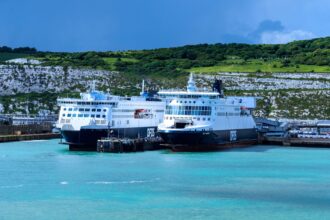
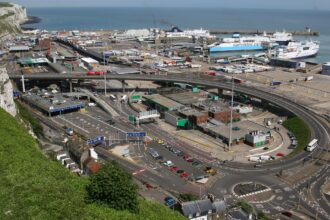
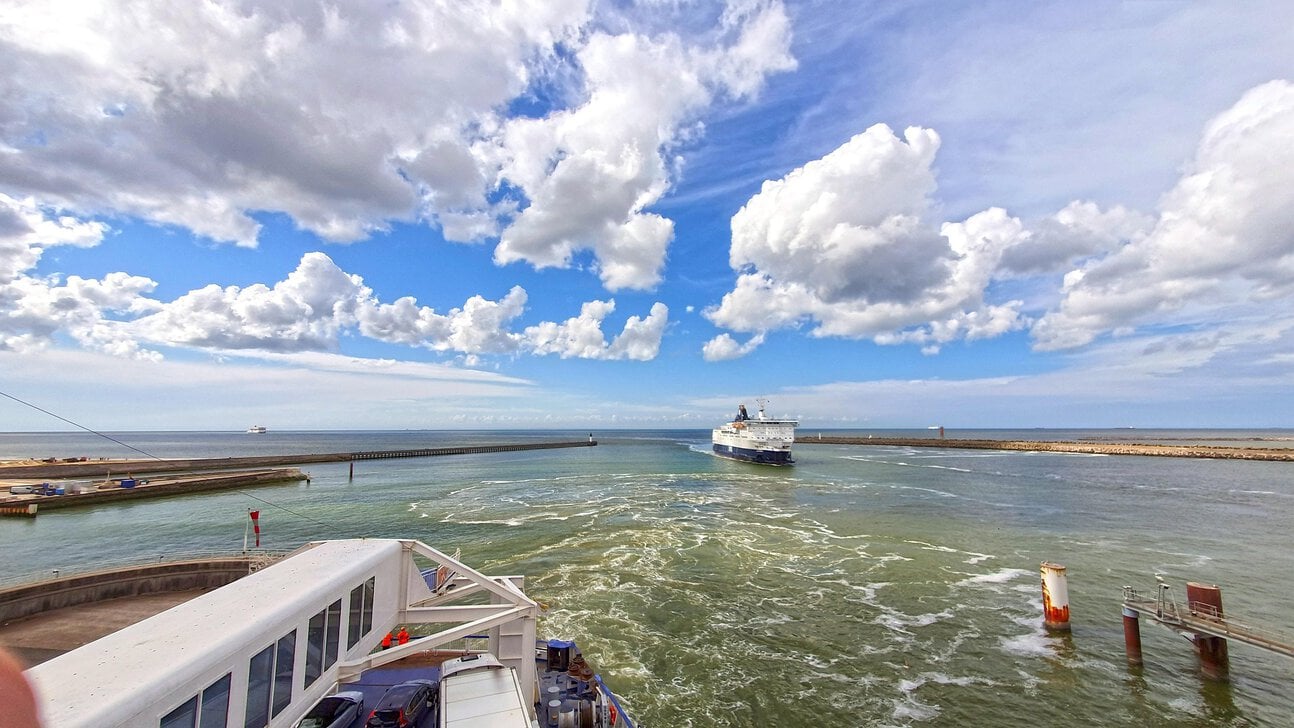
Calais Ferry Port is the main gateway between the United Kingdom and mainland Europe, welcoming millions of passengers every year on crossings from Dover. Whether you are travelling as a foot passenger, arriving with a car, motorhome, motorcycle, or coach, the port provides quick access to northern France, Belgium, the Netherlands, Germany, and the wider European motorway and rail networks. Its strategic location on the Strait of Dover, where the English Channel is at its narrowest, has made it one of Europe’s busiest maritime transport hubs for decades.
Unlike many ferry terminals that are located some distance from urban areas, Calais Ferry Port sits just a few kilometres from Calais city centre, making it convenient for travellers continuing their journey by train, bus, taxi, or hire car. It is equally well positioned for motorists joining the nearby A16 and A26 motorways, offering direct routes towards Paris, Lille, Brussels, Belgium, and beyond. This combination of excellent sea, road and rail connections makes the port an ideal arrival point whether you are planning a short weekend break or a longer European road trip.
The port is served by both P&O Ferries and DFDS, with departures operating throughout the day and night. Crossing times are typically around 90 minutes, allowing travellers to move quickly between England and France without the need to fly. The frequency of sailings also provides flexibility if your travel plans change or your arrival in Dover is delayed.
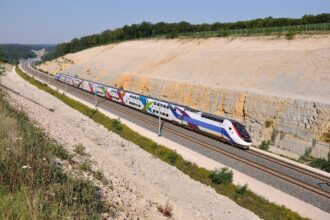
For foot passengers, the journey does not end when the ferry docks. The port offers straightforward onward transport to Calais-Ville railway station, while Calais-Fréthun provides access to France’s extensive high-speed rail network. From there it is possible to continue to destinations including Lille, Paris, Brussels, Strasbourg, and many other cities with relatively little effort. Travellers exploring Europe by rail will therefore find Calais Ferry Port an excellent starting point for their onward journey.
The port is also increasingly popular with holidaymakers heading towards the French Alps, Normandy, Brittany, Belgium, Luxembourg, and Germany. Thanks to excellent motorway connections, many destinations can be reached within a few hours of leaving the ferry, making the crossing attractive for both summer holidays and winter ski trips.
Whether you are arriving for the first time or have crossed the Channel many times before, this guide explains exactly how Calais Ferry Port works, how to leave the terminal efficiently, and the best ways to continue your journey across France and the rest of Europe.
Live sailing information and full operational details are published by Port Boulogne Calais, the authority that manages the terminal.
Calais Ferry Port at a Glance
| Feature | Information |
|---|---|
| Location | Calais, Pas-de-Calais, France |
| Country | France |
| Primary Route | Dover to Calais |
| Ferry Operators | P&O Ferries, DFDS |
| Typical Crossing Time | Around 90 minutes |
| Distance to City Centre | Approximately 3 km |
| Nearest Railway Station | Calais-Ville |
| High-Speed Rail Station | Calais-Fréthun |
| Nearest Motorways | A16 and A26 |
| Foot Passengers Accepted | Yes |
| Vehicle Traffic | Cars, motorcycles, motorhomes, caravans, coaches and freight |
| Taxi Rank | Available outside the terminal |
| Bus Connections | Local buses operate between the port and city |
| Car Hire | Available in Calais |
| Accessibility | Accessible facilities throughout the passenger terminal |
Best for a short trip. Compare rooms by neighbourhood, price and guest rating before you book.
Compare hotelsBest for longer stays. Whole apartments and houses, so you are not eating out three times a day.
View rentalsBest if you have already picked a hotel. Checks the big booking sites for the same room and shows who is cheapest.
Check dealsArriving at Calais Ferry Port
Stepping ashore at Calais Ferry Port is generally a straightforward experience thanks to the port’s modern layout and efficient passenger handling. After the ferry docks, vehicles are normally released first before foot passengers are escorted from the vessel into the arrivals area. During busy holiday periods the process may take a little longer, but most passengers are able to leave the terminal within 20 to 30 minutes of arrival.
As you enter France, all travellers pass through the appropriate border control and customs procedures before exiting the secure area. Since Calais is the first point of entry into the Schengen Area for many passengers arriving from the United Kingdom, documentation should be kept readily accessible throughout the arrival process. Border checks are generally well organised, although waiting times can increase during school holidays and major travel weekends.
Once outside the terminal building, onward transport is clearly signposted. Taxi services wait outside the passenger exit, while local buses provide connections towards Calais city centre and the railway station. Travellers collecting a pre-booked hire car or being met by family or friends will also find designated pick-up areas close to the terminal.
Passengers travelling with reduced mobility will find accessible routes, step-free facilities and assistance available throughout much of the terminal. If assistance has been requested before travelling, ferry operators will normally coordinate support from the ship through to the terminal building, helping ensure a smooth arrival experience.
Getting from Calais Ferry Port to Calais City Centre
Although Calais Ferry Port is located only around 3 kilometres from Calais city centre, the port itself is a busy commercial area designed primarily for vehicle traffic rather than pedestrians. Most foot passengers should therefore continue their journey using the free Balad’In shuttle bus or a taxi, both of which provide quick and convenient access to the city centre and railway stations.
The best option for almost all travellers is the Balad’In shuttle bus, a free city centre shuttle operated by the local transport network. The shuttle stops immediately outside the passenger terminal and links Calais Ferry Port, Calais-Ville railway station, Place d’Armes, the shopping district and other key points in the city centre. No ticket or reservation is required, simply leave the arrivals building, follow the signs for the shuttle stop and board the next available bus. Services normally operate Monday to Saturday between approximately 09:00 and 19:00, with buses running every 10 to 15 minutes for much of the day. The journey to Calais-Ville railway station usually takes around 7 to 10 minutes, making it by far the easiest and most economical way to continue your journey.
If your ferry arrives outside the Balad’In operating hours, or you are carrying several suitcases, travelling with children or simply prefer a direct transfer, taxis are available outside the passenger terminal whenever ferries arrive. The journey to Calais-Ville station or the city centre typically takes 10 to 15 minutes, depending on traffic, while a transfer to Calais-Fréthun, the city’s high-speed rail station, usually takes around 15 to 20 minutes. Taxis are also the best choice if you are connecting with an early morning or late evening train when public transport is less frequent.
Walking into Calais is technically possible, but it is not recommended for most visitors. Although the distance is relatively short, the route passes through an industrial port environment with heavy freight traffic, limited pedestrian infrastructure and few services along the way. Travellers with luggage will generally find the journey uncomfortable, and using the shuttle bus or a taxi provides a much safer and more convenient alternative.
For most foot passengers, the recommended route is straightforward. Leave the ferry terminal and board the free Balad’In shuttle directly outside the arrivals area. Stay on the bus until Calais-Ville railway station if you are continuing by train, or disembark in the city centre if you are staying locally. From Calais-Ville, you can purchase rail tickets from the SNCF ticket office or self-service machines before boarding TER regional trains to destinations including Lille, Boulogne-sur-Mer, Dunkerque and Amiens.
For high-speed TGV services towards Paris, Brussels and other major cities, continue to Calais-Fréthun by taxi or connecting train. This combination of the free shuttle and the French rail network makes onward travel from Calais Ferry Port quick, simple and inexpensive for travellers arriving without a vehicle.
Returning to Calais Ferry Port
Most guides to Calais Ferry Port focus on the journey into the city, but working out how to get back for your return sailing matters just as much. The good news is that the same Balad’In shuttle and taxi options used on arrival also run in the opposite direction, so the return trip is just as straightforward for foot passengers.
The Balad’In shuttle runs as a loop around Calais city centre, so the same free bus that brings passengers in from the port also carries them back out to it. Board at any stop along the route and stay on until the Ferry Terminal, where the bus drops passengers directly at the check-in building rather than leaving you at the port gate. Services run Monday to Saturday, generally between 09:00 and 19:00, with no service on Sundays or public holidays.
The most convenient pick-up points for the return journey are:
- Calais-Ville railway station: the shuttle stop sits directly outside the station, on the opposite side of the road from where it drops passengers off, and is usually signed simply as “Gare.”
- Place d’Armes: the main square in the historic centre, within easy walking distance of most hotels and restaurants.
- Hôtel de Ville (Town Hall): close to the belfry, and a useful stop if you have been sightseeing in that part of town.
- Boulevard Lafayette: convenient for the shopping streets running through the centre of Calais.
If you would rather not rely on the shuttle timetable, taxis are readily available throughout Calais city centre and can usually be hailed, booked by phone, or picked up from a rank near Place d’Armes or Calais-Ville station. Taxis can also drive right up to the ferry terminal building before the port’s security area, making them a good option for an early or late sailing when the free shuttle is not running, or if you are travelling with heavy luggage.
As with the outbound journey, walking back to Calais Ferry Port is possible but not recommended. The route crosses an industrial port area with heavy freight traffic and little pedestrian infrastructure, so the shuttle bus or a taxi remains by far the safer and more comfortable choice. Whichever option you choose, allow a little extra time to reach the terminal, since check-in for foot passengers typically closes shortly before departure.

Calais-Ville Railway Station
Located around 3 kilometres from Calais Ferry Port, Calais-Ville is the main railway station used by most foot passengers arriving from Dover. The quickest and easiest way to reach the station is by the free Balad’In shuttle bus, which departs from immediately outside the ferry terminal and usually reaches the station in around 7 to 10 minutes. The shuttle operates Monday to Saturday, generally between 09:00 and 19:00, with buses running every 10 to 15 minutes throughout much of the day. No ticket or reservation is required, making it the simplest option for travellers continuing their journey by rail. If you are arriving outside the shuttle’s operating hours, taxis are available outside the passenger terminal and normally complete the journey in around 10 minutes.
Calais-Ville is a modern, easy-to-use station that offers everything needed before continuing your journey through France. Inside you’ll find SNCF ticket machines, a staffed ticket office during opening hours, waiting areas, toilets and nearby cafés and convenience stores. Real-time departure boards display the latest train information, while tickets can also be purchased in advance using the SNCF Connect app or through Omio, allowing you to compare train times, fares and connections across multiple operators before you travel. Booking ahead can often secure lower fares, particularly if you are making onward connections beyond northern France.
Most trains departing Calais-Ville are TER Hauts-de-France regional services, providing regular links across northern France. Popular destinations include Boulogne-sur-Mer, Dunkerque, Saint-Omer, Lille-Flandres and Amiens, making the station an excellent base for travellers exploring the region without a car. Typical journey times are around 30 minutes to Boulogne-sur-Mer, 35 minutes to Dunkerque, approximately 40 minutes to Saint-Omer, and between 1 hour 20 minutes and 1 hour 40 minutes to Lille, depending on the service.
Although Calais-Ville provides excellent regional connections, it is not usually the best departure point for long-distance travel. If your destination is Paris, Brussels, Amsterdam, Cologne or other major European cities, you’ll normally enjoy a faster journey by travelling first to Calais-Fréthun, the city’s dedicated high-speed railway station.
Calais-Fréthun Railway Station
Situated approximately 7 kilometres south-west of Calais Ferry Port, Calais-Fréthun is the city’s principal high-speed railway station and the best choice for travellers heading further into France or continuing across Europe. Built on the LGV Nord high-speed line close to the Channel Tunnel, the station provides access to France’s extensive TGV network as well as convenient onward connections to neighbouring countries.
Unlike Calais-Ville, Calais-Fréthun is not served directly by the free Balad’In shuttle bus from the ferry terminal. Most passengers therefore reach the station by taxi, with the journey taking around 15 to 20 minutes depending on traffic. A lower-cost alternative is to take the free shuttle to Calais-Ville before boarding a regional TER train to Calais-Fréthun, although this option takes longer and requires an additional change of trains. If you are travelling on a fixed TGV reservation, allowing plenty of time between your ferry arrival and train departure is strongly recommended.
The station itself is compact and easy to navigate, with ticket machines, waiting areas, passenger information displays and parking facilities. Before travelling, it is worth checking departure times through Omio or the SNCF Connect app, particularly as high-speed services are less frequent than the regional trains departing from Calais-Ville. Using Omio also allows you to compare fares, journey times and onward connections across multiple European rail operators in one place, making it particularly useful if your journey involves more than one train.
From Calais-Fréthun, regular TGV INOUI services reach Paris Gare du Nord in around 1 hour 45 minutes to 2 hours. Frequent trains also operate to Lille Europe, where passengers can connect with services to Brussels, Amsterdam, Rotterdam, Cologne, Frankfurt and many other destinations across western Europe. Depending on the timetable, direct trains may also continue towards cities including Strasbourg, Lyon, Marseille and other destinations in southern France.
If your final destination lies outside northern France, Calais-Fréthun is almost always the better station to use. Although reaching it requires an additional transfer from Calais Ferry Port, the significantly shorter rail journey usually outweighs the extra travel time, particularly for passengers heading to Paris or making onward international rail connections across Europe.

Plan Your Calais Train Journey with Omio
Planning a train journey involving Calais? Omio lets you compare routes, check departure times and search for tickets from different transport operators in one place.
It is particularly useful when a journey involves different rail companies or crosses a border, saving you from checking several operator websites separately.
Scan to open
on your phone

Popular Train Routes from Calais
Whether you depart from Calais-Ville or Calais-Fréthun, the city provides excellent onward rail connections throughout France and into neighbouring countries. Regional trains offer an economical way to explore northern France, while high-speed services place much of western Europe within easy reach after arriving on the Dover to Calais ferry.
| Destination | Departure Station | Typical Journey Time | Service Type |
|---|---|---|---|
| Boulogne-sur-Mer | Calais-Ville | 30 minutes | TER Regional |
| Dunkerque | Calais-Ville | 35 minutes | TER Regional |
| Saint-Omer | Calais-Ville | 40 minutes | TER Regional |
| Lille-Flandres | Calais-Ville | 1 hour 20–40 minutes | TER Regional |
| Paris Gare du Nord | Calais-Fréthun | 1 hour 45–2 hours | TGV INOUI |
| Brussels | Via Lille Europe | Around 3 hours | TGV / Connecting Services |
| Amsterdam | Via Lille or Brussels | Around 5–6 hours | Connecting Services |
| Cologne | Via Lille or Brussels | Around 5 hours | Connecting Services |
For most travellers, Calais-Ville is the best choice for exploring northern France, while Calais-Fréthun is the station to use for high-speed journeys across France and onward into Belgium, the Netherlands and Germany. Both stations are straightforward to reach from the ferry terminal, making rail one of the easiest ways to continue your journey after crossing the English Channel.
Best for long or awkward journeys. Builds one itinerary out of separate flights.
View flightsBest for short trips. Install the eSIM at home and arrive with working data, no shop queue.
Browse eSIMsBest when public transport has stopped, or when you are travelling with children and bags.
Book a transferDriving from Calais Ferry Port
For motorists, Calais Ferry Port is one of the easiest ferry terminals in France to leave thanks to its modern road layout and excellent motorway connections. After disembarking, vehicles are guided through clearly marked exit lanes before joining the local road network. Direction signs are displayed in both French and English, making navigation straightforward even for first-time visitors. Within just a few minutes of leaving the terminal you can access some of northern Europe’s most important transport corridors, allowing you to continue your journey almost immediately.
The principal route out of the port is the A16 motorway, which runs along the northern French coastline. Travelling east takes you towards Dunkerque, the Belgian border, Bruges, Ghent and the wider road networks of Belgium and the Netherlands. Heading south-west on the same motorway provides easy access to Boulogne-sur-Mer, Le Touquet, Abbeville and the Normandy coast. The A16 is particularly popular with holidaymakers touring northern France or continuing towards Belgium by car.
If you are travelling deeper into France, follow signs for the A26 Autoroute, often referred to as the Autoroute des Anglais because of the large number of British motorists who use it after arriving by ferry. The A26 provides one of the fastest routes from Calais towards Arras, Reims, Troyes and connections for Paris, Luxembourg, Alsace and eastern France. Combined with the surrounding motorway network, it makes reaching almost any part of continental Europe relatively simple.
French motorways are generally well maintained and easy to drive on, although many sections operate as péage toll roads. Toll booths accept cash, Visa, Mastercard and most international debit cards, while many lanes also support electronic toll transponders. Fuel stations are located close to the port and at regular intervals along the motorway network, with most motorway service areas offering restaurants, toilets, supermarkets and EV charging points. Speed limits are clearly signposted and, as throughout France, motorists drive on the right-hand side of the road.
Whether you are beginning a European road trip or simply driving to your holiday destination, Calais Ferry Port offers one of the quickest transitions from ferry to motorway anywhere in Europe. Within half an hour of leaving the terminal you could already be approaching Belgium, travelling south towards Paris, or following the French coast towards Normandy, making the port an excellent gateway for both short breaks and longer continental adventures.
Parking in Calais City Centre
If you are stopping in Calais rather than driving straight onto the motorway, the parking rules changed completely on 2 June 2025. The city abolished paid on-street parking in the centre and replaced it with a free zone bleue. That sounds like good news, and it is, but it comes with a catch that catches out British drivers arriving off the ferry.
The zone bleue covers boulevard Lafayette, boulevard Gambetta, and the axis running along rue des Fontinettes, boulevard Jacquard and rue Royale as far as place d’Armes. Parking there is free for one hour, but you must display a parking disc on the windscreen showing the time you arrived. It has to be the standard European disc, the same cardboard type used across France, Belgium and Germany. The city handed out roughly 37,000 discs to residents through its Calais-Mag magazine in April 2025, so locals all have one, but a car coming off the Dover ferry almost certainly will not. Pick one up in any tabac or supermarket before you park.
This is genuinely enforced. Calais expanded its municipal police to 42 officers when the zone came in, specifically to patrol it, so an hour without a disc is a real risk of a fine rather than a theoretical one.
If you would rather not think about discs at all, the covered Calais Cœur de Vie car park gives you two hours free with no purchase required, which is usually plenty for a walk round the old town, the Place d’Armes and the market. For anything longer than a couple of hours it is the simpler option.
One thing worth knowing: a parking app will not help you here. Calais no longer has paid on-street parking to pay for, so although PayByPhone and EasyPark both still publish Calais pages, they are out of date and there is nothing for them to charge you for. The disc and the covered car park are the whole picture.
Car Hire at Calais Ferry Port
Although most passengers arriving at Calais Ferry Port travel with their own vehicle, hiring a car after arriving as a foot passenger is a popular option for travellers planning to explore northern France, Belgium or other parts of continental Europe. Having your own vehicle provides considerably more flexibility than relying solely on public transport, particularly if you intend to visit smaller towns, coastal resorts or rural areas where train services may be limited.
There are no major car hire desks inside the ferry terminal itself, but several international and local rental companies operate from Calais city centre and Calais-Fréthun railway station. Most travellers reach their chosen rental office by taking the free Balad’In shuttle to Calais-Ville or by using a taxi if collecting a vehicle from Calais-Fréthun. During the busy summer season it is advisable to reserve your vehicle well in advance, as availability can become limited when large numbers of British holidaymakers arrive on the Dover route.
Before collecting your vehicle, remember that driving in France differs from the United Kingdom. Traffic drives on the right, speed limits are displayed in kilometres per hour, and many motorways charge tolls. Most hire companies also require a valid driving licence, a credit card in the lead driver’s name and proof of identity. If you intend to cross international borders into Belgium, Luxembourg, Germany or other neighbouring countries, check with your rental company beforehand to ensure cross-border travel is permitted under your hire agreement.
Hiring a car from Calais is an excellent choice if you are planning to explore destinations such as Normandy, Champagne, Belgium, the Ardennes or the French countryside, where public transport may not always offer the flexibility that a self-drive itinerary provides.
Compare Car Hire Prices in Calais
If you are planning to explore beyond Calais, hiring a car can give you much more flexibility over where you go and how long you spend there.
Compare prices through Discover Cars and EconomyBookings to check vehicles, rental conditions and offers from multiple car hire companies before you book.
Hotels Near Calais Ferry Port
Whether you have arrived on a late evening ferry, are catching an early morning sailing back to Dover, or simply want to explore the region before continuing your journey, there is a wide range of accommodation close to Calais Ferry Port. Options range from budget roadside hotels to comfortable waterfront properties in the heart of Calais, many of which are within a short taxi ride of the terminal.
| Hotel | Approximate Distance | Best For |
|---|---|---|
| Holiday Inn Calais | 3 km | Ferry passengers, sea views |
| B&B HOTEL Calais Centre St Pierre | 3 km | Budget travellers |
| ibis Calais Car Ferry | 2 km | Early ferry departures |
| Hôtel Meurice Calais | 3 km | Historic city centre stay |
| Campanile Calais | 4 km | Drivers and families |
Many hotels offer free parking, making them particularly convenient for motorists continuing their journey the following day. If you are travelling without a car, staying in Calais city centre provides easy access to restaurants, shops, beaches and Calais-Ville railway station, allowing you to continue your journey by train the following morning without returning to the ferry terminal.

Find the Right Stay in Calais with Hotels.com
Looking for somewhere to stay in Calais? Hotels.com lets you compare hotels, prices and locations so you can find accommodation that fits your plans.
It is useful for everything from short city breaks to longer stays, especially when you want to compare several areas or hotel types before booking.
Scan to open
on your phone

Food, Shops & Facilities
Calais Ferry Port offers a good range of passenger facilities designed to make waiting for your ferry or arriving in France as comfortable as possible. Inside the passenger terminal you’ll find toilets, seating areas, tourist information, vending machines and facilities for travellers with reduced mobility. Free Wi-Fi is available in parts of the terminal, allowing passengers to check train times, book accommodation or contact family and friends after arriving.
A selection of cafés and snack outlets provides light meals, sandwiches and hot drinks, while larger supermarkets, restaurants and bakeries can be found within a short drive or bus journey of the terminal in Calais city centre. If you are beginning a long drive across Europe, this is an ideal opportunity to purchase refreshments, fuel and other travel essentials before joining the motorway network.
Cash machines are available within the city, although most businesses throughout Calais accept contactless payment and major international credit and debit cards. Public toilets can also be found at Calais-Ville railway station, making it convenient for passengers transferring directly from the ferry to the train. Together, these facilities ensure that whether you are spending only a few minutes in the port or beginning a longer stay in northern France, you’ll have access to everything needed for a comfortable onward journey.
Where Can You Travel Next?
One of the biggest advantages of arriving at Calais Ferry Port is the number of destinations that can be reached within just a few hours. Whether you’re travelling by train, car or coach, the port provides an excellent starting point for exploring France, Belgium, the Netherlands, Luxembourg and western Germany. Thanks to its location on the English Channel, many travellers use Calais as the gateway to a much larger European adventure rather than simply a destination in its own right.
If you’re staying in France, nearby Boulogne-sur-Mer makes an excellent first stop, offering one of the country’s largest aquariums, a historic old town and beautiful coastline less than 30 minutes away by train. Continuing inland, Lille combines Flemish architecture with outstanding shopping, museums and restaurants and serves as one of France’s major rail hubs. From Lille Europe, travellers can easily continue towards Paris, Brussels, Amsterdam, Cologne and dozens of other European cities using high-speed rail services.
Drivers have even greater flexibility. Within around two hours you can be exploring the battlefields of the Somme, relaxing on the beaches of Le Touquet, discovering the medieval streets of Arras, or crossing into Belgium to visit Bruges, Ghent or Ypres. Those heading further south can follow the motorway network towards Normandy, Champagne, the Loire Valley or the French Alps, while eastbound routes provide straightforward access to Luxembourg, Germany and beyond.
For travellers using an Interrail Pass or planning a longer rail holiday, Calais also provides an excellent entry point into Europe’s extensive railway network. From Calais-Fréthun, high-speed trains place much of western Europe within easy reach, making it entirely possible to arrive from Dover in the morning and be enjoying dinner in Paris, Brussels or Amsterdam later the same day.
Best for solo travellers and anyone watching the budget. Dorm beds and private rooms in the same search.
Browse hostelsBest arranged before you fly rather than after. Covers claim handling, plus lounge access on eligible delays.
Explore AirHelp+Best for a day with a suitcase and nowhere to put it. Find a storage point near where you already are.
View storageTips for Foot Passengers
Travelling through Calais Ferry Port as a foot passenger is generally straightforward, but a little preparation can make your onward journey much smoother. Before boarding your ferry in Dover, it’s worth checking the departure times of any connecting trains or buses, particularly if you’re travelling onwards to Paris, Lille or another destination with a reserved seat. Ferry arrival times can occasionally vary due to weather or operational delays, so allowing a little extra time between connections is always sensible.
If you’re continuing by rail, the free Balad’In shuttle bus is usually the quickest and cheapest way to reach Calais-Ville railway station. Travellers heading to Calais-Fréthun for TGV services should allow additional time for the transfer, particularly if using regional trains rather than a taxi. Booking rail tickets in advance through Omio can also help secure cheaper fares while giving you digital tickets that are immediately available on your phone after leaving the ferry.
Although English is widely understood in tourist areas, learning a few basic French phrases can be helpful when asking for directions or speaking with local transport staff. Most ticket machines also offer an English-language option, making it easy to purchase rail tickets if you have not booked ahead.
If you are carrying several suitcases, remember that both the ferry terminal and railway stations involve some walking. Packing luggage that can be wheeled comfortably between the ferry, shuttle bus and station platforms will make the transfer considerably easier. Travellers with reduced mobility should contact their ferry operator before travelling, as assistance can usually be arranged throughout the arrival process.
Finally, if you’re planning to continue further into Europe, consider downloading any rail tickets, hotel confirmations and maps before leaving the United Kingdom. Although mobile coverage is generally excellent after arriving in France, having everything stored offline provides additional peace of mind should your mobile signal or data connection be unavailable immediately after arrival.

Rupert’s Handy Travel Tips
Arriving at Calais Ferry Port? Here are a few useful tips to help you continue your journey through France with confidence:
- Use the free Balad’In shuttle: If you’re arriving as a foot passenger, the free shuttle is the easiest way to reach Calais-Ville railway station and the city centre in around 10 minutes.
- Choose the right railway station: Use Calais-Ville for regional destinations such as Lille, Boulogne-sur-Mer and Dunkerque. If you’re travelling to Paris or further across Europe, head to Calais-Fréthun for high-speed TGV services.
- Book train tickets in advance: Long-distance rail fares can increase significantly closer to departure. Comparing prices with Omio before you travel can often save both money and time.
- Driving into France? Remember you’ll be driving on the right-hand side of the road, speed limits are displayed in kilometres per hour, and many French motorways operate as péage toll roads.
- Allow extra time for connections: Ferry arrivals can occasionally be delayed by weather or busy sailing periods, so avoid booking tight onward train connections if possible.
Want to meet the reindeer behind our travel tips? Find out more in our page Who is Rupert?.




Frequently Asked Questions
Can you walk from Calais Ferry Port to the city centre?
Although it is technically possible, it is not recommended. The route passes through a busy commercial port with heavy traffic and limited pedestrian facilities. Most travellers should use the free Balad’In shuttle or a taxi.
Is there a free shuttle bus from Calais Ferry Port?
Yes. The Balad’In shuttle connects the ferry terminal with Calais city centre and Calais-Ville railway station, operating free of charge during its normal daytime service.
Which railway station should I use after arriving by ferry?
Use Calais-Ville for regional destinations across northern France. Choose Calais-Fréthun if you’re travelling by TGV to Paris or making high-speed connections to other European cities.
How far is Calais-Fréthun from the ferry terminal?
The station is approximately 7 kilometres from Calais Ferry Port and can usually be reached by taxi in around 15 to 20 minutes.
Can I buy train tickets at the station?
Yes. Both Calais-Ville and Calais-Fréthun have SNCF ticket machines, while Calais-Ville also has a staffed ticket office during opening hours. Many travellers choose to book in advance through Omio or SNCF Connect.
Are taxis available when ferries arrive?
Yes. Taxis normally wait outside the passenger terminal to meet arriving ferries, although waiting times may be longer during busy holiday periods.
Is Calais Ferry Port accessible?
Yes. The passenger terminal offers accessible facilities, and assistance can usually be arranged through your ferry operator if requested before travel.
Where do I catch the bus back to Calais Ferry Port?
The Balad’In shuttle runs in both directions, so you can board it at Calais-Ville station, Place d’Armes, Hôtel de Ville or Boulevard Lafayette and stay on until the Ferry Terminal, where it drops you directly at the check-in building.
Further Reading & Related Guides
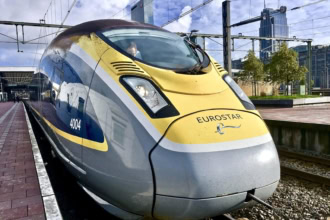
If you’re continuing your journey beyond Calais Ferry Port, there are plenty of ways to make travelling around Europe easier. If you’re still deciding how to cross the English Channel, read our Dover to Calais: Eurostar or Ferry? guide, which compares journey times, costs and the overall travel experience. Travelling in the opposite direction? Our Dover Ferry Port Guide explains everything you need to know before boarding, while the Dover to Calais Ferry Guide covers operators, onboard facilities, booking advice and what to expect during the crossing.
If you’re planning to continue by rail, our comprehensive Eurostar Guide explains routes, ticket types, luggage allowances and check-in procedures, while the Eurostar Snap Guide shows you how to find discounted last-minute Eurostar tickets. Travellers exploring France with a rail pass should also read our Interrail France Guide, which explains how to get the best value from the French rail network, reserve seats and plan longer journeys across the country.