Reviewed by our editorial team Updated
Why Take the Dover to Calais Ferry?
The Dover to Calais ferry is the busiest international ferry crossing in Europe and one of the quickest ways to travel between the United Kingdom and France. Crossing the narrowest part of the English Channel, the route links Dover Ferry Port in Kent with Calais Ferry Port in northern France, providing a fast, flexible and convenient gateway to continental Europe.
Whether you’re driving to Paris, exploring Belgium, heading to the French Alps, or beginning a wider European road trip, the Dover to Calais route is often the most practical choice.
Unlike flying, the ferry allows you to travel with your own car, motorhome, motorcycle or bicycle, giving you complete freedom once you arrive in France. There are generous luggage allowances, no airline baggage restrictions and the ability to carry items that would be difficult or expensive to transport by air. The route is equally popular with foot passengers, who can continue their journey using the excellent rail connections from Calais-Ville and Calais-Fréthun.
The crossing itself takes around 90 minutes, with departures operating throughout the day and night. Three operators currently serve the route, P&O Ferries, DFDS and Irish Ferries, giving travellers an exceptional choice of sailing times. With departures often available every 30 to 60 minutes, missing one ferry rarely means waiting long for the next, making the route particularly attractive for flexible travel.
On board, passengers can relax in comfortable lounges, enjoy restaurants and cafés, browse duty-free shopping, stretch their legs on the outside decks or simply enjoy the views across the English Channel. Modern ferries provide a much more comfortable experience than many first-time travellers expect, with facilities designed for families, business travellers and holidaymakers alike.
Whether you’re planning a family holiday, a European road trip, a skiing adventure or simply travelling across the Channel for a weekend break, this guide explains everything you need to know about the Dover to Calais ferry, including the ferry operators, booking advice, ticket prices, check-in procedures, onboard facilities and what to expect before, during and after your crossing.
Dover to Calais Ferry at a Glance
| Feature | Information |
|---|---|
| Route | Dover, England to Calais, France |
| Crossing Time | Approximately 90 minutes |
| Distance | Around 21 miles (34 km) |
| Operators | P&O Ferries, DFDS, Irish Ferries |
| Sailings | Throughout the day and night |
| Typical Frequency | Every 30–60 minutes during much of the day |
| Foot Passengers | Yes (subject to operator availability) |
| Cars | Yes |
| Motorcycles | Yes |
| Motorhomes & Caravans | Yes |
| Bicycles | Yes |
| Coaches | Yes |
| Pets | Yes (subject to PETS requirements) |
| Restaurants & Cafés | Available on all operators |
| Duty-Free Shopping | Available onboard |
| Premium Lounges | Available on selected vessels |
| Wi-Fi | Available on many sailings |
| Accessibility Assistance | Available when requested before travel |
Best for two or three nights. The widest choice of rooms, with filters for free cancellation and included breakfast.
View staysBest for families, or any stay past about four nights. A kitchen and a washing machine start paying for themselves.
Browse rentalsBest as a last check before booking. Compares hotel rates across several sites in one search.
Compare ratesWhich Ferry Operators Run the Route?
Three ferry operators currently run the Dover to Calais route: P&O Ferries, DFDS and Irish Ferries. Between them they offer frequent departures throughout the day and night, so there’s rarely a long wait for the next sailing. Each operator is covered in more detail below.
P&O Ferries
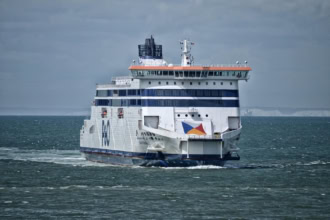
For many travellers, P&O Ferries is the name most closely associated with the Dover to Calais ferry. The company has operated across the English Channel for generations and remains one of the best-known ferry brands in Europe.
Today it continues to offer a busy schedule between Dover Ferry Port and Calais Ferry Port, carrying millions of passengers each year, from families heading to France on holiday to business travellers, freight drivers and motorists beginning road trips across continental Europe. Its combination of frequent departures, modern vessels and straightforward boarding procedures has helped make it one of the most popular ways to cross the Channel.
One of the biggest advantages of travelling with P&O Ferries is the flexibility it offers. Sailings operate throughout the day, meaning passengers can often choose a departure time that best suits their itinerary rather than planning their entire journey around a single ferry.
This flexibility is particularly valuable if you’re driving from elsewhere in the United Kingdom, as traffic around Kent, particularly on the M20 and A20, can vary considerably depending on the time of day and the season. Having multiple departures available provides valuable peace of mind should your journey to the port take longer than expected.
The crossing itself normally takes around 90 minutes, giving passengers enough time to leave their vehicle behind and enjoy the onboard facilities before arriving in France.
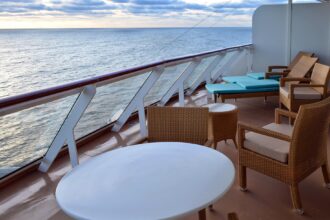
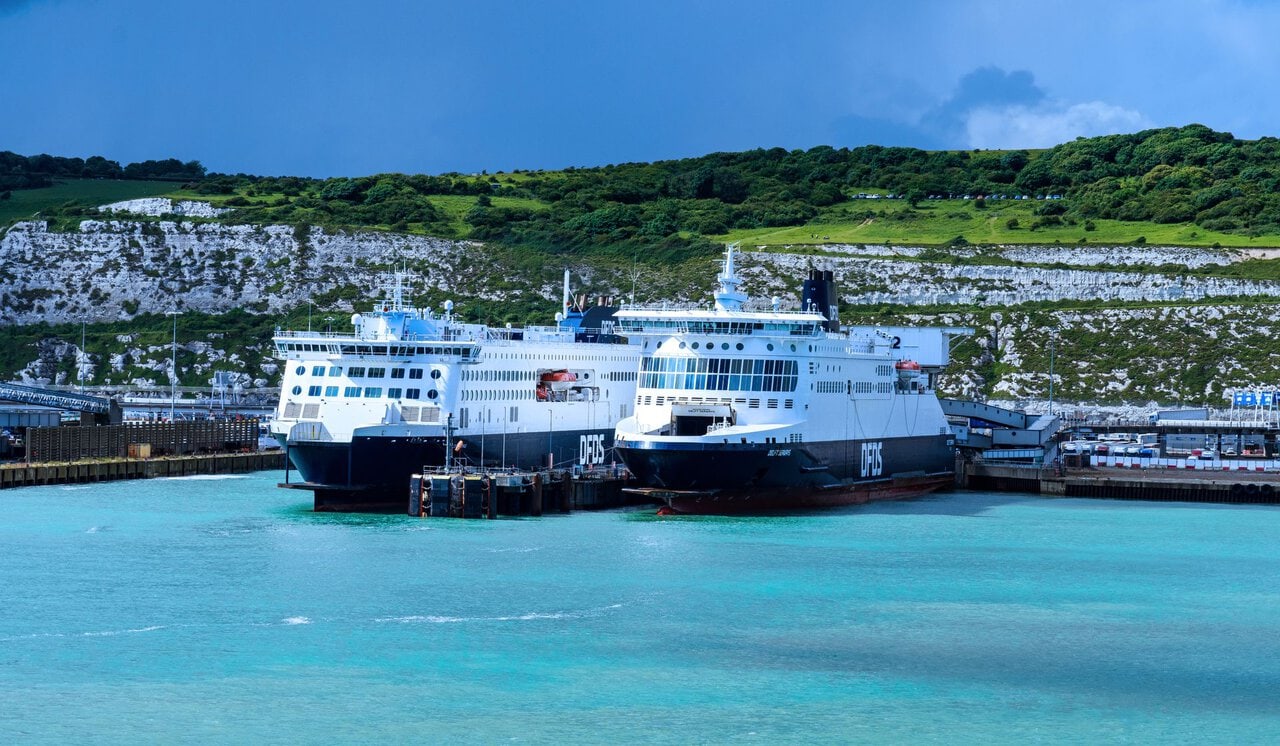
Unlike shorter ferry routes where travellers often remain close to the vehicle deck, the Dover to Calais crossing encourages passengers to explore the ship. Comfortable seating areas are located throughout the vessel, while large panoramic windows and open-air observation decks provide excellent views as the ferry leaves the famous White Cliffs of Dover behind before approaching the French coastline around Calais. On clear days the views across the English Channel are one of the highlights of the journey.
Food and drink form an important part of the onboard experience. Depending on the vessel, passengers can choose from cafés serving coffee, pastries and sandwiches, self-service restaurants offering hot meals, and bars where travellers can relax with a drink while watching the coastline disappear into the distance. Families often appreciate the wide range of meal choices available, while those simply looking for a quick snack can usually find grab-and-go options without spending much of the crossing queuing.
Another popular feature is the onboard duty-free shop. Following the return of duty-free shopping on Channel crossings, passengers can browse a wide range of products including perfumes, cosmetics, confectionery, alcohol, tobacco, gifts and travel essentials. Many travellers deliberately leave a little extra time during the crossing to visit the shop before returning to their vehicles ahead of arrival.
For motorists, P&O Ferries caters for virtually every type of vehicle. Whether you’re travelling by car, motorcycle, motorhome, campervan, caravan, bicycle or commercial vehicle, boarding is generally well organised and clearly managed by port staff. Loading usually begins well before departure, with vehicles directed onto dedicated decks before passengers head upstairs to enjoy the crossing. Travellers carrying large amounts of luggage often find this far more convenient than flying, as there are no airline-style baggage limits and everything simply remains inside the vehicle during the voyage.
Families travelling with children generally find the crossing relaxed and easy to manage. The ability to move around the ship, enjoy refreshments and watch the sea from the outside decks often makes the journey part of the holiday rather than simply a means of transport. Passengers travelling with pets can also use the service, provided they comply with the latest Pet Travel Scheme requirements and the operator’s current policies.
Overall, P&O Ferries combines a long-established reputation with frequent departures, comfortable ships and excellent facilities, making it an excellent choice whether you’re travelling for a weekend break in France, a European driving holiday or a longer adventure across the continent. For travellers looking for a dependable crossing backed by decades of experience, it remains one of the strongest options on the Dover to Calais ferry route.
DFDS
DFDS is one of the largest ferry companies operating across northern Europe and has become a favourite with many travellers using the Dover to Calais ferry. With roots stretching back more than 150 years, the Danish operator has built a reputation for reliable service, modern ships and an extensive sailing schedule. Today it operates numerous daily departures between Dover Ferry Port and Calais Ferry Port, providing passengers with excellent flexibility whether travelling for business, a family holiday or a European road trip.
One of DFDS’s greatest strengths is the sheer number of crossings available throughout the day. Rather than planning your journey around a limited timetable, you’ll usually find a sailing that fits your itinerary, whether you’re leaving early in the morning, travelling during the afternoon or crossing later in the evening. This flexibility is particularly valuable during the busy holiday season, when traffic around Kent can be unpredictable and journey times to Dover Ferry Port occasionally take longer than expected. Knowing that another sailing may be available later in the day gives many travellers added peace of mind.
Once on board, DFDS offers a comfortable and modern environment that makes the 90-minute crossing feel surprisingly relaxed. Spacious passenger lounges provide plenty of seating, while large windows offer excellent views across the English Channel. During fine weather, many passengers head outside onto the open decks to watch the ferry depart beneath the spectacular White Cliffs of Dover before looking out for the coastline of France as Calais gradually comes into view. It’s one of those journeys where the scenery becomes part of the overall travel experience rather than simply a way of reaching your destination.
Food and drink options are designed to suit a wide variety of travellers. Cafés serve freshly prepared sandwiches, pastries, hot drinks and lighter snacks, while larger restaurants offer cooked breakfasts, hot meals and family favourites throughout the day. Travellers looking for a quieter experience can simply find a comfortable seat with a coffee, while families often appreciate the relaxed atmosphere and the opportunity for children to stretch their legs after spending time in the car.
The onboard duty-free shop is another highlight of travelling with DFDS. Passengers can browse a wide selection of perfumes, cosmetics, wines, spirits, confectionery, travel essentials and gifts before arriving in France. Many travellers take advantage of the crossing to stock up on duty-free purchases, particularly when travelling by car where luggage space is rarely an issue.
For motorists, DFDS caters for almost every type of vehicle. Whether you’re driving a car, motorhome, campervan, caravan, motorcycle or commercial vehicle, boarding is generally efficient and well organised. Once parked on the vehicle deck, passengers leave their vehicle behind and spend the crossing enjoying the facilities on board before returning shortly before arrival in Calais. The generous vehicle allowances also make the ferry an attractive alternative to flying for travellers carrying sports equipment, camping gear or several weeks’ worth of luggage.
Families travelling with children generally find the ships spacious and easy to navigate, while travellers with reduced mobility benefit from accessible facilities and assistance that can be arranged in advance. Pets are also welcome on DFDS sailings provided they meet the latest Pet Travel Scheme requirements, allowing many owners to travel to continental Europe without leaving their animals behind.
Overall, DFDS combines frequent departures, comfortable ships and a modern onboard experience with the flexibility that has made the Dover to Calais ferry one of Europe’s most popular international routes. Whether you’re travelling for a weekend city break, driving across France, heading to the French Alps or continuing deeper into Europe, DFDS offers a dependable and enjoyable way to begin your journey.

Compare DFDS Ferry Routes and Sailings
Travelling by ferry can be one of the most relaxing ways to reach your destination. DFDS operates ferry routes across the United Kingdom, France, the Netherlands, Denmark, Norway, Sweden, Germany, Estonia and Lithuania, connecting travellers with key destinations throughout Northern Europe.
DFDS is ideal for foot passengers, car and motorcycle travellers, and those taking motorhomes or campervans abroad. Many routes offer onboard dining, shopping, cabins and comfortable lounges, making the journey part of the travel experience rather than simply a transfer.

Irish Ferries
Although Irish Ferries is the newest operator on the Dover to Calais ferry route, it has rapidly established itself as a serious competitor by introducing modern vessels and a contemporary onboard experience. Well known for its extensive ferry network between Ireland, Wales, England and France, the company expanded onto the English Channel with the aim of providing travellers with greater choice, competitive pricing and high-quality passenger facilities. In a relatively short time, it has become a popular option for both regular cross-Channel travellers and those making the journey for the first time.
One of the first things passengers notice when boarding an Irish Ferries vessel is the bright, modern interior. The public areas have a spacious feel, with comfortable seating, large windows and contemporary décor throughout the ship. During the crossing, passengers are free to move around the various lounges, enjoy the outside decks or simply relax while watching the busy shipping lanes of the English Channel. Departing Dover, the views of the iconic White Cliffs are particularly impressive, while the gradual approach towards Calais provides a memorable introduction to mainland Europe.
Dining options are designed to suit both travellers looking for a full meal and those simply wanting a quick snack before arrival. Cafés and restaurants serve a range of hot meals, sandwiches, pastries, coffee and cold drinks, while the onboard duty-free shop offers a wide selection of perfumes, cosmetics, confectionery, wines, spirits and travel essentials. Like the other operators on the route, the return of duty-free shopping has become a significant attraction for many passengers, particularly those travelling by car.
One feature that helps distinguish Irish Ferries from its competitors is the availability of the Club Class Lounge on selected vessels. For an additional supplement, passengers can enjoy a quieter premium lounge with more comfortable seating, complimentary refreshments and a more relaxed atmosphere away from the busier public areas. Business travellers and couples often find this upgrade worthwhile, particularly during peak holiday periods when the standard passenger lounges can become much busier.
Like the other ferry operators on the route, Irish Ferries welcomes cars, motorhomes, motorcycles, campervans, caravans, bicycles and foot passengers. The generous vehicle allowances make the crossing particularly attractive for travellers embarking on longer European holidays, allowing them to carry camping equipment, sports gear and luggage without worrying about airline restrictions. Loading and unloading procedures are generally efficient, helping minimise waiting times at both Dover and Calais.
Travellers bringing pets can also use the service, provided they comply with the latest Pet Travel Scheme regulations and the company’s current travel requirements. Assistance for passengers with reduced mobility is available when requested in advance, ensuring the crossing remains accessible for as many travellers as possible.
Competitive pricing is another reason many passengers consider Irish Ferries. Depending on the time of year, sailing time and availability, the operator frequently offers attractive fares, making it well worth comparing alongside P&O Ferries and DFDS before making a booking. For travellers who value modern ships, comfortable surroundings and the option of upgrading to a premium lounge, Irish Ferries has quickly become an excellent choice for crossing the English Channel.
Plan Your Ferry Journey with Irish Ferries
Travelling between Ireland, Britain, and France can be simple and flexible by ferry. Irish Ferries operates passenger and vehicle services, making it easy to travel with your car, motorhome, bicycle, or luggage without airline restrictions.
It is ideal for road trips, family holidays, and travellers who prefer a more relaxed journey. Whether you are crossing the Irish Sea or travelling between Ireland and continental Europe, ferry travel offers flexibility, comfort, and generous luggage allowances.
Compare Prices & Book Your Ferry
With P&O Ferries, DFDS and Irish Ferries all operating the Dover to Calais ferry route, choosing the right sailing isn’t always as simple as selecting the first departure you see. Ticket prices vary throughout the year depending on demand, the day of the week, departure time, vehicle type and how far in advance you book. A sailing that is the cheapest in the morning may be considerably more expensive later in the day, while one operator may offer better value for a car, motorhome or foot passenger depending on current availability.
Rather than visiting each ferry operator’s website individually, you can compare every available sailing in one place using the search widget below. It checks P&O Ferries, DFDS and Irish Ferries simultaneously, showing departure times, journey options, ticket prices and availability without having to switch between multiple websites. This makes planning your crossing significantly quicker, particularly if you’re flexible about when you travel.
One of the biggest advantages of searching this way is the ability to compare different ticket types in one place. Whether you’re travelling as a foot passenger, taking a car, motorcycle, motorhome, campervan, caravan or bicycle, the results clearly display which sailings are available along with the latest fares. If you’re travelling with pets, you’ll also be able to select the appropriate travel options during the booking process.
If your travel dates are flexible, it’s well worth comparing several departures before making a reservation. Even moving your sailing by an hour or travelling on a different day can sometimes produce noticeable savings, especially during the busy summer holiday period, bank holiday weekends and Christmas. Booking several weeks in advance also tends to provide the widest choice of departure times, particularly for larger vehicles where availability can become limited.
Another benefit of comparing this way is that it lets you assess operators objectively. While P&O Ferries, DFDS and Irish Ferries all offer modern ships and similar crossing times, departure schedules, onboard facilities and fares differ from day to day. Comparing everything together makes it much easier to choose the sailing that best matches both your itinerary and your budget.
If you’re planning a wider European road trip, securing your ferry before booking hotels or onward transport is often the best approach. Once your Channel crossing is confirmed, you can plan your onward journey through France, Belgium, the Netherlands or elsewhere in Europe with confidence, knowing exactly when you’ll arrive in Calais.
Dover to Calais Ferry Times & Departures
Use Ferryhopper to check live sailings between Dover and Calais in both directions. Select your travel date to compare scheduled ferry departures, sailing times and available tickets.
Select the date you want to travel. The times shown on the right-hand side are the scheduled departure and arrival times for each ferry.
Availability can change quickly, particularly during weekends and the summer season. Some sailings may stop accepting bookings a few hours before departure. If a timetable is blank, there may be no available sailings for today. Try moving to a later date to check future services.
This is the timetable for the outward direction. Use it to check sailings from Dover to Calais for the date you plan to travel.
This is a separate timetable for the opposite direction. It does not select a return ticket for the journey above. Use it to check sailings from Calais to Dover.
Want to compare different routes and other ferry options?
Compare routes, operators, sailing times and prices with Ferryhopper or Direct Ferries.
Best for long or awkward journeys. Builds one itinerary out of separate flights.
View flightsBest for short trips. Install the eSIM at home and arrive with working data, no shop queue.
Browse eSIMsBest after a long flight or a late landing. Price agreed before you travel, and no taxi queue.
Check transfersTicket Prices
The cost of travelling on the Dover to Calais ferry varies considerably throughout the year, so there is no single standard fare. Prices are influenced by several factors including the time of year, day of the week, departure time, vehicle type, the ferry operator and how far in advance you make your booking. Because of this, two passengers travelling on the same route may pay very different prices depending on when they reserve.
For foot passengers, the Dover to Calais route is often one of the most affordable ways to reach mainland Europe. Travellers who book several weeks in advance can often secure excellent value, while last-minute bookings during busy periods are usually more expensive. Although the ferry takes longer than Eurostar, generous luggage allowances and flexible ticket options make it an attractive alternative for many travellers.
Motorists should expect pricing to depend on the size of their vehicle. Standard cars generally attract the lowest vehicle fares, while motorhomes, campervans, caravans, trailers and commercial vehicles cost more because they occupy additional space on the vehicle deck. The overall cost also varies according to the number of passengers travelling in the vehicle and whether you choose a flexible or non-refundable ticket.
Travellers taking motorcycles or bicycles often benefit from competitive fares, making the route particularly popular with touring cyclists and motorcyclists exploring Europe. Similarly, passengers travelling with pets should check whether any additional charges apply under the chosen operator’s pet travel policy before completing their booking.
Peak travel periods naturally command the highest prices. Sailings during school holidays, bank holiday weekends, Christmas, Easter and the main summer holiday season often sell out well in advance, particularly for larger vehicles. Booking early not only increases your chances of securing your preferred departure but can also result in substantial savings compared with purchasing tickets shortly before travelling.
For the best value, compare prices across all three ferry operators before booking. The Ferryhopper search above shows the latest fares for P&O Ferries, DFDS and Irish Ferries side by side, helping you find the most suitable combination of price, departure time and flexibility for your journey.
Check-in & Boarding
Although the Dover to Calais ferry crossing itself only takes around 90 minutes, passengers should allow plenty of additional time before departure for check-in, security procedures and border controls. Every operator publishes recommended arrival times, and following this guidance is one of the easiest ways to ensure a stress-free start to your journey. The Port of Dover also publishes travel advice for ferry passengers, covering documents, border checks and what to expect at the terminal.
Motorists should drive directly to the check-in lanes for their chosen operator at Dover Ferry Port, where passports, booking confirmations and vehicle details are checked before proceeding towards the departure lanes. After completing border formalities, passengers remain with their vehicle until instructed to board. Vehicles are loaded in carefully managed sequences to maximise space on the ferry, with port staff directing drivers throughout the process.
Foot passengers follow a slightly different procedure. Rather than entering the vehicle lanes, they report to the Passenger Terminal, where travel documents are checked before waiting in the departure lounge. Once boarding begins, passengers are transferred to the ferry by a dedicated shuttle bus, as walking through the operational dock area is not permitted.
Before travelling, ensure that your passport, booking confirmation and any other required travel documents are easily accessible. Travellers taking pets should also have the necessary veterinary paperwork readily available, while motorists towing trailers or caravans should confirm that all vehicle details match those provided during the booking process.
During particularly busy periods, such as the summer holidays, Christmas and bank holiday weekends, additional queues may develop before departure. Arriving in good time allows for unexpected delays caused by traffic, border checks or adverse weather and helps ensure you begin your crossing as smoothly as possible.
Onboard Facilities
Modern ferries on the Dover to Calais route offer far more than simply a means of crossing the English Channel. All three operators provide comfortable passenger lounges, cafés, restaurants and a range of facilities designed to make the 90-minute crossing both relaxing and enjoyable.
Food and drink are available throughout the voyage, with cafés serving hot drinks, sandwiches, pastries and lighter snacks alongside restaurants offering cooked meals suitable for breakfast, lunch or dinner depending on your sailing time. Bars are also available on many vessels, providing a pleasant place to sit and enjoy the crossing while watching the coastline disappear into the distance.
The return of duty-free shopping has become one of the highlights of travelling by ferry. Passengers can browse a wide range of products including perfumes, cosmetics, wines, spirits, confectionery, gifts and travel essentials before arriving in France. Many travellers deliberately leave time to explore the onboard shops, particularly when travelling by car where luggage space is rarely a concern.
Throughout the ships you’ll also find comfortable seating areas, panoramic lounges, outdoor viewing decks and accessible facilities for passengers requiring additional assistance. Families appreciate the spacious public areas and children’s facilities available on many sailings, while travellers looking for a quieter experience can often upgrade to premium seating or lounge access depending on the operator and vessel.
Although the crossing is relatively short, the quality of the onboard facilities means many passengers view the ferry as an enjoyable part of the overall journey rather than simply a method of reaching France.
Journey Time & Sailing Frequency
The Dover to Calais ferry is one of the shortest international ferry crossings in the world, with a typical sailing time of around 90 minutes. Although weather conditions and port traffic can occasionally affect arrival times, crossings are generally reliable throughout the year and provide one of the quickest ways to travel between Britain and continental Europe.
One of the biggest advantages of this route is its exceptional frequency. Between P&O Ferries, DFDS and Irish Ferries, departures are scheduled throughout the day and night, with sailings often leaving every 30 to 60 minutes during the busiest periods. This flexibility allows travellers to choose departure times that best suit their itinerary and provides reassurance that, if plans change, alternative sailings are often available.
During the busy summer holiday season, Christmas, Easter and major bank holiday weekends, demand increases significantly and the most popular departure times can sell out well in advance. Booking early is therefore recommended, particularly if you’re travelling with a motorhome, caravan or larger vehicle. Winter crossings are generally quieter, although weather conditions in the English Channel can occasionally result in delays or amended sailing schedules.
Regardless of which operator you choose, passengers should follow the recommended check-in times provided with their booking confirmation. Allowing sufficient time for border checks, security procedures and vehicle processing helps ensure a smooth start to your journey and reduces the risk of missing your scheduled departure.
Travelling with a Car, Motorhome or Motorcycle
One of the biggest advantages of choosing the Dover to Calais ferry over flying or travelling by rail is the freedom to take your own vehicle. Whether you’re driving a car, touring Europe in a motorhome, towing a caravan, riding a motorcycle or exploring the continent by bicycle, the ferry allows you to begin your journey exactly as you intend to continue it.
There are no airline baggage restrictions, no vehicle hire costs on arrival and no need to repack your luggage. Everything travels with you from Dover to Calais, making the crossing particularly attractive for longer holidays and European road trips.
The boarding process is straightforward. After completing check-in and border controls, vehicles are directed into clearly marked lanes before being called forward by port staff.
Drivers are then guided onto the ferry by the crew, who position vehicles carefully to maximise the available space on the vehicle decks. Once parked, you’ll be asked to switch off your engine, apply the handbrake and leave your vehicle for the duration of the crossing. Before heading upstairs, remember to take any medication, travel documents or personal belongings you’ll need, as access to the vehicle deck is generally not permitted while the ferry is at sea.
For motorists, the route is ideal whether you’re heading to northern France for a weekend break or embarking on a much longer European adventure. Within minutes of leaving Calais Ferry Port, you’ll have direct access to the A16 and A26, allowing you to continue towards Paris, Belgium, the Netherlands, Luxembourg, Germany or virtually anywhere else in continental Europe. This convenience is one of the reasons the Dover to Calais crossing remains so popular despite competition from the Channel Tunnel and air travel.
The route is equally well suited to motorhome and campervan owners. Many travellers use the crossing as the starting point for extended tours across France, the French Alps, Spain, Italy and beyond. When booking, you’ll need to enter your vehicle’s dimensions accurately, particularly if it exceeds the height or length of a standard car. Larger vehicles occupy more deck space and are therefore charged differently, but they benefit from exactly the same convenient crossing and generous luggage allowance.
Travelling by motorcycle is another popular option. The short crossing provides riders with a quick and enjoyable way to reach some of Europe’s finest touring roads without the fatigue of a much longer ferry journey. Crew members secure motorcycles using dedicated tie-down equipment, although many experienced riders prefer to carry a soft cloth or cover to protect painted surfaces where straps may be attached. Cyclists are also welcome on the route, making the ferry a popular starting point for long-distance rides through France and neighbouring countries.
If you’re driving an electric vehicle, there are no special requirements beyond those provided by your ferry operator. Similarly, LPG-powered vehicles are accepted, although operators may have specific procedures regarding fuel systems during boarding, so it’s worth checking current guidance before travelling. Whatever vehicle you choose to take, arriving with accurate booking details and allowing sufficient time for check-in will help ensure a smooth start to your journey across the English Channel.
Travelling with Pets
The Dover to Calais ferry is one of the most convenient ways to travel to France with your dog or other eligible pet, making it particularly popular with families who don’t want to leave their animals behind. Unlike flying, where pet travel can be more complicated and expensive, the ferry allows owners to remain much closer to their pets while providing a relatively quick 90-minute crossing between England and France.
Before travelling, pets must meet the requirements of the Pet Travel Scheme (PETS). This normally includes having a microchip, a valid Animal Health Certificate or qualifying EU Pet Passport, and, for dogs, an approved tapeworm treatment administered within the required time period before returning to the United Kingdom. As regulations can change, travellers should always check the latest government guidance before departure and ensure that all veterinary documentation is completed correctly.
Each ferry operator has slightly different arrangements for travelling with pets. Depending on the company and vessel, animals may remain inside your vehicle during the crossing or travel in designated onboard kennel facilities. Some operators also provide dedicated pet exercise areas or designated pet-friendly spaces on board. Because policies vary, it’s important to check the latest information when making your booking, particularly if you’re travelling with multiple pets or a larger animal.
When checking in at Dover Ferry Port, you’ll normally be asked to present both your own travel documents and your pet’s paperwork before boarding. Staff may also verify your pet’s microchip as part of the departure process. Arriving in plenty of time helps ensure these additional checks can be completed without unnecessary stress.
Although the crossing itself is relatively short, it’s a good idea to exercise your dog before arriving at the port and to ensure fresh drinking water is available before and after the journey. Bringing familiar bedding or a favourite toy can also help nervous animals settle during the voyage. For many pet owners, the Dover to Calais ferry remains one of the easiest and most pet-friendly ways to begin a European holiday.
Best for short city stops where being central matters more than the room. Dorms and private rooms both listed.
See hostelsBest arranged before you fly rather than after. Covers claim handling, plus lounge access on eligible delays.
Explore AirHelp+Best for the gap between checking out and your train. Drop bags at a shop or hotel nearby and carry on.
Store your bagsSeasickness & Bad Weather
Despite crossing one of the world’s busiest shipping lanes, the Dover to Calais ferry is generally a smooth journey. The crossing takes place across the relatively sheltered waters of the Strait of Dover, and on most days passengers experience little more than gentle movement. During calm weather, it’s easy to forget you’re even at sea, particularly while relaxing in one of the onboard lounges or enjoying a meal.
Weather conditions can occasionally become more challenging during the autumn and winter, when strong winds across the English Channel create rougher seas. Even then, modern ferries are large, highly stable vessels designed to operate safely in demanding conditions. Most crossings continue as scheduled, although particularly severe weather may result in reduced speeds, delays or, on rare occasions, cancellations if conditions make sailing unsafe.
If you’re prone to seasickness, there are several simple ways to make the crossing more comfortable. Sitting near the centre of the ship, where movement is generally least noticeable, often helps, while looking towards the horizon rather than focusing on nearby objects can also reduce symptoms. Many travellers choose to take travel sickness medication before boarding if they know they’re sensitive to motion, while staying hydrated and avoiding very heavy meals before departure can also make a difference.
Should poor weather affect your sailing, ferry operators will normally provide updates through their websites, mobile apps, text messages or email. If a crossing is delayed or cancelled, passengers are usually offered the next available sailing, although arrangements depend on the nature of the disruption and the operator’s current policy. Checking live travel updates before leaving for Dover Ferry Port is always recommended during periods of severe weather.
Fortunately, significant disruption is relatively uncommon, and for the vast majority of passengers the 90-minute Dover to Calais ferry provides a comfortable, reliable and enjoyable start to travelling in Europe.
Arriving in Calais
After around 90 minutes at sea, your ferry arrives at Calais Ferry Port, one of the busiest ferry terminals in continental Europe. Vehicles are directed off the ship first, while foot passengers are transferred back to the passenger terminal by shuttle bus before completing the final arrival procedures. Despite the port’s size, the process is generally efficient, allowing most travellers to continue their journey quickly.
For motorists, one of the biggest advantages of the Dover to Calais ferry is how quickly you can join the French road network. Within minutes of leaving the port you’ll have direct access to the A16 motorway, which follows the northern French coastline towards Boulogne-sur-Mer, Dunkerque, Belgium and the Netherlands. Alternatively, the nearby A26 Autoroute provides one of the fastest routes towards Arras, Reims, Paris and eastern France, making Calais an excellent starting point for both short breaks and longer European road trips.
If you’re travelling as a foot passenger, onward travel is equally straightforward. The free Balad’In shuttle bus links the ferry terminal with Calais-Ville railway station and the city centre, providing convenient access to the French rail network. Regional TER trains connect with destinations including Lille, Boulogne-sur-Mer, Dunkerque and Amiens, while travellers heading further into Europe can continue to Calais-Fréthun for TGV high-speed services towards Paris, Brussels, Strasbourg and many other cities.
If you’re planning to continue your journey by train, it’s worth comparing fares through Omio before leaving the ferry terminal. Booking in advance can often reduce the cost of longer-distance journeys while making it easier to coordinate rail connections after arriving in France.
We’ve produced a comprehensive Calais Ferry Port Guide covering everything you’ll need after leaving the ferry, including the free shuttle bus, railway stations, taxi services, road connections, car hire, nearby hotels and onward transport across France and Europe.

Organise Your your destination Train Trip with Omio
You can use Omio to research train travel for your destination, check schedules and compare ticket options before making your booking.
For journeys involving connections or multiple operators, having the available services together can make it much easier to work out your itinerary.
Scan to open
on your phone

Eurostar or Ferry?
For travellers crossing between the United Kingdom and France, the biggest decision is often whether to take the Dover to Calais ferry or travel through the Channel Tunnel on Eurostar. Both options provide fast and reliable access to continental Europe, but they are designed for very different types of journeys.
The Dover to Calais ferry is generally the better option if you’re travelling with a car, motorhome, motorcycle, bicycle or large amounts of luggage. It gives you complete freedom once you arrive in France, allowing you to drive directly to destinations across Europe without hiring a vehicle. Travelling with pets is also considerably easier on the ferry than by rail, making it the preferred choice for many families.
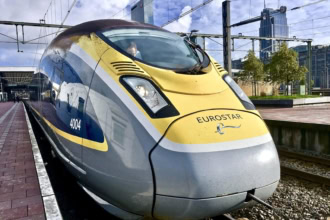
By contrast, Eurostar is ideal for travellers heading directly to city centres. High-speed trains link London St Pancras International with Paris, Brussels, Lille, Amsterdam and other major destinations without the need to drive. Journey times are often shorter than combining the ferry with onward rail travel, particularly if your final destination is one of these cities.
Cost is another important consideration. Ferry prices depend largely on the type of vehicle you’re taking, while Eurostar fares vary according to demand and how far in advance you book. For solo travellers heading to Paris, the train can often be the quickest option. For families travelling with a fully loaded car, the ferry frequently offers much better value.
Ultimately, the right choice depends on your journey rather than the crossing itself. If you’re planning a European road trip, touring the countryside or carrying lots of luggage, the Dover to Calais ferry offers flexibility that rail simply can’t match. If you’re travelling between major cities with only hand luggage, Eurostar is usually faster and more convenient.

Rupert’s Handy Travel Tips
Planning to take the Dover to Calais ferry? Here are a few tips to help make your Channel crossing as smooth as possible.
- Book early if you’re taking a vehicle: The cheapest fares and widest choice of sailings are usually available several weeks before departure, particularly during school holidays.
- Compare all three ferry operators: Prices can vary considerably between P&O Ferries, DFDS and Irish Ferries, even for similar departure times.
- Take everything you’ll need upstairs: Once the ferry leaves port, you won’t normally be able to return to your vehicle until arrival in Calais.
- Don’t miss the outside decks: The views of the White Cliffs of Dover departing England and the approach into Calais are well worth seeing if the weather is clear.
- Continue planning before you arrive: If you’re travelling onwards by train after reaching France, booking your rail tickets through Omio before the ferry docks can save valuable time.
Want to meet the reindeer behind our travel tips? Find out more in our page Who is Rupert?.




Frequently Asked Questions
How long does the Dover to Calais ferry take?
The crossing normally takes around 90 minutes, although the total journey will be longer once check-in, border controls, boarding and disembarkation are included. Most travellers should allow around 3 to 4 hours from arriving at Dover Ferry Port to leaving Calais Ferry Port.
How early should I arrive before my ferry departs?
Ferry operators generally recommend arriving 60 to 90 minutes before departure. During school holidays, bank holiday weekends and other busy periods, allowing additional time is advisable as traffic and border checks can increase waiting times.
Can you stay in your car during the crossing?
No. Once your vehicle has been parked on the ferry’s vehicle deck, passengers must leave it for the duration of the crossing. Before going upstairs, make sure you take any medication, passports, travel documents and personal belongings you’ll need, as the vehicle deck is normally closed while the ship is at sea.
Can foot passengers use the Dover to Calais ferry?
Yes. P&O Ferries, DFDS and Irish Ferries all carry foot passengers on the route, although availability and conditions can vary depending on the operator. After checking in at the passenger terminal, foot passengers are transferred to the ferry by shuttle bus before boarding.
Can I take my dog or other pet to France?
Yes. Pets can travel on the Dover to Calais ferry, provided they meet the requirements of the Pet Travel Scheme and the individual ferry operator’s policies. This includes having the correct documentation and, for dogs returning to the United Kingdom, the required tapeworm treatment.
Which ferry operator is best?
There is no single “best” operator, as each offers a slightly different experience. P&O Ferries is well established with frequent departures, DFDS offers an extensive timetable and modern ships, while Irish Ferries provides contemporary vessels and the option of the Club Class Lounge on selected sailings. Comparing all three before booking is the best way to find the sailing that suits your plans.
Is duty-free shopping available?
Yes. All three operators offer duty-free shopping, allowing passengers to purchase products such as perfumes, cosmetics, wines, spirits, confectionery and travel essentials during the crossing.
Can I take a bicycle on the ferry?
Yes. Bicycles are accepted by all three ferry operators, making the route popular with cyclists beginning tours through France and mainland Europe. Booking in advance is recommended, particularly during the busy summer season.
Is there Wi-Fi onboard?
Many vessels provide Wi-Fi, although availability and performance can vary depending on the operator and your location during the crossing. Mobile signal may also be intermittent while the ferry is at sea.
What happens if my ferry is cancelled?
If a sailing is cancelled because of severe weather or operational disruption, your ferry operator will normally offer an alternative sailing or discuss the options available under the terms of your booking. Checking travel updates before leaving for Dover Ferry Port is recommended whenever poor weather is forecast.

Further Reading & Related Guides
If you’re planning your journey across the English Channel, we’ve created several detailed guides to help you prepare. Before setting off, read our Dover Ferry Port Guide for everything you need to know about reaching the terminal, parking, check-in and transport connections.
Once you arrive in France, our Calais Ferry Port Guide explains how to continue your journey by train, bus, taxi or car, including detailed information on the free Balad’In shuttle and onward rail connections across France. If you’re comparing routes into Calais from other UK ports as well, our Calais Ferry Crossings guide covers the full range of options.
If you’re still deciding between travelling by sea or rail, our Dover to Calais: Eurostar or Ferry? guide compares the two options in detail, helping you decide which is best for your budget and itinerary. Travelling by train instead? Our comprehensive Eurostar Guide explains routes, ticket types, luggage allowances and onboard facilities, while the Eurostar Snap Guide shows you how to find discounted last-minute fares and special offers.