Reviewed by our editorial team Updated
Why Take the Wembley Stadium Tour?
The Wembley Stadium tour offers far more than simply walking around one of the world’s most famous football grounds. It provides a rare opportunity to step behind the scenes of the United Kingdom’s national stadium, exploring areas normally reserved for England’s football team, FA Cup finalists, Champions League winners, NFL stars and some of the world’s biggest music artists. Whether you’re a lifelong football supporter, an architecture enthusiast or simply looking for one of London’s best attractions, the tour combines sporting history with exclusive access that ordinary matchday visitors never experience.
With a capacity of 90,000 spectators, Wembley Stadium is the largest sports venue in the United Kingdom and one of the most recognisable stadiums anywhere in the world. Since opening in its current form in 2007, it has hosted everything from the UEFA Champions League Final and UEFA EURO 2020 Final to NFL London Games, world championship boxing, rugby league finals and sold-out concerts by artists including Taylor Swift, Coldplay, Ed Sheeran, Beyoncé, Oasis and many others. Every year, millions of visitors watch events inside the stadium, but only a fraction get the opportunity to experience what happens behind the scenes.
The guided tour takes you beyond the public seating areas into locations normally reserved for players, managers, officials and the media. You’ll visit the England dressing room, walk through the famous Players’ Tunnel, stand pitchside beside the dugouts, sit in the press conference room and climb the iconic Royal Box steps, where countless trophies have been lifted by some of the biggest names in world sport. Along the way, your guide shares stories about unforgettable matches, legendary players and memorable concerts that have shaped Wembley’s remarkable history.
History plays just as important a role as football. Throughout the experience you’ll discover how today’s stadium evolved from the original Empire Stadium, famous for its distinctive Twin Towers, into the modern venue crowned by its spectacular 134-metre-high arch. Interactive displays, historic memorabilia and fascinating exhibits help explain why Wembley remains one of Britain’s most important sporting landmarks over a century after the site first welcomed visitors.
The experience is suitable for almost every type of visitor. Football supporters naturally enjoy standing where their sporting heroes have celebrated major victories, but even travellers with only a casual interest in the game are often surprised by the scale of the stadium and the stories behind its construction. Families appreciate the interactive nature of the tour, while international visitors often include Wembley alongside attractions such as Tower Bridge, Westminster Abbey and The Tower of London during a stay in the capital.
Tours are led by knowledgeable English-speaking guides who combine historical facts with personal anecdotes, helping bring the stadium to life in an engaging and entertaining way. Visitors consistently praise the guides for making the experience informative without feeling overly scripted, and there is plenty of time throughout the visit to stop for photographs in some of the stadium’s most iconic locations.
If you’re looking for an attraction that combines sport, history, architecture and exclusive behind-the-scenes access, the Wembley Stadium tour is one of London’s standout experiences. Even if you’ve visited Wembley before for a football match or concert, seeing the stadium completely empty and exploring the areas hidden from ordinary spectators offers a completely different perspective on one of Britain’s most famous venues.
Wembley Stadium Tour at a Glance
| Feature | Information |
|---|---|
| Location | Wembley Stadium, London |
| Tour Duration | Approximately 2 hours |
| Guided Portion | Around 90 minutes |
| Tour Type | Fully guided walking tour |
| Tour Language | English |
| Wheelchair Accessible | Yes |
| Photography | Permitted throughout most of the tour |
| Main Highlights | England Dressing Room, Players’ Tunnel, Pitchside, Royal Box, Press Room, Crossbar Exhibition, Walk of Legends |
| Meeting Point | Behind the Bobby Moore Statue (Level 1) |
| Cancellation Policy | Free cancellation up to 24 hours before departure |
| Payment Option | Reserve now, pay later available |
| Suitable For | Families, football fans, architecture enthusiasts and general visitors |
| Ticket Price | Adult £28 ($38 / €32), child £19 ($25 / €22), family £75 ($100 / €86) |
| Nearest Underground Station | Wembley Park |
| Nearest National Rail Station | Wembley Stadium |
| Parking | More than 3,000 parking spaces nearby |
London transport status
Live from Transport for London.
Powered by TfL Open Data
Live service status for the London Underground, DLR, London Overground, Elizabeth line, London Trams, river buses and the cable car, updated continuously from Transport for London.
What to Expect on the Tour
The Wembley Stadium tour has been carefully designed to recreate the journey made by players on the biggest days in English sport. Rather than simply walking around the stadium, you’ll follow the same route taken by international footballers, FA Cup finalists, NFL athletes and world-famous performers as they prepare to step into one of the most iconic arenas on the planet.
Your visit begins on Level 1 behind the famous Bobby Moore statue, where you’ll meet your guide before entering the stadium. After a short introduction to Wembley’s history, the tour gradually moves into areas that are normally closed to the public, allowing you to experience the stadium from a completely different perspective than spectators on match day.
Throughout the tour you’ll explore the luxurious England dressing room, discover where managers speak to the world’s media inside the press conference room, walk through the dramatic Players’ Tunnel and emerge beside the immaculate playing surface. Standing pitchside, it’s easy to appreciate the true scale of the 90,000-seat stadium, while the panoramic views from the lower seating bowl demonstrate why Wembley continues to host many of the world’s biggest sporting and entertainment events.
One of the most memorable moments comes as you climb the famous Royal Box steps, the same staircase used by captains lifting the FA Cup, UEFA Champions League trophies and countless other major honours. It’s one of the most photographed locations on the tour and gives visitors the chance to recreate some of football’s most iconic celebrations.
Alongside the behind-the-scenes access, you’ll also discover exhibitions celebrating Wembley’s remarkable history. The Crossbar Exhibition includes the original crossbar from the 1966 FIFA World Cup Final, while the Walk of Legends explores the evolution of the stadium from the original Twin Towers to today’s spectacular arch. Throughout the experience your guide shares stories about unforgettable matches, legendary players and historic concerts, making each stop feel connected to the wider story of Wembley rather than simply another room inside the stadium.
The guided element lasts around 90 minutes, but visitors should allow approximately 2 hours for the full experience. This provides plenty of time to browse the exhibitions, take photographs and visit the club shop before leaving. Whether you’re a lifelong football supporter or simply curious about one of Britain’s most recognisable landmarks, the tour offers an engaging look behind the scenes of a stadium that continues to make sporting history almost every week.
Best for a short trip. Compare rooms by neighbourhood, price and guest rating before you book.
Compare hotelsBest for families, or any stay past about four nights. A kitchen and a washing machine start paying for themselves.
Browse rentalsBest as a last check before booking. Compares London hotel rates across several sites in one search.
Compare ratesThe England Dressing Room
For many visitors, stepping inside the England dressing room is one of the highlights of the entire Wembley Stadium tour. Hidden beneath the stands and normally accessible only to players, coaches and match officials, this is where England’s men’s and women’s national teams prepare before taking to the pitch in front of 90,000 supporters. Standing inside the room offers a fascinating glimpse into the moments before some of the country’s biggest sporting occasions, from FIFA World Cup qualifiers and UEFA European Championship matches to major domestic cup finals.
The dressing room has been designed to balance practicality with inspiration. Each player has an individual changing area, while the spacious central layout allows the squad to gather for final tactical instructions before leaving for the tunnel. Your guide explains how managers deliver team talks, how matchday preparations unfold and how players build themselves mentally before walking out into one of the most famous stadiums in world football. Even without the players present, it’s easy to imagine the anticipation that fills the room before kick-off.
Visitors are encouraged to take photographs and spend time exploring the space while learning about some of the famous names who have prepared here. From Bobby Moore lifting the 1966 FIFA World Cup to modern England stars competing in major international tournaments, the dressing room has witnessed countless memorable moments in English football history. Your guide often shares stories about famous matches, celebrations and behind-the-scenes traditions that most supporters never get to hear.
Although the room is naturally quieter than it would be on a match day, that actually adds to the experience. Without the noise of players and staff, visitors can appreciate the attention to detail that goes into preparing a world-class international dressing room while imagining what it must feel like to sit in the same place as some of football’s biggest names just moments before walking onto the Wembley pitch.
Walking Through the Players’ Tunnel
Few moments on the Wembley Stadium tour capture the imagination quite like walking through the famous Players’ Tunnel. Every footballer dreams of making this journey, and during the tour you’ll follow exactly the same route taken by the England national team, FA Cup finalists, UEFA Champions League stars, NFL players and world-famous performers before they emerge into one of the most iconic sporting arenas on the planet.
Your guide pauses before entering the tunnel to explain the rituals and traditions that take place behind the scenes on match day. This is where players gather for the final time before kick-off, where captains lead their teams onto the pitch and where the anticipation reaches its highest point. Standing in the tunnel, surrounded by the same walls that have witnessed some of football’s greatest names preparing for battle, gives visitors a genuine appreciation for the pressure and excitement experienced before every major event at Wembley Stadium.
As you walk slowly towards the light at the end of the tunnel, the scale of the stadium gradually reveals itself. Emerging beside the immaculate playing surface, you’re greeted by the breathtaking sight of 90,000 seats rising around you beneath the enormous Wembley Arch. It’s a dramatic moment that explains why so many visitors describe the tunnel as the emotional highlight of the entire experience.
The tunnel has witnessed countless historic moments throughout the stadium’s history. Players have walked this route before FA Cup Finals, England internationals, UEFA Champions League Finals, UEFA EURO 2020, NFL London Games, major rugby finals and world championship boxing events. Away from sport, some of the biggest names in music have also used the same tunnel before performing to capacity crowds, adding another layer to its remarkable history.
There is plenty of time to stop for photographs, and your guide is usually happy to point out the best angles for capturing the moment. Whether you’re travelling as a family, with friends or exploring alone, standing in the Players’ Tunnel is one of those experiences that instantly makes you feel connected to the incredible history of Wembley Stadium.
Pitchside, Dugouts & The Stadium Bowl
Stepping out from the Players’ Tunnel and onto the edge of the pitch is one of the defining moments of the Wembley Stadium tour. From pitch level, the sheer size of the stadium becomes immediately apparent. Looking up towards the towering stands and the spectacular 134-metre-high Wembley Arch, it’s easy to understand why Wembley is regarded as one of the greatest sporting venues in the world.
Although visitors don’t walk directly onto the playing surface itself in order to protect the grass, you’ll stand immediately beside it, giving you the same perspective enjoyed by players, coaches and match officials on match day. From here, your guide explains how the pitch is maintained to world-class standards throughout the year despite hosting an extraordinary variety of events including football, NFL, rugby, boxing and major concerts.
You’ll also have the opportunity to sit in or stand beside the famous team dugouts, where managers and substitutes spend every match analysing the action unfolding in front of them. This is where countless tactical decisions have influenced the outcomes of FA Cup Finals, England internationals, European finals and many other unforgettable occasions. It’s another popular photography stop, allowing visitors to imagine themselves directing events from one of football’s most recognisable technical areas.
Looking across the empty 90,000-seat Stadium Bowl offers a completely different perspective from attending a live event. Without the noise of a packed crowd, visitors can truly appreciate the remarkable scale of the architecture, the uninterrupted sightlines and the engineering that allows every spectator to enjoy excellent views of the action. Your guide also points out key features of the stadium, including the enormous roof structure, hospitality areas and the famous arch that has become one of London’s defining landmarks.
For many visitors, this section of the tour is where the emotional impact of Wembley Stadium really becomes apparent. Standing only a few metres from the pitch where legendary players have celebrated victories, lifted trophies and created sporting history makes it easy to understand why Wembley remains the spiritual home of English football.
The Royal Box & Trophy Presentation Steps
No visit to Wembley Stadium would be complete without standing on the famous Royal Box steps, one of the most recognisable locations in world sport. This is where captains climb to receive some of football’s most prestigious trophies before turning to celebrate with their teammates and thousands of cheering supporters below. For many visitors, recreating those celebrations becomes the single most memorable photograph of the entire tour.
Over the decades, the Royal Box has hosted members of the British Royal Family, senior politicians, football officials and countless sporting legends. It is from here that medals are presented, trophies are lifted and history is made. Whether it’s the Emirates FA Cup, the UEFA Champions League, the Women’s FA Cup, the League Cup or major international honours, countless iconic celebrations have taken place on these very steps.
Your guide brings these moments to life by sharing stories from some of Wembley’s most famous finals. Visitors hear about dramatic victories, last-minute goals, unforgettable celebrations and emotional presentations that have become part of football folklore. Even those with only a casual interest in the sport often recognise many of the moments that unfolded exactly where they are standing.
The Royal Box also reflects Wembley’s role as far more than simply a football stadium. Championship boxing, rugby league finals, American football, concerts and national celebrations have all seen distinguished guests watch events unfold from this privileged position. Looking back across the vast 90,000-seat stadium, it’s easy to appreciate why lifting a trophy at Wembley Stadium remains one of the greatest achievements in world sport.
Visitors are given plenty of time to take photographs on the famous trophy presentation steps, making this one of the most popular stops on the tour. Whether you’re imagining yourself lifting the FA Cup, celebrating an England victory or simply taking in the incredible surroundings, it’s an experience that perfectly captures the unique atmosphere and prestige that have made Wembley Stadium famous throughout the world.
The Press Conference Room
After visiting the playing areas, the tour continues into the Press Conference Room, where managers and players speak to journalists from around the world following some of the biggest sporting events ever staged in England. Television cameras, microphones and media backdrops recreate the familiar setting seen after every major final, allowing visitors to experience another side of life inside Wembley Stadium that is normally hidden from the public.
This room has hosted post-match interviews following England internationals, FA Cup Finals, UEFA Champions League Finals, NFL London Games, major boxing events and countless sold-out concerts. It is here that victorious managers explain their tactics, disappointed players reflect on narrow defeats and journalists ask the questions that shape headlines across the globe. Your guide shares stories about memorable interviews, emotional reactions and humorous exchanges that have taken place inside the room over the years.
One of the highlights for many visitors is taking a seat behind the press conference desk and imagining what it would be like to answer questions after leading a team to victory in front of 90,000 supporters. It’s another excellent opportunity for photographs, particularly for younger football fans who enjoy pretending to be players or managers speaking to the world’s media after lifting a major trophy.
Although quieter than the spectacular Players’ Tunnel or Royal Box, the Press Conference Room completes the story of a modern sporting event by showing visitors what happens after the final whistle has blown. Together with the dressing rooms, tunnel, pitchside areas and trophy presentation steps, it helps create a complete behind-the-scenes journey through one of the most famous sporting venues anywhere in the world.
The Crossbar Exhibition & Walk of Legends
Beyond the dressing rooms and pitchside areas, the Wembley Stadium tour also celebrates the remarkable history that has made Wembley one of the world’s most famous sporting venues. The Crossbar Exhibition and the Walk of Legends transform the experience from a simple behind-the-scenes tour into a journey through more than a century of British sporting history, allowing visitors to discover the people, matches and moments that have shaped the stadium’s global reputation.
One of the exhibition’s most treasured artefacts is the original 1966 FIFA World Cup Final crossbar, preserved from the historic final in which England defeated West Germany to win its first and only FIFA World Cup. For football supporters, standing just a few metres from one of the sport’s most famous pieces of memorabilia is a genuinely special moment. Your guide explains the significance of the famous Geoff Hurst goal, the continuing debate surrounding whether the ball crossed the line, and why that match remains one of the defining moments in English sporting history.
As you continue through the exhibition, you’ll encounter displays celebrating many of the unforgettable occasions that have taken place at Wembley Stadium over the decades. From dramatic FA Cup Finals and memorable England internationals to spectacular UEFA Champions League Finals, UEFA EURO 2020, NFL London Games, rugby finals, heavyweight boxing contests and sold-out concerts, the exhibition demonstrates just how diverse Wembley’s history has become. Historic photographs, match programmes, shirts, medals, trophies and interactive displays help bring these events to life, giving visitors a deeper appreciation of the stadium’s extraordinary legacy.
The Walk of Legends continues the story by celebrating the players, managers, teams and performers who have left their mark on Wembley Stadium. Rather than focusing solely on football, the exhibition reflects the stadium’s wider cultural importance, recognising famous sporting achievements alongside landmark concerts and major entertainment events that have attracted millions of visitors from around the world. Throughout the displays, your guide shares fascinating stories and lesser-known facts that most visitors would never discover during a normal match or concert.
One of the strengths of this part of the tour is how effectively it connects the original Empire Stadium, with its iconic Twin Towers, to the modern 90,000-seat Wembley Stadium visitors see today. Rather than presenting history as a collection of isolated events, the exhibitions show how Wembley has continuously evolved while remaining at the heart of British sport and entertainment. For visitors who enjoy sporting history as much as football itself, the Crossbar Exhibition and Walk of Legends provide some of the richest and most rewarding moments of the entire experience.
Best for finding routes the airlines do not sell as a single ticket. Combines carriers to bring the fare down.
Search flightsBest for anyone whose home plan charges by the megabyte abroad. Pay a fixed price up front.
Check eSIMsBest when public transport has stopped, or when you are travelling with children and bags.
Book a transferThe History of Wembley Stadium
The story of Wembley Stadium begins long before the modern arena or its famous steel arch appeared on the London skyline. The original stadium was constructed for the British Empire Exhibition of 1924, an ambitious event designed to showcase the achievements of the nations that formed the British Empire. Built in remarkably little time, the venue immediately became recognisable thanks to its distinctive Twin Towers, which quickly developed into one of the most famous landmarks in British sport.
Although originally intended as a temporary structure, the stadium’s popularity ensured it remained at the centre of national life for more than eighty years. Its first major sporting occasion, the legendary 1923 FA Cup Final, became known as the White Horse Final after a mounted police officer famously helped control the enormous crowds that spilled onto the pitch. That remarkable afternoon established Wembley as the home of English football and marked the beginning of a sporting legacy that continues today.
Over the following decades, the original Wembley Stadium hosted many of the greatest moments in British sporting history. It welcomed annual FA Cup Finals, major England international matches, rugby league finals and countless other sporting occasions. The stadium’s defining moment arrived in 1966, when England, captained by Bobby Moore, defeated West Germany to lift the FIFA World Cup in front of a capacity crowd. Images of Moore climbing the steps to receive the Jules Rimet Trophy remain among the most iconic photographs ever taken in world football.
Wembley also became one of the world’s great concert venues. Legendary artists including Queen, Michael Jackson, U2, Bon Jovi, Oasis, Take That and many others performed beneath the famous Twin Towers, while the Live Aid concert in 1985 became one of the most influential charity events in music history. The stadium proved that it was capable of hosting much more than football, becoming a symbol of British culture recognised around the globe.
By the early 2000s, however, the ageing stadium could no longer meet the demands of modern international sport. The difficult decision was made to demolish the original Wembley, and in 2003 the famous Twin Towers disappeared from the London skyline. Their replacement would become one of the most ambitious stadium construction projects ever undertaken in Europe.
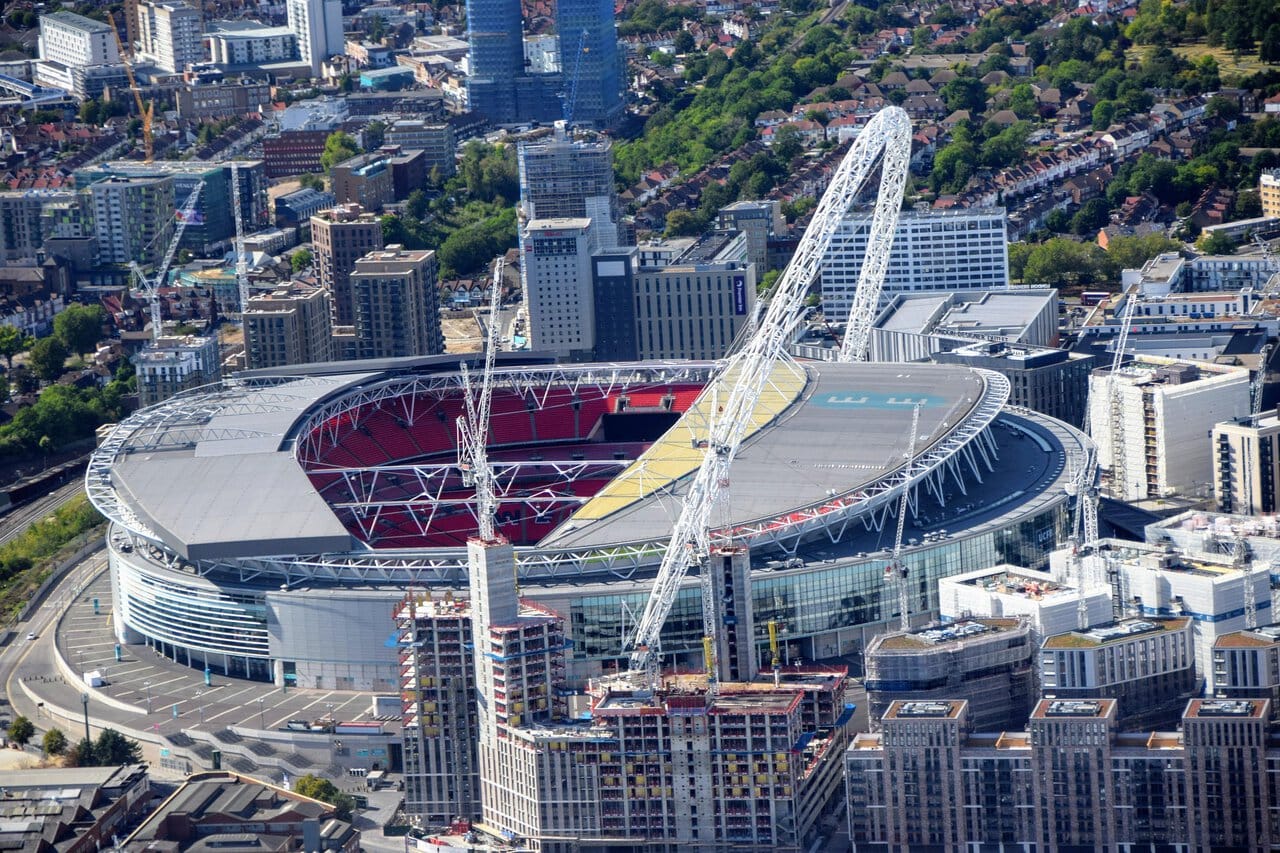
The new Wembley Stadium officially opened in 2007 with a capacity of 90,000, making it the largest sports venue in the United Kingdom. Its most recognisable feature is the spectacular 134-metre-high Wembley Arch, which spans the stadium roof and has become one of modern London’s defining landmarks. Visible for miles across the capital, the arch supports much of the stadium’s roof while creating an instantly recognisable silhouette that has replaced the iconic Twin Towers in the public imagination.
Today, Wembley Stadium remains the home of the England men’s and women’s national football teams and hosts the FA Cup Final, League Cup Final, FA Community Shield, National League Promotion Final and numerous other domestic finals. It has also staged the UEFA Champions League Final, matches during UEFA EURO 2020, regular NFL London Games, world championship boxing, rugby league, rugby union and many of the world’s biggest music tours.
Visiting the stadium today means experiencing not only one of the world’s finest modern sporting arenas but also becoming part of a story that stretches back more than a century. The Wembley Stadium tour brings that history to life by combining exclusive behind-the-scenes access with the fascinating story of how one venue became a symbol of British sport, entertainment and national identity recognised across the world.
Tour Tickets, Prices & Booking Options
The Wembley Stadium tour is available throughout much of the year, although opening days and tour times vary depending on the stadium’s busy calendar of football matches, NFL games, concerts, private events and maintenance work. Because Wembley hosts events almost every week, it’s always advisable to book in advance rather than assuming tours will be available on your preferred date.
Tickets are available for adults, children, students, seniors and families, with discounted family tickets often providing the best overall value. Group bookings are also available, making the tour popular with schools, football clubs, corporate groups and overseas visitors. Booked direct through Wembley’s own tour site, an adult ticket is £28 ($38 / €32) and a child ticket for under-16s is £19 ($25 / €22), while a family ticket covering two adults and two children is £75 ($100 / €86). The shorter Mini Stadium Tour is £15 ($20 / €17) for adults and £10 ($13 / €12) for children, and group rates apply for parties of 25 or more. Exact prices change periodically, so checking the latest availability before travelling is recommended.
Many visitors choose to reserve through trusted attraction partners because they offer useful benefits such as free cancellation up to 24 hours before your visit and reserve now, pay later options. These flexible booking conditions can be particularly valuable if you’re visiting London as part of a longer holiday and your travel plans may change.
Regardless of where you book, the tour includes an English-speaking guide, access to all of the major behind-the-scenes areas, entry to the Crossbar Exhibition and Walk of Legends, and plenty of opportunities to take photographs throughout the experience. Visitors should allow approximately 2 hours for the complete visit, including time to browse the exhibitions and stadium shop before leaving.
For the widest choice of tour times and the latest availability, booking before you arrive at Wembley Stadium is strongly recommended, particularly during weekends, school holidays and the busy summer tourist season.
Book Your Wembley Stadium Tour
Ready to explore one of the world’s most famous sporting venues? Booking your Wembley Stadium tour in advance is the easiest way to secure your preferred date and time, especially during weekends, school holidays and the football season when demand is at its highest.
We recommend booking through GetYourGuide, which offers free cancellation up to 24 hours before your tour, reserve now and pay later, instant mobile tickets and verified customer reviews from thousands of previous visitors. It’s a simple and flexible way to organise your visit while giving you the confidence that your place is reserved before you travel.
Opening Times & Best Time to Visit
The Wembley Stadium tour operates throughout much of the year, although tour availability depends on the stadium’s busy schedule of football matches, NFL games, concerts, corporate events and maintenance work. Unlike many visitor attractions that follow fixed opening hours every day, Wembley regularly adjusts its tour programme around major events, so it’s always worth checking availability before travelling to London.
On days when tours are operating, multiple departures are normally available throughout the day, allowing visitors to choose a time that fits comfortably into a wider sightseeing itinerary. The guided portion of the experience lasts approximately 90 minutes, although visitors should allow around 2 hours in total to enjoy the exhibitions, browse the stadium shop and take photographs throughout the venue without feeling rushed.
One of the best aspects of visiting outside an event day is the opportunity to experience Wembley Stadium completely empty. Without tens of thousands of spectators filling the stands, you can truly appreciate the remarkable scale of the 90,000-seat stadium, admire the engineering of the famous 134-metre-high Wembley Arch, and enjoy uninterrupted views across the pitch from areas normally occupied by players and officials. Many visitors actually prefer the quiet atmosphere of a tour compared with attending a live event, as it allows much more time to absorb the history and architecture of the stadium.
If your travel dates are flexible, weekday tours are often quieter than weekends, particularly outside school holidays. Early morning departures can also provide a more relaxed experience, while afternoon tours tend to be popular with visitors combining Wembley with other attractions in central London.
It’s important to remember that tours may occasionally be amended, shortened or cancelled at short notice if stadium operations require it. High-profile sporting fixtures, concerts, television broadcasts or security requirements can all affect the normal tour route. Booking through an authorised ticket partner ensures you’ll receive the latest updates if any changes occur before your visit.
Getting to Wembley Stadium
One of the reasons Wembley Stadium is such a popular attraction is its excellent transport connections. Located in north-west London, the stadium is served by National Rail, the London Underground, the London Overground, local bus routes and an extensive road network, making it straightforward to reach whether you’re travelling from central London, another part of the United Kingdom or overseas.
For most visitors, public transport is by far the easiest way to arrive. Three different railway stations serve the stadium, each within comfortable walking distance, while direct London Underground services connect Wembley with many of the capital’s major tourist areas. Even on busy event days, the transport network is designed to move large numbers of passengers efficiently before and after matches and concerts.
Travellers arriving from elsewhere in the country also benefit from excellent rail and coach connections. Direct services operate from many towns and cities, while major coach operators regularly run services into London, making Wembley an easy destination even if you don’t live in the capital. If you’re comparing rail journeys before travelling, Omio is an excellent way to check routes, journey times and ticket prices in one place.
Drivers will also find Wembley relatively easy to reach via the M1, M40, North Circular (A406) and several other major routes. However, traffic can become extremely busy on event days, making advance parking reservations highly advisable if you intend to travel by car.
Rail Connections
For visitors travelling from outside London, the easiest railway station is usually Wembley Stadium, served by Chiltern Railways. Direct trains operate from London Marylebone, with journey times of around 10 minutes, making it one of the quickest ways to reach the stadium from central London. The station sits only a short walk from the main entrance, and the route is clearly signposted throughout Wembley Park. On event days Chiltern runs an enhanced timetable with extra trains and additional stops at the stadium, as set out on its Wembley Stadium station page.
Travellers arriving from other parts of the country can connect into London Marylebone or use one of London’s other major terminals before transferring onto the London Underground or local rail network. Depending on where you’re travelling from, changing at stations such as Birmingham Moor Street, Oxford, High Wycombe or Banbury may provide convenient connections via the Chiltern Main Line.
Because rail fares vary considerably depending on the time of day and how far in advance you book, it’s worth comparing tickets before travelling. Omio allows you to compare National Rail services, journey times and ticket prices in one search, making it easier to find the most convenient option while often saving money on advance bookings.

Find Train Tickets for your destination with Omio
Rather than checking individual railway websites for your trip to or from your destination, you can use Omio to compare available train journeys in one place.
Search results make it easier to compare departure times and journey options before choosing the service that works best for your plans.
Scan to open
on your phone

Best if you would rather spend the money on London than on the room. Compare hostels by location and rating.
Search hostelsBest if you have ever given up on a claim. AirHelp checks whether the flight qualifies and pursues it for you.
See the benefitsBest if your room is not ready yet. Left luggage booked in advance, so you are not hunting for a locker.
Check storageLondon Underground & Local Transport
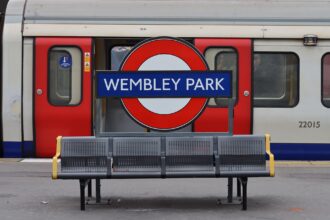
For many visitors, the quickest way to reach Wembley Stadium is via the London Underground. The principal station is Wembley Park, served by both the Jubilee Line and the Metropolitan Line. From the station, it’s an easy 10-minute walk along the wide pedestrian boulevard directly to the stadium, with the impressive Wembley Arch providing a constant landmark to guide you.
A second option is Wembley Central, served by the Bakerloo Line, the Lioness Line on the London Overground and London Northwestern Railway services. Although slightly further away than Wembley Park, the walk to the stadium still takes only around 15 to 20 minutes, passing shops, cafés and restaurants along the way.
Local Transport for London buses also serve the stadium from many parts of north and west London, making Wembley easy to reach without using the Underground. On major event days, additional transport staff are usually on hand to help manage passenger flows, while clear signage throughout the area makes navigation straightforward even for first-time visitors.
Whether you’re arriving by train, Underground or Overground, Wembley is one of the best-connected attractions in London, allowing visitors to combine the stadium tour with many of the capital’s other famous landmarks in a single day.
Coach Travel
If you’re travelling from outside London, coach travel can be one of the easiest and most affordable ways to reach Wembley Stadium, particularly if you’re visiting from a town or city without a direct rail connection. Comfortable coaches, generous luggage allowances and competitive fares make this an increasingly popular option for both domestic and international visitors.
For the Wembley Stadium tour, the simplest approach is usually to travel with National Express to London Victoria Coach Station. From there, you can continue to Wembley Park in around 30 to 40 minutes using the London Underground, making the entire journey straightforward even if you’ve never visited London before. National Express operates services from hundreds of destinations across England, Wales and Scotland, allowing many visitors to reach the capital without changing trains.
If you’re planning to return home on the same day, coach travel can also work out significantly cheaper than rail, particularly when booked several weeks in advance. The generous luggage allowance means there’s no need to worry about carrying souvenirs from the Wembley Stadium Shop, while comfortable reclining seats, onboard Wi-Fi on many services and charging points help make the journey more enjoyable.
Although the standard scheduled coach network is ideal for the stadium tour, it’s worth remembering that National Express also operates dedicated Event Travel coaches for many of Wembley’s biggest occasions. During major England internationals, FA Cup Finals, NFL London Games and headline concerts, direct coaches often run from towns and cities across the country straight to Wembley Stadium, avoiding the need to travel through central London altogether. If you’re planning to return for a match or concert after taking the tour, these direct event coaches can be one of the easiest ways to visit the stadium.
Booking in advance is recommended, particularly during weekends and the school holidays when both coaches and trains can become much busier. Comparing your transport options before travelling also makes it easier to balance journey time against cost, especially if you’re travelling as part of a family or larger group.
Compare National Express Options for your destination
Planning coach travel around your destination? Choose between standard National Express tickets, Coachcard discounts and event services depending on the journey you are making.
Tip: Check Coachcard eligibility first if you are likely to make more than one National Express trip.
Driving & Parking
Although public transport is the recommended way to reach Wembley Stadium, driving remains a practical option for many visitors, particularly families, groups and those travelling from areas with limited rail services. The stadium is well connected to the surrounding road network, with straightforward access from the M1, M40, A406 North Circular, A40 Western Avenue and several other major routes serving north and west London.
Visitors following satellite navigation will find the stadium clearly signposted as they approach Wembley Park, although traffic levels vary considerably depending on the day. On normal tour days, driving is usually straightforward, but if a football match, concert or other major event is taking place, congestion can build quickly around the stadium several hours before kick-off or showtime. Checking the event calendar before travelling is therefore worthwhile, even if you’re only attending the stadium tour.
One advantage of visiting Wembley is the availability of parking. There are more than 3,000 parking spaces across a number of official and privately operated car parks surrounding the stadium, giving visitors plenty of choice. Many spaces can be pre-booked online, which is highly recommended if your visit coincides with a busy event. Pre-booking not only guarantees a space but can often reduce parking costs compared with paying on arrival.
Accessible parking is also available for Blue Badge holders, while several nearby car parks provide electric vehicle charging points. Visitors should always check the latest parking information before travelling, as temporary road closures and traffic management measures may be introduced on major event days.
For most visitors attending only the Wembley Stadium tour, arriving by car outside major event times provides a relatively stress-free experience, while those visiting during busy periods may find National Rail or the London Underground the quicker option.

Accessibility
The Wembley Stadium tour has been designed to be accessible to as many visitors as possible. The stadium itself was built to modern accessibility standards, and the guided tour follows step-free routes wherever practical, allowing visitors with reduced mobility to enjoy the same behind-the-scenes experience as everyone else.
The tour is wheelchair accessible, with lifts providing access between levels and accessible routes leading to the principal tour locations, including the England dressing room, Players’ Tunnel, pitchside areas, Royal Box and many of the exhibition spaces. Accessible toilets are available throughout the stadium, while seating is provided at various points during the tour if visitors need to rest.
Visitors with additional accessibility requirements are encouraged to contact the tour provider before travelling. Stadium staff are experienced in assisting guests with a wide range of mobility, sensory and medical needs and can advise on the most suitable arrangements before your visit. Assistance dogs are also welcome where appropriate.
Because the tour involves walking through several parts of the stadium over approximately 2 hours, comfortable footwear is recommended. Although much of the route is indoors, there are short outdoor sections where weather conditions may vary, so bringing a light waterproof jacket can also be worthwhile.
Facilities
Despite being one of the world’s largest sporting venues, Wembley Stadium is remarkably easy to navigate. Visitors taking the stadium tour have access to a wide range of facilities designed to make their visit comfortable, whether they’re spending a couple of hours exploring behind the scenes or combining the tour with shopping and dining around Wembley Park.
Before or after the tour, many visitors spend time browsing the official Wembley Stadium Shop, which stocks a wide selection of souvenirs, clothing, football memorabilia, gifts and England merchandise. It’s an excellent place to pick up a reminder of your visit, with products ranging from replica shirts to exclusive Wembley-themed collectibles.
Toilets, baby-changing facilities and accessible washrooms are available throughout the visitor areas, while cafés nearby provide hot drinks, sandwiches, snacks and light meals before or after the tour. Free Wi-Fi is available in many parts of the stadium, allowing visitors to upload photographs, access digital tickets or simply stay connected throughout their visit.
The surrounding Wembley Park development also offers an excellent range of restaurants, coffee shops, supermarkets and convenience stores within a short walk of the stadium. Whether you’re looking for a quick coffee before your tour or a full meal afterwards, you’ll find plenty of choice within just a few minutes of the main entrance.
Nearby Attractions
Although the Wembley Stadium tour is a fantastic attraction in its own right, it’s well worth setting aside additional time to explore Wembley Park, which has been transformed into one of London’s fastest-growing entertainment and leisure destinations. Within just a few minutes’ walk of the stadium you’ll find restaurants, cafés, shops, public art installations and several other attractions, making it easy to turn your visit into a full day out.
Immediately opposite the stadium is the popular London Designer Outlet, one of the capital’s best outlet shopping centres. Home to dozens of well-known fashion and lifestyle brands, the centre offers discounted shopping alongside a wide choice of restaurants, cafés and a large cinema complex. Whether you’re looking for sportswear, designer clothing or somewhere to enjoy lunch after your tour, it’s an excellent place to spend a few extra hours before heading home.
Just a short walk away you’ll also find BOXPARK Wembley, one of London’s best-known street food destinations. Built from colourful shipping containers, the venue brings together independent food vendors serving cuisine from around the world, alongside bars, live entertainment and large communal seating areas. On event days the atmosphere is particularly lively, but even during quieter periods it’s an excellent place to relax after exploring the stadium.
Music fans may also wish to visit the nearby OVO Arena Wembley, formerly known as Wembley Arena. Opened in 1934, it has hosted thousands of concerts, comedy shows and sporting events over the decades and continues to attract internationally renowned performers throughout the year. If your visit coincides with an evening performance, it’s perfectly possible to combine the Wembley Stadium tour with a show at the arena.
Beyond the attractions themselves, Wembley Park has become an enjoyable destination simply to walk around. Wide pedestrian streets, public art, landscaped squares and regular outdoor events give the area a very different feel from the industrial surroundings that once dominated this part of north-west London. Visitors looking for somewhere to relax before returning to central London will find plenty of cafés, bars and open spaces within easy walking distance of the stadium.

Where to Stay Near Wembley Stadium
If you’re travelling from outside London or planning to attend another event after your tour, spending a night near Wembley Stadium can make your visit much more relaxed. The surrounding Wembley Park area has seen significant investment in recent years, and visitors can now choose from a wide range of hotels within easy walking distance of the stadium, catering for every budget.
| Hotel | Approximate Distance | Best For |
|---|---|---|
| Hilton London Wembley | 200 metres | Closest luxury hotel overlooking the stadium |
| Novotel London Wembley | 300 metres | Families and leisure travellers |
| ibis London Wembley | 350 metres | Budget-friendly stays |
| Premier Inn London Wembley Park | 500 metres | Excellent value and reliable comfort |
| Holiday Inn London Wembley | 700 metres | Business and family travel |
Staying locally is particularly worthwhile if you’re combining the Wembley Stadium tour with an evening concert, sporting event or a longer sightseeing trip around London. Most nearby hotels are within 5 to 10 minutes’ walk of the stadium and also provide excellent access to Wembley Park Underground Station, allowing you to reach attractions such as Westminster, Buckingham Palace, Covent Garden, Tower Bridge and The British Museum in well under an hour.
Hotel prices naturally increase when major events are taking place at Wembley Stadium or the OVO Arena, so booking well in advance is recommended if your visit coincides with an England international, FA Cup Final, NFL London Game or a major concert.

Search your destination Hotels with Hotels.com
Rather than checking hotel websites individually, you can use Hotels.com to search accommodation across your destination in one place.
It is a practical way to compare different properties, locations and price points before deciding which stay works best for your trip.
Scan to open
on your phone


Rupert’s Handy Travel Tips
Planning a Wembley Stadium tour? Here are a few tips to help you get the most from your visit.
- Book your tour in advance: Tour times regularly sell out during weekends, school holidays and around major sporting events, so reserving early gives you the widest choice.
- Arrive 20 to 30 minutes early: The meeting point is behind the Bobby Moore Statue, giving you plenty of time to check in and browse the surrounding displays before your guide begins.
- Travel by public transport: Wembley Park Station and Wembley Stadium Station are both only a short walk away and are usually much easier than driving through London.
- Leave time after your tour: Explore the London Designer Outlet, enjoy lunch at BOXPARK Wembley or browse the official Wembley Stadium Shop before heading home.
- Bring a fully charged phone or camera: There are fantastic photo opportunities throughout the tour, especially in the Players’ Tunnel, beside the pitch and on the famous Royal Box trophy presentation steps.
Want to meet the reindeer behind our travel tips? Find out more in our page Who is Rupert?.




Frequently Asked Questions
How long does the Wembley Stadium tour take?
The full Wembley Stadium tour lasts approximately 2 hours, with around 90 minutes spent with your guide and additional time to explore the exhibitions and stadium shop.
Can you go inside the England dressing room?
Yes. One of the highlights of the tour is visiting the England dressing room, where you’ll see the area used by the national team before major international matches.
Can you walk through the Players’ Tunnel?
Yes. Visitors follow the same Players’ Tunnel used by footballers, musicians and other performers before emerging beside the pitch.
Is the Wembley Stadium tour wheelchair accessible?
Yes. The tour follows accessible routes throughout the stadium, with lifts available between levels where required.
Can I visit on a match day?
Tour availability depends on the stadium’s event schedule. Tours may not operate on certain match days or concert days, so booking in advance is recommended.
Is photography allowed?
Yes. Photography is encouraged throughout most areas of the tour, making it easy to capture memorable moments in some of Wembley’s most iconic locations.
Where does the tour start?
Tours begin on Level 1 behind the Bobby Moore Statue, where you’ll meet your guide before entering the stadium.
Is parking available?
Yes. There are more than 3,000 parking spaces across official and nearby car parks, although public transport is often the easier option.
Can children take the tour?
Absolutely. The experience is suitable for families and children, with interactive elements and plenty of opportunities to take photographs throughout the visit.
What’s the best way to book?
Booking online before you travel is recommended, particularly during busy periods, as it gives you the best choice of departure times and often includes flexible cancellation options.
Further Reading & Related Guides
If you’ve enjoyed exploring Wembley Stadium, there’s plenty more to discover before your trip. Our Wembley Stadium Events Guide explains everything you need to know about attending England matches, FA Cup Finals, NFL London Games, concerts and other major events at the stadium.
Travelling from elsewhere in the UK? Our National Express Guide covers coach routes and money-saving booking tips, while our Hotel Booking Apps Guide can help you find the best accommodation if you’re staying overnight in London.
International visitors may also find our eSIM Apps Guide useful for staying connected throughout their trip, and our London Underground Guide will help you navigate the capital with confidence.