Reviewed by our editorial team Updated
Why Visit Wembley Stadium?
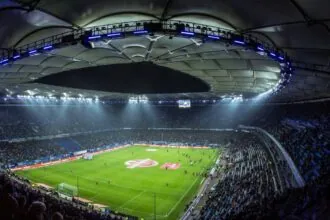
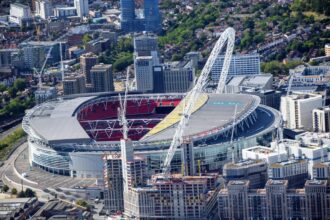
Few sporting venues anywhere in the world can match the history, atmosphere and global reputation of Wembley Stadium. Standing proudly beneath its instantly recognisable 133-metre-high Wembley Arch, the 90,000-seat stadium is the largest sports venue in the United Kingdom and one of the most famous event venues on the planet. Every year, millions of supporters and music fans travel from across the world to experience unforgettable moments inside what is widely regarded as the home of English football.
Unlike many stadiums that host a single club, Wembley Stadium welcomes an extraordinary variety of events throughout the year. It is the home of the England Men’s National Team and the England Women’s National Team, while also staging the Emirates FA Cup Final, FA Community Shield, League Cup Final, National League Promotion Final and numerous other domestic cup finals. Beyond football, Wembley regularly hosts NFL London Games, world championship boxing, rugby league, rugby union and many of the world’s biggest concerts.
Music has become just as much a part of Wembley’s identity as sport. Over recent years the stadium has welcomed artists including Taylor Swift, Coldplay, Ed Sheeran, Beyoncé, Oasis, Harry Styles, Foo Fighters and countless other global superstars. For many performers, selling out Wembley Stadium represents the pinnacle of a touring career, while fans often travel hundreds of miles simply to experience a concert beneath the famous arch.
Attending an event at Wembley Stadium is unlike visiting a typical sports venue. With tens of thousands of supporters arriving by train, London Underground, coach and car, careful planning makes a huge difference to your day. Choosing the right station, arriving at the best time, understanding the security procedures and knowing where to eat or stay can transform your visit from stressful to seamless.
This guide has been designed to help you plan every aspect of your visit. Whether you’re attending an England international, the FA Cup Final, an NFL London Game, a sold-out concert or another major sporting event, you’ll find practical advice covering tickets, transport, National Express event coaches, parking, hotels, accessibility, security, food and drink, and everything else you need to enjoy one of the greatest sporting and entertainment venues in the world.
London transport status
Live from Transport for London.
Powered by TfL Open Data
Live service status for the London Underground, DLR, London Overground, Elizabeth line, London Trams, river buses and the cable car, updated continuously from Transport for London.
Wembley Stadium at a Glance
| Feature | Information |
|---|---|
| Location | Wembley Park, London |
| Capacity | 90,000 |
| Opened | 2007 |
| Replaced | Original Empire Stadium (Twin Towers) |
| Home Teams | England Men’s & England Women’s National Teams |
| Main Events | Football, concerts, NFL, boxing, rugby and major sporting finals |
| Nearest Underground Station | Wembley Park |
| Nearest National Rail Station | Wembley Stadium |
| Alternative Station | Wembley Central |
| Accessibility | Fully accessible venue |
| Parking | More than 3,000 spaces nearby |
| Payment | Largely cashless |
| Security | Airport-style bag and ticket checks |
Browse hotels and accommodation for your visit to London.
View staysBrowse apartments, homes and self-catering accommodation in London.
Browse rentalsCompare hotel deals in London from multiple booking sites.
Compare pricesFootball at Wembley Stadium
For football supporters, Wembley Stadium represents the pinnacle of the English game. Every season the stadium hosts many of the country’s biggest fixtures, attracting supporters from every corner of the United Kingdom and far beyond. Simply walking through the turnstiles is a memorable experience, but attending one of Wembley’s major football occasions is something many fans regard as a lifelong ambition.
The stadium serves as the permanent home of both the England Men’s National Team and the England Women’s National Team, hosting international fixtures throughout the year including FIFA World Cup qualifiers, UEFA European Championship qualifiers, friendly matches and major tournament fixtures whenever England plays at home. The atmosphere during international matches is unlike anywhere else in the country, with supporters filling all 90,000 seats beneath the famous Wembley Arch.
Domestic football is equally important to Wembley’s calendar. The stadium hosts the prestigious Emirates FA Cup Final, one of the oldest and most celebrated cup competitions in world football, along with the FA Community Shield, the League Cup Final and the National League Promotion Final. Wembley also stages the Championship Play-Off Final, League One Play-Off Final and League Two Play-Off Final, often described as some of the richest and most dramatic matches in football because of what promotion means financially and emotionally for the competing clubs.
Over the years, Wembley Stadium has also welcomed the UEFA Champions League Final, international youth tournaments and special charity matches, ensuring its reputation extends far beyond domestic football. Every event adds another chapter to a history that stretches back more than a century, making Wembley far more than simply another football ground.
For supporters attending one of these fixtures, planning ahead is essential. Major football matches regularly attract crowds approaching the stadium’s full 90,000 capacity, meaning public transport, National Express event coaches, nearby hotels and even restaurants around Wembley Park become exceptionally busy. Booking travel well in advance is strongly recommended.
Concerts at Wembley Stadium
Although Wembley Stadium is synonymous with football, it has also established itself as one of the world’s greatest concert venues. Performing beneath the famous Wembley Arch is regarded as a career milestone by many artists, and every summer the stadium hosts some of the biggest music events anywhere in Europe.
Recent years have seen sold-out performances by Taylor Swift, Coldplay, Ed Sheeran, Beyoncé, Harry Styles, Oasis, Foo Fighters and numerous other international artists. Concerts regularly attract audiences of 90,000 people, creating an atmosphere unlike almost any other venue in the United Kingdom. Massive production stages, spectacular lighting displays and world-class sound systems transform the football stadium into one of Europe’s premier live music destinations.
Unlike football matches, concert layouts vary depending on the performer. Some events feature a large standing area on the pitch alongside reserved seating, while others use different stage configurations that affect sightlines throughout the stadium. Ticket prices also vary considerably depending on seating location, hospitality packages and the popularity of the artist, making early booking particularly important for major tours.
Most concerts begin during the early evening, often with one or more support acts before the headline performance. Because of local licensing conditions, events usually finish before late evening, allowing visitors time to make their way back to London Underground, National Rail and National Express services. Nevertheless, tens of thousands of people leave the stadium at the same time, so allowing extra time for your journey home is always advisable.
For visitors travelling from outside London, combining a concert with an overnight stay nearby can often create a much more enjoyable experience. Hotels around Wembley Park fill quickly whenever internationally renowned artists perform, making early accommodation bookings just as important as securing your concert tickets.
NFL, Boxing & Other Major Events
While football remains the biggest draw, Wembley Stadium has evolved into one of the world’s premier venues for major sporting and entertainment events. Its huge 90,000-seat capacity, outstanding transport links and modern facilities make it the natural choice for occasions that attract spectators from across the United Kingdom, Europe and beyond. Throughout the year, the stadium hosts an impressive calendar that extends far beyond the traditional football season.
One of the biggest annual attractions is the NFL London Games. Every autumn, Wembley Stadium welcomes regular-season National Football League fixtures, bringing some of America’s biggest teams to London. Thousands of supporters travel from across Europe and North America to attend these games, transforming Wembley Park into one of the most vibrant sporting destinations in the country. Tailgate-style entertainment, fan zones and merchandise stalls create a unique atmosphere that differs noticeably from football matchdays.
The stadium has also staged some of the biggest boxing events in modern history. Heavyweight world title fights featuring names such as Anthony Joshua have attracted sell-out crowds, demonstrating that Wembley is capable of hosting far more than football. The sight of a boxing ring positioned beneath the towering Wembley Arch has become one of the defining images of British sport in recent years.
Rugby League and Rugby Union also have a long association with Wembley. The stadium regularly hosts major domestic finals, including the Challenge Cup Final, while international rugby fixtures have also taken place here. The flexibility of the stadium allows it to be transformed quickly between different sports, ensuring the playing surface and spectator experience remain first class regardless of the event.
Beyond sport, Wembley Stadium occasionally hosts national celebrations, charity events and other large-scale entertainment productions that simply wouldn’t fit inside most other UK venues. Whatever the occasion, visitors can expect the same excellent facilities, straightforward transport connections and unforgettable atmosphere that have made Wembley one of the world’s great event destinations.
Buying Tickets Safely
Demand for events at Wembley Stadium is often exceptionally high, particularly for England internationals, the FA Cup Final, NFL London Games and concerts by internationally renowned artists. Many of the biggest events sell out within hours, making it important to buy tickets from trusted sources and avoid the disappointment of fraudulent or invalid tickets.
The safest option is always to purchase directly through the official ticketing partner for the event. Football matches are typically sold through organisations such as The Football Association, participating clubs or their authorised ticket partners, while concerts are usually handled by major ticket agencies including Ticketmaster and the official promoter. Purchasing directly from authorised sellers ensures your tickets remain valid and gives you access to customer support if event details change.
Most events now use mobile tickets, allowing spectators to enter the stadium using a smartphone rather than a printed ticket. Downloading your tickets before leaving home is recommended, particularly if you’re travelling from overseas or expect mobile data coverage to be busy around the stadium before kick-off or showtime. Ensuring your phone is fully charged before arriving can also help avoid unnecessary stress at the turnstiles.
If an event appears to have sold out, be extremely cautious when purchasing tickets from unofficial resale websites or private sellers. Fraudulent tickets unfortunately remain common for major sporting occasions and concerts. If you choose to buy resale tickets, always use an authorised resale platform approved by the event organiser, as these provide significantly greater protection than buying through social media or online marketplaces.
Visitors looking for a premium experience may also wish to consider hospitality packages, which often include premium seating, lounge access, food and drink, and dedicated entrances. Although more expensive than standard tickets, hospitality can offer excellent value for special occasions, particularly for corporate entertaining or celebrating milestone events.
Seating Guide
Choosing the right seat can make a significant difference to your experience at Wembley Stadium, particularly given its enormous 90,000-seat capacity. Fortunately, the stadium has been designed with excellent sightlines throughout, meaning there are very few genuinely poor seats regardless of the event you’re attending.
The Lower Tier places spectators closest to the action and is often the preferred choice for football supporters wanting to experience the atmosphere at pitch level. During concerts, sections of the lower tier provide excellent views of the stage, particularly when seated opposite the performance area.
The Club Wembley level offers a more premium experience, combining excellent views with wider seats, hospitality facilities and access to exclusive lounges depending on your ticket type. Business travellers and visitors celebrating special occasions often choose this level for its additional comfort and shorter queues.
The Upper Tier provides spectacular panoramic views across the entire stadium. While further from the pitch or stage, the elevated position offers an impressive perspective of the venue’s scale and is often particularly popular with photographers. Modern stadium design ensures that even the highest seats maintain excellent visibility.
Concert layouts differ from football matches because many events include a standing area on the pitch. Depending on the stage design, certain seating blocks may have restricted views, particularly if large video screens or production equipment are installed. Always check the seating plan provided when booking your tickets so you understand exactly where your seats are located.
If you’re attending your first event at Wembley Stadium, don’t worry too much about finding the “perfect” seat. The combination of excellent stadium design, enormous video screens and outstanding acoustics means that the overall experience is impressive from almost every part of the venue.
Security, Bag Policy & Entry
Like all major international sports venues, Wembley Stadium operates comprehensive security procedures to ensure every visitor enjoys a safe experience. Whether you’re attending a football match, concert or other event, it’s important to allow sufficient time to pass through security before entering the stadium.
Before reaching the turnstiles, spectators should expect airport-style security checks, including ticket verification and bag inspections. Security staff may also carry out additional screening where necessary, so arriving well before the advertised start time is strongly recommended. Leaving your arrival until the last minute can result in unnecessary queues, particularly for sold-out events.
Bag policies vary slightly depending on the event, but in general visitors are encouraged to bring only small bags where possible. Large luggage and oversized backpacks are normally prohibited, and there are very limited storage facilities available near the stadium. Checking the specific event guidance before travelling is always advisable, particularly if you’re attending directly from an airport or railway station.
Certain items are not permitted inside Wembley Stadium, including professional camera equipment without accreditation, drones, fireworks, laser pens, glass bottles, alcohol purchased outside the venue and any item considered dangerous by security staff. Rules may also vary between football matches and concerts, so reviewing the latest event information before travelling can help avoid delays.
Once inside, stewards and information staff are positioned throughout the stadium to help visitors find their seats, answer questions and assist anyone requiring additional support. Following their guidance helps ensure the arrival process runs smoothly for everyone attending the event.
Search routes and flight options for your trip to London.
Search flightsChoose an Airalo eSIM and arrange mobile data before you arrive.
Browse eSIMsArrange a private airport pickup for your trip to London.
Check transfersFood & Drink Inside Wembley Stadium
Attending an event at Wembley Stadium is about much more than simply watching the action. Whether you’re arriving for an England international, a Taylor Swift concert, the FA Cup Final or an NFL London Game, you’ll find an extensive range of food and drink outlets throughout the stadium designed to cater for crowds of up to 90,000 spectators.
Concourse areas on every level offer a wide variety of refreshments, from freshly prepared burgers, hot dogs, pizzas and fish and chips to sandwiches, pastries and lighter snacks. Vegetarian and vegan options are widely available, while many kiosks also cater for visitors with common dietary requirements. Although menus vary slightly depending on the event, the overall choice is significantly better than many traditional sports venues.
A selection of bars and licensed outlets operate throughout the stadium, serving beer, wine, spirits, soft drinks and hot beverages before the event and during designated intervals where appropriate. Coffee, tea and cold drinks are available from numerous kiosks, making it easy to grab refreshments without walking far from your seating area.
Like most major venues, prices are generally higher than you would expect to pay elsewhere in London. Many experienced visitors therefore choose to eat beforehand at one of the excellent restaurants around Wembley Park, using the stadium kiosks mainly for drinks or snacks during the event. This can also help avoid the busiest queues, which typically develop immediately before kick-off, before headline acts and during half-time or interval breaks.
Wembley Stadium is now largely a cashless venue, with contactless payment, credit cards, debit cards and mobile payment services widely accepted throughout the stadium. Bringing a contactless payment method is therefore strongly recommended, as it speeds up purchases and reduces waiting times.
If you have specific dietary requirements or food allergies, don’t hesitate to speak to members of staff. Vendors are generally able to provide ingredient information and advise which menu items are most suitable.
How to Pay for Public Transport to Wembley
Contactless pay as you go is usually the simplest way to travel to Wembley. Use a contactless bank card, phone, smartwatch or Oyster card on the Underground, London Overground and most National Rail services within London’s pay-as-you-go area.
For rail and Underground journeys, touch in at the start and touch out at the end using exactly the same card or device. A physical bank card and that same card stored in Apple Pay or Google Pay count as different devices. On London buses you only touch in when boarding and do not touch out.
Paper singles and returns can still be bought from ticket machines at Tube and National Rail stations, but TfL says pay as you go is normally cheaper. If you use Chiltern Railways to Wembley Stadium station, contactless pay as you go is accepted where the journey is within the supported London area. See TfL’s official pay-as-you-go guide for the current rules.
Getting to Wembley Stadium
One of the reasons Wembley Stadium successfully hosts some of the world’s biggest sporting and entertainment events is its outstanding transport infrastructure. Unlike many large venues located on the outskirts of cities, Wembley benefits from excellent connections by National Rail, the London Underground, London Overground, coach and road, making it remarkably easy to reach from almost anywhere in the United Kingdom. Before a major event, check the stadium’s official getting-to-Wembley guidance for current station, parking and crowd-management information.
For the vast majority of visitors, public transport is the quickest and least stressful option. Three separate railway stations serve the stadium, while multiple London Underground lines provide direct services from central London throughout the day. Even when 90,000 spectators are arriving for a major event, carefully managed pedestrian routes and frequent train services help move crowds efficiently before and after kick-off or the headline performance.
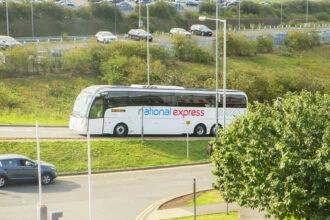
Visitors travelling from outside London have several options. Many choose to arrive by National Rail, connecting through one of London’s major stations before continuing to Wembley. Others prefer the convenience of National Express coach services, particularly when travelling from towns and cities without direct rail links. During many major football matches and concerts, National Express Event Travel operates dedicated coaches that travel directly to Wembley, avoiding the need to change transport in central London altogether.
Drivers can also reach the stadium relatively easily via the M1, M40, A40 and A406 North Circular, although heavy congestion should be expected on major event days. Unless you have already pre-booked parking, public transport is generally the better option, particularly for sold-out events where traffic management measures are often introduced around Wembley Park.
Whichever method you choose, arriving 60 to 90 minutes before the advertised start time is highly recommended. This provides plenty of time to pass through security, find your entrance and enjoy the atmosphere around the stadium before the event begins.

Rail Connections
Travelling by train is one of the easiest ways to reach Wembley Stadium, particularly for visitors coming from outside London. Three stations serve the area, each offering slightly different routes and advantages depending on where you’re travelling from.
The closest mainline station is Wembley Stadium, served by Chiltern Railways. Direct trains operate from London Marylebone, with the journey taking only around 10 minutes. The station sits approximately five minutes’ walk from the stadium, making it an excellent choice for visitors arriving from central London or connecting through the Chiltern Main Line from destinations including Birmingham, Warwick, Banbury, Oxford and High Wycombe.
A second option is Wembley Central, which is served by London Northwestern Railway alongside Underground and Overground services. This station is around 15 to 20 minutes’ walk from the stadium and can be particularly convenient for travellers arriving from Milton Keynes, Watford, Northampton and other destinations along the West Coast Main Line.
Because thousands of people leave Wembley immediately after major events, queues for trains are perfectly normal. Station staff operate carefully managed crowd-control systems to keep passengers moving safely, and although you may need to wait briefly before boarding, services operate extremely frequently to clear spectators as quickly as possible.
Before travelling, it’s worth comparing rail routes and advance fares using Omio. The platform allows you to compare National Rail services, journey times and ticket prices in one search, helping you choose the most convenient route while often saving money through advance bookings.

Organise Your your destination Train Trip with Omio
You can use Omio to research train travel for your destination, check schedules and compare ticket options before making your booking.
For journeys involving connections or multiple operators, having the available services together can make it much easier to work out your itinerary.
Scan to open
on your phone

London Underground
For many visitors, the London Underground is the quickest and most convenient way to reach Wembley Stadium. Multiple Underground lines serve the area, providing direct connections with many of London’s best-known tourist attractions, railway stations and hotels.
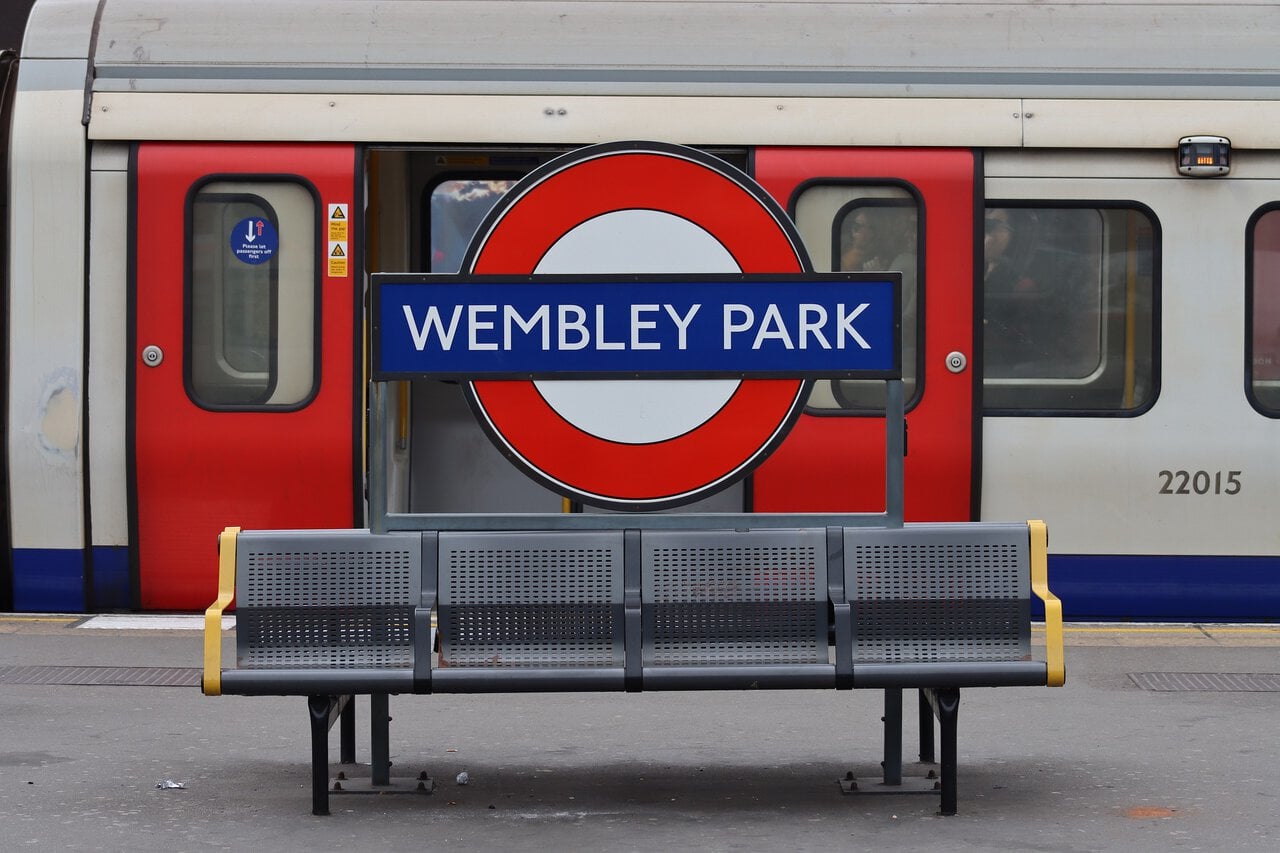
The principal station is Wembley Park, served by both the Jubilee Line and the Metropolitan Line. From here, it’s approximately a 10-minute walk to the stadium along a wide pedestrian boulevard, with the impressive Wembley Arch visible almost the entire way. The route is fully signposted and becomes one of the most atmospheric walks in London on major event days as thousands of supporters and concertgoers make their way towards the stadium together.
Another option is Wembley Central, served by the Bakerloo Line, the Lioness Line on the London Overground and London Northwestern Railway. Although slightly further away, the walk takes only 15 to 20 minutes and passes numerous cafés, restaurants and convenience stores.
The Jubilee Line provides particularly useful connections from London Bridge, Waterloo, Westminster, Green Park, Bond Street and Canary Wharf, while the Metropolitan Line offers fast services from King’s Cross St Pancras, Baker Street and north-west London. This makes Wembley easy to reach whether you’re staying in central London or arriving by Eurostar at St Pancras International.
Following major events, Transport for London operates an extensive crowd-management system to keep passengers moving safely. Queues outside Wembley Park Station are common after sold-out matches and concerts, but trains run at very high frequencies and the system is designed to move tens of thousands of people away from the stadium as efficiently as possible.
Wembley Public Transport at a Glance
| Option | Useful Stop | Typical Final Leg | Best For |
|---|---|---|---|
| Underground | Wembley Park | About 10 minutes along Olympic Way | Most central London journeys |
| Chiltern Railways | Wembley Stadium | About 10 minutes on foot | Marylebone and Chiltern corridor |
| Bakerloo / Overground | Wembley Central | About 15 to 20 minutes on foot | Euston, Watford and west London |
| Local bus | Wembley Park / Wembley Central area | Varies with event road closures | Local north-west London journeys |
| Taxi | Engineers Way event-day rank | Short walk to stadium | Groups and mobility needs outside peak crowd periods |
Wembley Park is the main station for most visitors. It is served by both the Metropolitan Line and Jubilee Line. The Metropolitan Line is particularly fast from Baker Street and King’s Cross St Pancras, while the Jubilee Line gives direct links from Bond Street, Westminster, Waterloo, London Bridge and Canary Wharf. Wembley Stadium Station is served by Chiltern Railways and is only one stop from London Marylebone, with the stadium quoting a journey of around nine minutes from Marylebone.
Wembley’s official transport guidance lists all three stations, current local bus routes, the event-day taxi rank, bicycle parking and event coach information. It is worth checking again on the day because individual fixtures can use different pedestrian routes and station-management plans.
Compare hostels and budget-friendly accommodation around London.
Browse hostelsFlying to London? Get fast compensation payouts, eligible lounge benefits and expert help when flights go wrong.
See AirHelp+ benefitsArriving before check-in or leaving later? Store your luggage and make more of your time in London.
Store your bagsGetting to Wembley from London’s Main Stations
From Marylebone, Chiltern Railways to Wembley Stadium is usually the fastest mainline-station connection, taking around nine minutes on the train before the short walk to the stadium. From King’s Cross St Pancras, the Metropolitan Line from King’s Cross St Pancras to Wembley Park is normally the cleanest route; allow around 25 to 35 minutes station to stadium once the walk along Olympic Way is included.
From Waterloo or London Bridge, the Jubilee Line runs directly to Wembley Park. A sensible planning window is around 35 to 45 minutes from Waterloo and 40 to 50 minutes from London Bridge once the stadium walk is included. From Paddington, allow roughly 35 to 45 minutes, usually changing onto the Metropolitan or Jubilee network through Baker Street or another central interchange.
From Euston, Wembley Central can be reached on London Overground services on relevant timetables, or you can walk to Euston Square and use the Metropolitan Line towards Wembley Park. Allow around 35 to 45 minutes overall on a major event day rather than planning around the shortest journey shown by a normal-day journey planner.
Arriving from London’s Airports
Heathrow is best approached using the Elizabeth Line into central London and then changing for the Jubilee or Metropolitan Line; allow around 60 to 75 minutes to the stadium. Gatwick works well via Thameslink to London Bridge followed by the Jubilee Line, with around 65 to 80 minutes a sensible planning window.
Luton Airport can be particularly convenient via the rail connection to West Hampstead, where you can change for the Jubilee Line to Wembley Park; allow around 55 to 70 minutes. Stansted normally requires a journey into central London before connecting west towards Wembley, so allow around 75 to 90 minutes. These are planning windows rather than guaranteed times and should be increased if your flight lands close to kick-off.
Local Buses, Taxis and Cycling
Local bus routes serving the Wembley area include 18/N18, 83/N83, 92, 182, 206, 223, 297 and 483. Routes 83, 92 and 182 are particularly useful around Wembley Park and Wembley Central, although buses can be slower than rail when roads are closed or congested for a major event.
For taxis, Wembley operates an event-day licensed taxi rank on Engineers Way next to Wembley Arena. London black cabs are the most straightforward street-hail option, while Uber, Bolt and FREENOW are common app-based alternatives. Immediately after a 90,000-capacity event, however, walking to the official rank or beyond the immediate road-closure area is normally more reliable than requesting a car at the stadium gates.
Cycling is also supported. Wembley provides bicycle parking at street level on the north-east side of the stadium under the concourse. For visitors who need accessible transport, Wembley also operates a complimentary wheelchair-accessible shuttle between Wembley Park Station and the stadium area on event days, with operating hours varying by event.

Wembley Stadium at EURO 2028
Wembley will be the centrepiece of UEFA EURO 2028 and will stage eight matches. The schedule includes four group games, a quarter-final, both semi-finals and the final on 9 July. If England qualify directly, two of their three group-stage matches are scheduled at Wembley.
| Date | Fixture |
|---|---|
| 11 June 2028 | Group C: C1 vs C2 |
| 14 June 2028 | Group B: B1 vs B3 |
| 16 June 2028 | Group D: D1 vs D3 |
| 19 June 2028 | Group B: B4 vs B1 |
| 30 June 2028 | Quarter-final |
| 4 July 2028 | Semi-final |
| 5 July 2028 | Semi-final |
| 9 July 2028 | EURO 2028 Final |
UEFA has confirmed the tournament schedule, but the detailed event-day transport plan will be published closer to 2028. The underlying station choices will remain Wembley Park, Wembley Stadium and Wembley Central, with crowd-control arrangements determining which is quickest for a particular match. For the complete tournament picture, including all nine stadiums and the rail, coach and ferry links between host cities, see our EURO 2028 Travel Guide.
National Express Event Coaches
For many visitors travelling from outside London, one of the easiest ways to reach Wembley Stadium is by using National Express Event Travel. Unlike the company’s standard scheduled coach services, these dedicated event coaches are organised specifically for major occasions at Wembley, allowing passengers to travel directly to the stadium from towns and cities across England and Wales without having to change trains or navigate London’s transport network.
Dedicated coaches regularly operate for many of Wembley’s biggest events, including England internationals, the Emirates FA Cup Final, the League Cup Final, NFL London Games, major boxing events and some of the stadium’s largest concerts. Depending on the event, departures may be available from dozens of locations nationwide, making Wembley far more accessible for supporters who live well outside the capital.
One of the biggest advantages of using National Express Event Travel is convenience. Rather than driving into London, searching for expensive parking or negotiating busy railway stations after the event, passengers simply board their coach near home and travel directly to Wembley. After the event finishes, the coach waits nearby before returning passengers to their original departure point. This removes much of the stress associated with travelling to one of the busiest venues in Europe.
Coach travel can also represent excellent value, particularly for families or groups. Once fuel costs, London parking charges, congestion and rail fares are taken into account, travelling by coach is often surprisingly competitive. Comfortable reclining seats, generous luggage allowances and onboard facilities on many services make the journey relaxing, particularly for visitors travelling several hours to attend an event.
Because National Express Event Travel operates only when demand exists, routes and departure points vary depending on the specific event. Some concerts and football matches have a much larger coach network than others, while exceptionally popular occasions may see additional departures added closer to the event date. Booking early is recommended, especially for high-profile fixtures and concerts that attract visitors from across the country.
If you’re travelling from outside London and want one of the simplest ways to reach Wembley Stadium, National Express Event Travel is well worth considering. It removes the hassle of changing trains, eliminates concerns about parking and allows you to relax both before and after the event while someone else does the driving.
Find National Express Travel for your destination
For journeys involving your destination, National Express offers a straightforward way to book UK coach travel and check available discounts.
Tip: Frequent coach users should compare the Coachcard price against the savings available on their planned journeys.
Driving & Parking
Although public transport is strongly recommended for most visitors, driving to Wembley Stadium remains a practical option, particularly for families, groups and those travelling from areas with limited rail or coach services. The stadium enjoys excellent road connections via the M1, M40, A40 Western Avenue, A406 North Circular and other major routes, making it relatively straightforward to reach from much of southern England.
The challenge is rarely reaching Wembley: it’s dealing with the volume of traffic generated by a 90,000-capacity stadium. On major England matches, FA Cup Finals, NFL London Games and headline concerts, roads around Wembley Park become extremely busy several hours before the event. Temporary road closures, traffic management measures and restricted parking zones are often introduced to keep vehicles moving safely. Brent Council’s Wembley event day parking restrictions set out which streets become permit-only, typically from 8am to midnight on the day of an event.
Visitors intending to drive should therefore pre-book parking whenever possible. More than 3,000 parking spaces are available across official stadium car parks and privately operated facilities in the surrounding area, but demand regularly exceeds supply for the biggest events. Reserving a parking space before travelling not only guarantees somewhere to leave your vehicle but can often reduce costs compared with paying on the day.
Drivers requiring accessible parking will find designated Blue Badge spaces available, although these are limited and should also be reserved in advance. Several nearby car parks now provide electric vehicle charging points, making Wembley increasingly convenient for EV owners attending longer events.
If you’re being dropped off rather than parking, it’s worth agreeing a meeting point away from the immediate stadium area after the event. Traffic restrictions and road closures can make collecting passengers directly outside the stadium extremely difficult immediately after the final whistle or encore.
For visitors travelling from elsewhere in the UK, combining National Express Event Travel, National Rail or the London Underground is often significantly easier than driving, particularly when attending sold-out events.

Leaving Wembley After an Event
The experience doesn’t end when the final whistle blows or the last song finishes. With 90,000 spectators leaving the stadium at roughly the same time, Wembley Stadium operates one of the largest crowd-management operations in the United Kingdom. While thousands of people naturally create queues, the entire area has been carefully designed to move visitors away from the stadium safely and efficiently.
Immediately after an event, stewards direct spectators along designated pedestrian routes towards Wembley Park Station, Wembley Stadium Station and Wembley Central Station. Temporary barriers, one-way walking systems and managed queueing areas help prevent overcrowding while allowing trains to depart continuously throughout the evening. Although you may spend a short time in a queue, services are extremely frequent and most visitors find themselves moving steadily rather than standing still.
Passengers using National Express Event Travel should follow the instructions provided with their booking confirmation. Coaches normally depart from designated collection areas close to the stadium, with staff available to direct passengers to the correct vehicle. Because coaches wait until the event has finished, there is generally no need to rush out immediately unless instructed otherwise.
Taxi demand increases dramatically after major events, and journey prices may be significantly higher than normal because of traffic and demand. Visitors hoping to use ride-hailing services should also expect longer waiting times and designated pick-up locations away from the stadium itself.
If you’re not in a hurry, one of the best strategies is to spend 30 to 60 minutes around Wembley Park after the event. Many restaurants, cafés and bars remain open, allowing crowds to disperse before you begin your journey home. By delaying your departure slightly, you’ll often experience shorter queues, less crowded trains and a much more relaxed end to your visit.
Hotels Near Wembley Stadium
If you’re travelling a long distance or attending an evening event, staying overnight near Wembley Stadium can make your visit considerably more enjoyable. Instead of worrying about catching the last train home or sitting in post-event traffic, you can simply walk back to your hotel and continue your journey the following morning.
The area around Wembley Park has undergone a remarkable transformation in recent years and now offers accommodation ranging from budget hotels to full-service international brands. Many properties are located within five to ten minutes’ walk of the stadium, making them particularly convenient for concerts, football matches and NFL games.
| Hotel | Approximate Distance | Best For |
|---|---|---|
| Hilton London Wembley | 200 metres | Premium stays and stadium views |
| Novotel London Wembley | 300 metres | Families and leisure travellers |
| ibis London Wembley | 350 metres | Budget-conscious visitors |
| Premier Inn London Wembley Park | 500 metres | Excellent value |
| Holiday Inn London Wembley | 700 metres | Business and family stays |
Hotel demand increases sharply whenever England, the FA Cup Final, NFL London Games or major artists perform at Wembley, with many nearby properties selling out weeks or even months in advance. Booking your accommodation as soon as you’ve secured your event tickets is therefore highly recommended.
For visitors wanting to explore more of the capital, staying near Wembley also provides excellent access to central London via the Jubilee Line and Metropolitan Line, allowing attractions such as Buckingham Palace, Westminster Abbey, Tower Bridge and the British Museum to be reached quickly the following day.

Explore Places to Stay in your destination
You can use Hotels.com to browse accommodation in your destination and compare hotels across different areas of the city or region.
It is especially useful when you are deciding whether to stay near the main sights, transport hubs or in a quieter part of the destination.
Scan to open
on your phone

Accessibility
Wembley Stadium has been designed to welcome as many visitors as possible, and it is widely regarded as one of the most accessible major sporting venues in Europe. Whether you’re attending an England international, an FA Cup Final, an NFL London Game or a sold-out concert, extensive facilities are available to help ensure every visitor enjoys a safe and comfortable experience.
The stadium offers a large number of wheelchair-accessible viewing positions distributed throughout the venue, allowing disabled supporters to enjoy excellent views rather than being restricted to a single area. Many of these locations also include dedicated spaces for personal assistants or companions, ensuring families and friends can enjoy the event together.
Throughout Wembley Stadium, visitors will find step-free routes, lifts, accessible toilets, lowered service counters and clearly signposted facilities. Accessible entrances are located around the stadium, while trained stewards are available before, during and after events to provide assistance wherever required. Visitors with mobility requirements are encouraged to contact the stadium or event organiser before travelling so that any additional support can be arranged in advance.
Support is also available for visitors with hidden disabilities, hearing impairments and visual impairments. Depending on the event, facilities may include hearing enhancement systems, accessible information services and dedicated customer support teams. Assistance dogs are welcome where appropriate, although it’s always advisable to check the specific arrangements before travelling, particularly for concerts or special events.
Because crowds can be extremely large before and after major events, arriving slightly earlier than recommended can make the experience considerably more relaxed for visitors who require additional assistance. Wembley staff are highly experienced at managing large crowds while ensuring accessibility remains a priority, helping visitors enjoy one of the world’s great sporting venues with confidence.

Things to Do Before the Event
Arriving early is one of the easiest ways to improve your visit to Wembley Stadium. Rather than rushing through security shortly before kick-off or the headline act, many visitors spend several hours exploring Wembley Park, which has developed into one of London’s most impressive entertainment districts. With shops, restaurants, public art and family attractions all within a few minutes’ walk of the stadium, it’s easy to turn your event into a full day out.
The most popular destination is the London Designer Outlet, located directly opposite the stadium. Home to more than 70 shops, together with restaurants, cafés and a large cinema, it’s an ideal place to browse before the event begins. Whether you’re looking for sportswear, designer fashion, gifts or simply somewhere comfortable to enjoy lunch, the outlet offers plenty of choice.
Food lovers should also consider visiting BOXPARK Wembley, one of London’s best-known street food venues. Its collection of independent food vendors serves everything from gourmet burgers and pizza to Asian cuisine, Mexican dishes and desserts, while bars and communal seating create a lively atmosphere throughout the day. On major event days, BOXPARK often hosts DJs, live entertainment and fan gatherings, making it one of the busiest places in Wembley Park before kick-off.
Just a short walk away is the historic OVO Arena Wembley, another of London’s iconic entertainment venues. Open since 1934, the arena regularly hosts concerts, comedy shows, sporting events and family entertainment. If timings work in your favour, it’s possible to combine a visit to Wembley Stadium with another event in the surrounding entertainment district.
The streets around Wembley Park have also become an attraction in their own right. Public art installations, landscaped squares, outdoor seating, cafés and wide pedestrian boulevards create a welcoming environment where supporters and concertgoers gather before events. During major football matches you’ll find fans wearing club colours from across the country, while concert days bring an entirely different atmosphere as thousands of music fans arrive to enjoy one of the world’s biggest live venues.
Take the Wembley Stadium Tour
If you’re arriving in London a day before your event or extending your stay afterwards, one experience well worth adding to your itinerary is the Wembley Stadium Tour. While attending a match or concert allows you to enjoy the atmosphere from the stands, the guided tour provides exclusive access to areas that are completely off-limits during live events.
You’ll step inside the England dressing room, walk through the famous Players’ Tunnel, stand beside the pitch, visit the press conference room and climb the iconic Royal Box steps, where countless trophies have been lifted over the years. The experience also includes the fascinating Crossbar Exhibition and Walk of Legends, celebrating more than a century of sporting history at Wembley.
Many visitors combine the tour with a football match or concert to experience both sides of the stadium. Seeing Wembley Stadium completely empty gives you a unique appreciation of its remarkable scale and architecture, while attending a live event lets you experience the incredible atmosphere created by 90,000 spectators beneath the famous Wembley Arch.
For full details, practical visitor information and booking advice, see our dedicated Wembley Stadium Tour Guide, where we explain exactly what to expect and how to make the most of your visit

Rupert’s Handy Travel Tips
Heading to an event at Wembley Stadium? Here are a few simple tips that can make your day much smoother.
- Arrive early: For major events, aim to arrive at least 60 to 90 minutes before kick-off or the advertised start time. Security queues can become very busy.
- Use public transport whenever possible: Wembley Park Station is usually the quickest option, while National Express Event Travel can be an excellent alternative if you’re travelling from outside London.
- Travel light: Large bags can delay your entry and may not be permitted inside the stadium. Bringing only the essentials will help you pass through security much more quickly.
- Stay after the crowds: Rather than joining thousands of people rushing for the stations immediately after the event, enjoy a drink or meal around Wembley Park and let the queues reduce.
- Make a weekend of it: If you’re travelling a long distance, consider booking a nearby hotel and taking the Wembley Stadium Tour the following morning to experience areas normally hidden from event visitors.
Want to meet the reindeer behind our travel tips? Find out more in our page Who is Rupert?.




Frequently Asked Questions
How early should I arrive at Wembley Stadium?
For most events, it’s recommended that you arrive 60 to 90 minutes before kick-off or the advertised start time. This gives you plenty of time to pass through security screening, locate your entrance, buy food or drinks and find your seat without feeling rushed. For high-profile events such as the FA Cup Final, England internationals or major concerts, arriving even earlier is a good idea.
Which station is best for Wembley Stadium?
For the majority of visitors, Wembley Park Station is the best choice. It is served by the Jubilee Line and Metropolitan Line and is approximately a 10-minute walk from the stadium along a clearly signposted pedestrian route. Wembley Stadium Station is ideal if you’re travelling on Chiltern Railways, while Wembley Central offers additional Underground, Overground and National Rail connections.
Can I bring a backpack into Wembley Stadium?
Small bags are normally permitted, but large backpacks, suitcases and oversized luggage are generally prohibited. All bags are subject to security searches before entry. As policies can vary depending on the event, always check the latest guidance provided with your ticket before travelling.
Is Wembley Stadium cashless?
Yes. Wembley Stadium is largely a cashless venue, with food outlets, bars, merchandise shops and other concession stands accepting contactless cards, chip and PIN and mobile payment services such as Apple Pay and Google Pay.
Can I take food and drink into Wembley Stadium?
Policies vary between events, but visitors are generally not permitted to bring large quantities of food or drink into the stadium. There are numerous food and beverage outlets inside the venue offering a wide range of refreshments. Always check the event organiser’s guidance before travelling.
Is parking available at Wembley Stadium?
Yes. There are more than 3,000 parking spaces available across official and privately operated car parks surrounding Wembley Stadium. Parking should always be pre-booked, particularly for major football matches and concerts, as spaces frequently sell out well in advance.
Do National Express operate direct coaches to Wembley?
Yes. National Express Event Travel operates dedicated coaches for many of the biggest events at Wembley Stadium, including England matches, the FA Cup Final, NFL London Games and selected concerts. Services operate from towns and cities across the UK, allowing many visitors to travel directly to the stadium without changing trains in London.
How long does it take to leave Wembley after an event?
Most spectators clear the area within 30 to 60 minutes, although this depends on the size of the crowd and your chosen mode of transport. Transport for London, National Rail and National Express all operate additional services after major events to help move spectators away from the stadium efficiently.
Can I visit Wembley Stadium when there isn’t an event?
Absolutely. On many non-event days you can take the excellent Wembley Stadium Tour, which includes exclusive behind-the-scenes access to the England dressing room, Players’ Tunnel, Royal Box, Press Conference Room, Crossbar Exhibition and much more.
What’s the best way to avoid the queues after an event?
One of the easiest ways is to remain around Wembley Park for 30 to 60 minutes after the event finishes. Enjoy a meal, browse the London Designer Outlet or have a drink at BOXPARK Wembley before making your way to the stations. You’ll usually encounter much shorter queues and enjoy a far more relaxed journey home.
Further Reading & Related Guides
Planning a trip to Wembley Stadium doesn’t have to stop here. If you’d like to see what happens behind the scenes, our Wembley Stadium Tour Guide explains exactly what to expect, including visits to the England dressing room, Players’ Tunnel, Royal Box and the fascinating Crossbar Exhibition.
Travelling from elsewhere in the UK? Our National Express Guide explains how to book coach travel and save money on fares, while our Hotel Booking Apps Guide will help you compare accommodation close to the stadium if you’re staying overnight.
If you’re travelling internationally, don’t forget to read our eSIM Apps Guide to stay connected throughout your visit, and keep an eye out for our London Underground Guide, which will make navigating the capital even easier.