
St Paul’s Cathedral London Guide – What to Expect When You Visit
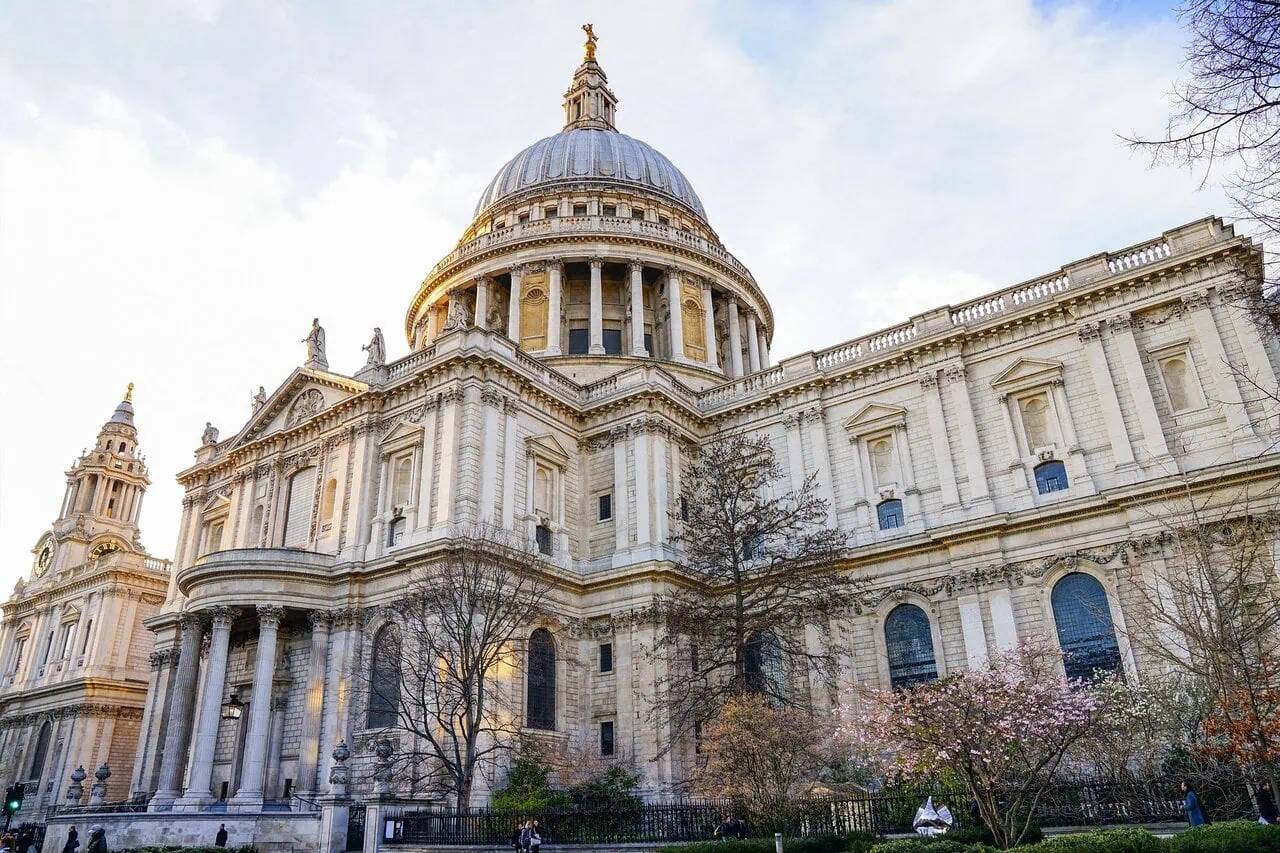
St Paul’s Cathedral London is one of the most recognisable buildings in the UK and one of the most important historic and religious sites in London. Sitting on Ludgate Hill, the highest point in the City of London, the cathedral dominates the skyline with its enormous dome and has been part of London’s history for over 300 years.
The current cathedral was designed by Sir Christopher Wren after the Great Fire of London in 1666 destroyed the previous church that stood on the site. Construction began in 1675 and took more than 35 years to complete. Since then, St Paul’s has hosted some of the most important national events in British history, including the funeral of Winston Churchill, the wedding of Prince Charles and Princess Diana, and national thanksgiving services after major events.
When you visit today, you are not just visiting a church. You are visiting a building that has survived the Blitz during World War II, witnessed centuries of London’s growth, and remains an active cathedral with daily services. The atmosphere inside is very different from most London attractions — quieter, more reflective, and incredibly impressive in scale.
Most visitors are surprised by how large the interior is, how detailed the mosaics and ceilings are, and how challenging but rewarding the climb up to the dome can be. A visit usually includes the cathedral floor, the crypt, and the famous dome galleries.
History of St Paul’s Cathedral
There has been a cathedral on this site for over 1,400 years, although the current building is the fifth version of St Paul’s. Earlier churches were destroyed by fires, Viking raids, and eventually the Great Fire of London.
After the Great Fire in 1666 destroyed much of the City of London, architect Christopher Wren was tasked with rebuilding many churches across London, including a new St Paul’s Cathedral. His design included the massive dome, inspired partly by St Peter’s Basilica in Rome, which is why the cathedral feels more like a European basilica than a traditional English church.
Construction started in 1675 and was completed in 1710. The dome became one of the defining features of London’s skyline and remained the tallest building in London for over 250 years.
During World War II, St Paul’s became a symbol of British resilience. During the Blitz, bombs fell all around the cathedral, and famous photographs show the dome standing surrounded by smoke while much of London burned. Fire watchers worked overnight to put out fires on the roof, and the cathedral survived while many surrounding buildings were destroyed.
Inside the cathedral today, you will find memorials to important historical figures including Admiral Nelson, the Duke of Wellington, and many scientists, artists, and military figures. The crypt below the cathedral is one of the largest in Europe and contains many tombs and memorials.
Understanding this history makes the visit much more meaningful, because you are not just looking at a building — you are walking through centuries of British history.
Where St Paul’s Cathedral Is & How to Get There
St Paul’s Cathedral is located in the City of London, close to the River Thames and directly opposite the Millennium Bridge. It is very easy to reach using public transport and is well connected to the Underground and buses.
The closest Underground station is St Paul’s Station on the Central Line, which is only a few minutes’ walk from the cathedral entrance. Other nearby stations include Blackfriars, Mansion House, and Bank, all within walking distance. If you are walking across the Millennium Bridge from Tate Modern, the cathedral is directly in front of you and this is one of the most impressive approaches to any building in London.
Many visitors actually arrive at St Paul’s while walking between attractions because it sits roughly between Tate Modern, Millennium Bridge, Sky Garden, the Tower of London, and the City of London financial district. It fits very easily into a central London walking itinerary.
Because the cathedral sits on a hill, you will often see it from a distance while walking around central London. Streets like Ludgate Hill and Fleet Street give particularly good views as you approach.
St Paul’s Cathedral Tickets & Entry Information
St Paul’s Cathedral is a working cathedral, which means there are two ways to enter. You can attend a church service for free, or you can visit as a sightseeing visitor with a ticket that allows you to explore the cathedral floor, crypt, and dome galleries.
Most visitors will want the sightseeing ticket, because this includes the cathedral interior, the Whispering Gallery, Stone Gallery, Golden Gallery, and the crypt, which is where many famous historical figures are buried. The dome climb alone makes the ticket worthwhile for many visitors, as the views from the top are some of the best in central London.
It is usually cheaper to buy tickets online in advance, and this also helps you avoid queues. During summer, weekends, and school holidays, St Paul’s can get very busy, particularly late morning and early afternoon. If you want a quieter visit, arriving early in the morning or later in the afternoon is usually better.
One important thing many visitors don’t realise is that St Paul’s Cathedral is included in several London attraction passes. If you are planning to visit multiple attractions such as the Tower of London, Westminster Abbey, the London Eye, or river cruises, an attraction pass can sometimes save a lot of money. However, the passes only make sense if you plan to visit several paid attractions in a short period of time.
If you are considering this, it is worth reading our London attraction pass comparison guide before buying anything, because the different passes include different attractions and work in different ways. Choosing the wrong pass is a very common mistake visitors make when planning a London trip.
If you only plan to visit St Paul’s Cathedral and a few free attractions, then buying a standard entry ticket is usually the best option. If you plan to visit many major attractions in two or three days, then a London attraction pass may be better value.
Most visitors spend around 1.5 to 2.5 hours at St Paul’s Cathedral, especially if they climb the dome and visit the crypt, so it is worth planning this into your itinerary rather than rushing through the visit.
What to See Inside St Paul’s Cathedral
When you enter St Paul’s Cathedral London, the first thing most visitors notice is the sheer scale of the building. The nave is enormous, the ceilings are incredibly high, and the decoration is much more elaborate than many British churches. The interior feels closer to a grand European basilica than a traditional English cathedral.
The cathedral floor is where most visitors start. Here you can walk through the main nave, see the High Altar, the Quire, and several side chapels. Look up at the ceiling mosaics and painted domes, which are covered in gold details and religious artwork. Many people walk through too quickly and miss the details above them, but some of the most impressive artwork in the cathedral is on the ceilings rather than the walls.
One of the most famous features inside the cathedral is the Whispering Gallery, located inside the dome. The circular design means that if someone whispers against the wall on one side of the gallery, the sound travels around the dome and can be heard clearly on the opposite side. It’s a strange and memorable experience and one of the most unique parts of the visit.
Above this is the Stone Gallery, which is the first outdoor viewing area. From here you can walk around the outside of the dome and see views across the City of London, including the River Thames, Tate Modern, and the skyscrapers in the financial district.
At the very top is the Golden Gallery, reached by climbing even more steps. This is the highest point visitors can reach and offers one of the best panoramic views in London. On a clear day you can see the Shard, London Eye, Tower Bridge, Canary Wharf, and even Wembley Stadium in the distance.
Below the cathedral floor is the crypt, which many visitors find just as interesting as the main cathedral. This is where several important British figures are buried, including Admiral Lord Nelson and the Duke of Wellington. The crypt also contains memorials, sculptures, and exhibitions about the history of the cathedral and its survival during World War II.
A visit to St Paul’s is really a combination of architecture, history, viewpoints, and memorials, which is why it is considered one of the most important historic attractions in London.
Climbing the Dome – What to Expect
Climbing the dome at St Paul’s Cathedral London is one of the highlights of the visit, but it is important to know that it is quite a serious climb. To reach the very top Golden Gallery, you need to climb 528 steps in total.
The first part of the climb is a wide staircase that takes you up to the Whispering Gallery inside the dome. From there, the stairs become narrower and steeper as you climb towards the Stone Gallery and then the Golden Gallery. Some sections are spiral staircases, and some are very narrow metal staircases, so this part of the climb is not suitable for people who struggle with heights or tight spaces.
However, for most visitors, the climb is absolutely worth it. The Golden Gallery view is one of the best viewpoints in central London, and because you have to climb to reach it, it is usually less crowded than places like the London Eye or Sky Garden.
On the way up, you also get to see the inside structure of the dome and parts of the cathedral that most visitors never see, which makes the climb feel like part of the experience rather than just a staircase to a viewpoint.
It is important to take your time when climbing and be prepared for a bit of physical effort. Comfortable shoes are recommended, and you should allow extra time for the climb because you will probably stop several times on the way up and down.
For many visitors, the dome climb is the main reason to visit St Paul’s Cathedral, and it is one of the most memorable viewpoints in London.
Best Views of St Paul’s Cathedral (Photo Spots)
Even if you visit inside the cathedral, it is worth walking around the area because some of the best views of St Paul’s Cathedral are actually from outside, especially across the River Thames.
One of the most famous views is from the Millennium Bridge, which lines up perfectly with the cathedral dome. If you walk across the bridge from Tate Modern towards St Paul’s, the view gets better the closer you get, and this is one of the most photographed views in London.
Another excellent viewpoint is the One New Change shopping centre rooftop terrace, which is free to visit and gives a very close view of the cathedral dome. Many visitors don’t know about this viewpoint, but it is one of the best places for photos of St Paul’s.
You can also get great views from Ludgate Hill, Fleet Street, and the South Bank near Tate Modern. From the river side, the cathedral looks particularly impressive because you can see the full size of the dome rising above the surrounding buildings.
If you want photos of St Paul’s, the best times are usually early morning or late evening, when the light is softer and the area is less crowded.
How Long to Spend at St Paul’s Cathedral
Most visitors spend between 1.5 and 2.5 hours at St Paul’s Cathedral, depending on whether they climb the dome and how interested they are in the history and crypt.
If you only visit the cathedral floor and the crypt, you could finish your visit in about an hour. However, if you climb to the Whispering Gallery, Stone Gallery, and Golden Gallery, and spend time enjoying the views and exploring the crypt exhibitions, the visit will usually take closer to two hours.
St Paul’s is located in a very convenient part of London, so many visitors combine it with nearby attractions such as Millennium Bridge, Tate Modern, Sky Garden, the Tower of London, or a Thames river walk. Because of this, St Paul’s often fits into a full day of sightseeing rather than being the only attraction you visit that day.
It is usually best to visit in the morning or later in the afternoon, as the middle of the day is when tour groups and school groups tend to arrive. Visiting earlier also makes the dome climb more enjoyable because it is less crowded on the staircases.
Overall, St Paul’s Cathedral is not a quick photo stop — it is a major historic site, viewpoint, and landmark, and it is worth allowing enough time to properly explore it.
Nearby Attractions
One of the reasons St Paul’s Cathedral London fits so well into a London itinerary is because it sits right between several major attractions. You can easily combine St Paul’s with a walk across the river, a museum visit, or a skyline viewpoint without needing to use transport.
Directly in front of the cathedral is the Millennium Bridge, one of the most famous pedestrian bridges in London. Walking across the bridge takes you straight to Tate Modern, which is one of the most popular modern art museums in the world and is free to enter. This is one of the best short walks in London because you get incredible views of the cathedral behind you as you cross the river.
Not far from St Paul’s is the Sky Garden, a free indoor garden and viewing platform at the top of the Walkie Talkie building. From the Sky Garden you get one of the best elevated views of St Paul’s Cathedral and the City of London skyline. Many visitors combine St Paul’s and Sky Garden on the same day.
If you walk east from St Paul’s for around 20–25 minutes, you will reach the Tower of London and Tower Bridge, which makes a very good walking route through the historic City of London. Along the way you pass historic streets, old churches, and modern skyscrapers, which really shows how London mixes old and new architecture together.
Because of its location, St Paul’s Cathedral is often included in City of London walking routes, Thames river walks, and central London sightseeing days rather than being visited on its own.
St Paul’s Cathedral Visitor Tips
Visiting St Paul’s Cathedral London is quite straightforward, but there are a few things that can make your visit much easier and more enjoyable if you know them in advance.
One of the most important tips is to arrive early if you want to climb the dome. The staircases are narrow in places, and when the cathedral is busy there can be queues inside the dome staircases. Climbing earlier in the day usually means fewer people and a more enjoyable experience.
It is also important to wear comfortable shoes, especially if you plan to climb to the Golden Gallery. The 528 steps are manageable for most people, but it is still a long climb and not something you want to do in uncomfortable footwear.
Photography is allowed inside the cathedral during sightseeing hours, but the cathedral is still an active place of worship, so visitors are expected to be respectful and keep noise levels low. Some areas may occasionally be closed for services or events.
Another useful tip is to visit the One New Change rooftop terrace either before or after your cathedral visit. It is free to access and gives one of the closest and best views of the St Paul’s dome, which many visitors miss because they don’t know it exists.
Finally, remember that St Paul’s is located in the City of London, which is a business district. This means the area is usually very busy on weekdays but much quieter on weekends, which can actually make weekend visits more pleasant for sightseeing.

Rupert’s Handy Travel Tips
Visiting St Paul’s Cathedral? Here are a few tips to make your visit smoother:
- Climb the dome early: The staircases get busy later in the day, and the climb is much more enjoyable when it is quieter.
- Use Millennium Bridge for photos: One of the best views of St Paul’s Cathedral is from the middle of the bridge looking back toward the dome.
- Visit the One New Change rooftop: The free rooftop terrace gives one of the closest views of the cathedral and many visitors miss it.
- Combine with Tate Modern: Walk across the river after your visit and combine two major attractions in one area.
Want to meet the reindeer behind our travel tips? Find out more in our page Who is Rupert?.
Further Reading & Related Guides
If you are planning to visit St Paul’s Cathedral London, it is worth reading our London attractions guide, which helps you plan your itinerary and group nearby attractions together so you do not waste time travelling back and forth across the city.
Because St Paul’s is located in the City of London near the River Thames, many visitors combine it with attractions such as the Sky Garden, Tower of London, Tower Bridge, and Thames river cruises, all of which are located along the river and easy to visit on the same day.
If you are planning a short trip, our London in a Weekend guide will help you prioritise the most important attractions and plan a realistic itinerary. If the weather is not great, our London rainy day guide includes indoor attractions like museums, galleries, and historic buildings that are perfect to visit when the weather is bad.
Reading these guides together will help you plan your London itinerary more efficiently, group nearby attractions together, and make the most of your time in London.
Last Updated
April 2026
Affiliate Disclosure
This page contains affiliate links. If you click through and make a purchase or booking, we may earn a small commission at no extra cost to you. This helps support our work and allows us to continue providing detailed, independent travel advice. We only recommend apps and services we personally use or have verified as high-quality.