
Overview – Buenos Aires Hop-On Hop-Off Bus (Gray Line Argentina)
The Buenos Aires Hop-On Hop-Off Bus operated by Gray Line Argentina is one of the easiest ways to explore the city, especially if you are visiting for the first time and want to get an overview of the main neighbourhoods and attractions. Buenos Aires is a very large city with attractions spread across different areas such as Recoleta, Palermo, San Telmo, La Boca, Puerto Madero, and the city centre, so moving between them can take time if you rely only on taxis or public transport. The hop-on hop-off bus allows you to move between these areas easily while also learning about the city through the onboard audio guide.
The concept of a hop-on hop-off bus is simple. You can get on the bus at any official stop, ride the bus to another area of the city, get off to explore, and then later get back on the next bus using the same ticket. This continues for the duration of your ticket, which can be 24, 48, or 72 hours depending on the option you choose. This flexibility is what makes the bus particularly useful for visitors who want to explore the city at their own pace without worrying about transport routes.
The buses themselves are open-top double-decker sightseeing buses, which means you can sit on the upper deck for views across the city or sit inside on the lower deck if the weather is cold or rainy. The buses are equipped with air conditioning, sunroof sections, and multilingual audio guides, which provide commentary about the history, architecture, and culture of Buenos Aires as you travel along the route.
One of the additional benefits of the Gray Line Buenos Aires Hop-On Hop-Off Bus is that the ticket also includes access to free walking tours in several neighbourhoods. These guided walking tours allow you to explore areas such as San Telmo, Recoleta, Plaza de Mayo, and La Boca on foot with a local guide, which adds extra value to the ticket and makes the bus more than just a sightseeing transport service.
Overall, the hop-on hop-off bus is particularly useful for visitors who are short on time, visiting Buenos Aires for the first time, or who want a simple and flexible way to see the main attractions without navigating public transport.
How the Buenos Aires Hop-On Hop-Off Bus Works
The Buenos Aires Hop-On Hop-Off Bus is designed to be very easy to use. After purchasing your ticket, you can start the tour at any official bus stop, although the main starting stop is usually Diagonal Norte (Av. Pres. Roque Sáenz Peña 728) in the city centre. Another major starting point is Plaza San Martín, where Gray Line also has an office.
Your ticket becomes active the first time you board the bus, not when you purchase it. From that moment, your ticket is valid for 24, 48, or 72 consecutive hours, depending on the ticket you selected. For example, if you board the bus at 11:00am on a 24-hour ticket, your ticket will remain valid until 11:00am the following day.
The buses operate on a loop route around the city, stopping at major tourist areas and attractions. You can stay on the bus for the entire loop to get an overview of the city, or you can get off at any stop to explore an area and then board the next bus when you are ready to continue. Buses run frequently, so you normally do not have to wait long at each stop.
One of the key features of the service is the multilingual audio guide, which is available in many languages including English, Spanish, Portuguese, French, German, Italian, Japanese, Chinese, Korean, Russian, and Ukrainian. The audio guide explains the history and interesting facts about the areas you pass through, which makes the journey informative as well as convenient.
The buses also offer free WiFi onboard and at some bus stops, which is useful for checking maps, planning your next stop, or booking attractions while you travel around the city.
In simple terms, the process works like this: you board the bus, ride to an area you want to explore, get off and walk around, then return to the stop and board the next bus using the same ticket. You can repeat this as many times as you like while your ticket is valid.
Ticket Types – 24, 48 and 72 Hour Options
The Buenos Aires Hop-On Hop-Off Bus offers three main ticket options, which are 24-hour, 48-hour, and 72-hour tickets. The main difference between these tickets is how long you can use the bus and how much time you have to explore the city.
The 24-hour ticket is usually suitable for travellers who are only in Buenos Aires for a short time or who want to use the bus mainly for transport between major attractions rather than as a full sightseeing experience. With a 24-hour ticket, you can normally complete the full bus route and get off at a few key locations such as La Boca, Recoleta, and Palermo.
The 48-hour ticket is often the most popular option because it allows you to spread the route over two days. Buenos Aires is a large city, and trying to see everything in one day can be rushed. With a 48-hour ticket, you can explore the city centre and San Telmo on one day and then visit Palermo, Recoleta, and the northern areas on the second day. This makes the trip much more relaxed.
The 72-hour ticket is useful if you want to use the bus as your main transport around the city for several days, or if you plan to take advantage of the free walking tours included with the ticket. This option gives you plenty of time to explore each neighbourhood properly.
An important detail is that you do not have to choose the exact date when booking, and once purchased, you usually have up to 6 months to start using the ticket. The time period only begins when you first board the bus, which gives you flexibility when planning your trip.
For most visitors, the 48-hour ticket is usually the best balance between price and time, as it allows you to explore Buenos Aires properly without rushing.
Route and Main Stops
The Buenos Aires Hop-On Hop-Off Bus route covers many of the most important neighbourhoods and attractions in the city. The route includes both historic and modern areas, giving visitors a good overview of Buenos Aires.
The route passes through the political and historic centre of the city near Congress and Avenida de Mayo, before continuing to the traditional neighbourhood of San Telmo, which is known for its historic buildings, markets, and tango culture. From there, the bus continues to La Boca and Caminito, one of the most colourful and famous areas of Buenos Aires, and the location of the La Bombonera stadium, home of Boca Juniors football club.
The route then continues along the waterfront areas including Puerto Madero and Costanera Sur, which are modern areas with restaurants, parks, and river views. After that, the bus heads towards the more elegant areas of the city such as Recoleta, known for the famous cemetery and historic cafés, and then continues towards Palermo, which is known for parks, museums, and green spaces including the Planetarium and Palermo parks.
The route also includes northern areas along the river, including Parque de la Memoria, the River Plate stadium, Chinatown, and other cultural and residential areas. This means the bus route covers a very large part of the city and connects many areas that would otherwise take a long time to reach using public transport.
Because the bus stops at all of these major areas, many visitors use the Buenos Aires Hop-On Hop-Off Bus not only as a sightseeing tour but also as a transport system between the main tourist neighbourhoods of the city.
Buenos Aires Hop-On Hop-Off Bus Stops and Nearby Attractions
The Buenos Aires Hop-On Hop-Off Bus stops at many of the city’s most important neighbourhoods and attractions. One of the best ways to use the bus is to plan which stops you want to get off at in advance, explore the area, and then continue the route later.
Below are some of the main stops on the Gray Line Argentina Hop-On Hop-Off Bus route and what you can see near each stop.
| Bus Stop / Area | Nearby Attractions and Things to Do |
|---|---|
| Diagonal Norte (Stop 0) | City centre, Avenida de Mayo, Teatro Colón, Obelisco, Plaza de Mayo |
| National Congress | Argentine National Congress building, Avenida de Mayo architecture |
| San Telmo / Plaza Dorrego | San Telmo Market, tango shows, antique markets, historic streets |
| Usina del Arte | Cultural centre, exhibitions, concerts |
| La Boca | Caminito street, La Bombonera stadium, colourful houses |
| Costanera Sur | Ecological reserve, riverfront walks, parks |
| Puerto Madero | Waterfront restaurants, Puente de la Mujer bridge |
| Galerías Pacífico | Historic shopping mall, murals, shopping |
| Plaza San Martín | Retiro area, parks, historic buildings |
| Floralis Genérica | Giant metal flower sculpture, Recoleta area |
| MALBA Museum | Museum of Latin American Art of Buenos Aires |
| Planetarium / Palermo | Palermo parks, lakes, gardens, planetarium |
| River Plate Stadium | Estadio Monumental stadium tours |
| Chinatown | Restaurants, shops, Chinatown arch |
| Recoleta | Recoleta Cemetery, cafés, museums, cultural centre |
| Teatro Colón | Famous opera house and guided tours |
This route covers a large part of the city and includes many of the most popular tourist areas such as San Telmo, La Boca, Puerto Madero, Recoleta, and Palermo. Because Buenos Aires is very spread out, travelling between these areas individually by taxi or public transport can take time, which is why many visitors find the hop-on hop-off bus a convenient way to move between neighbourhoods.
Many visitors choose to get off at San Telmo, La Boca, Recoleta, and Palermo, as these areas offer the best combination of historic sights, museums, parks, cafés, and restaurants. The city centre stops near Plaza de Mayo and Teatro Colón are also very popular for sightseeing.
Using the Buenos Aires Hop-On Hop-Off Bus in this way allows you to combine transport and sightseeing, which is why it is often recommended for visitors who are in the city for a short time or who want an easy overview of Buenos Aires before exploring in more detail on foot.
Free Walking Tours Included with the Hop-On Hop-Off Bus
One of the biggest advantages of the Buenos Aires Hop-On Hop-Off Bus operated by Gray Line Argentina is that the ticket also includes access to several free walking tours around the city. These walking tours are led by local guides and allow you to explore some of the most interesting neighbourhoods on foot, which adds a lot of value to the hop-on hop-off ticket.
The walking tours usually depart from specific bus stops along the route, and you can ask the driver or staff on the bus for the latest schedule and meeting points. The tours are optional, but they are a great way to learn more about the history and culture of Buenos Aires while visiting the main areas.
One of the walking tours focuses on San Telmo, which is one of the oldest neighbourhoods in Buenos Aires. During this walking tour, you typically visit places such as Plaza Dorrego, San Telmo Market, historic streets, old churches, and traditional buildings. San Telmo is known for tango culture, antique shops, and historic architecture, so it is one of the most interesting areas to explore on foot.
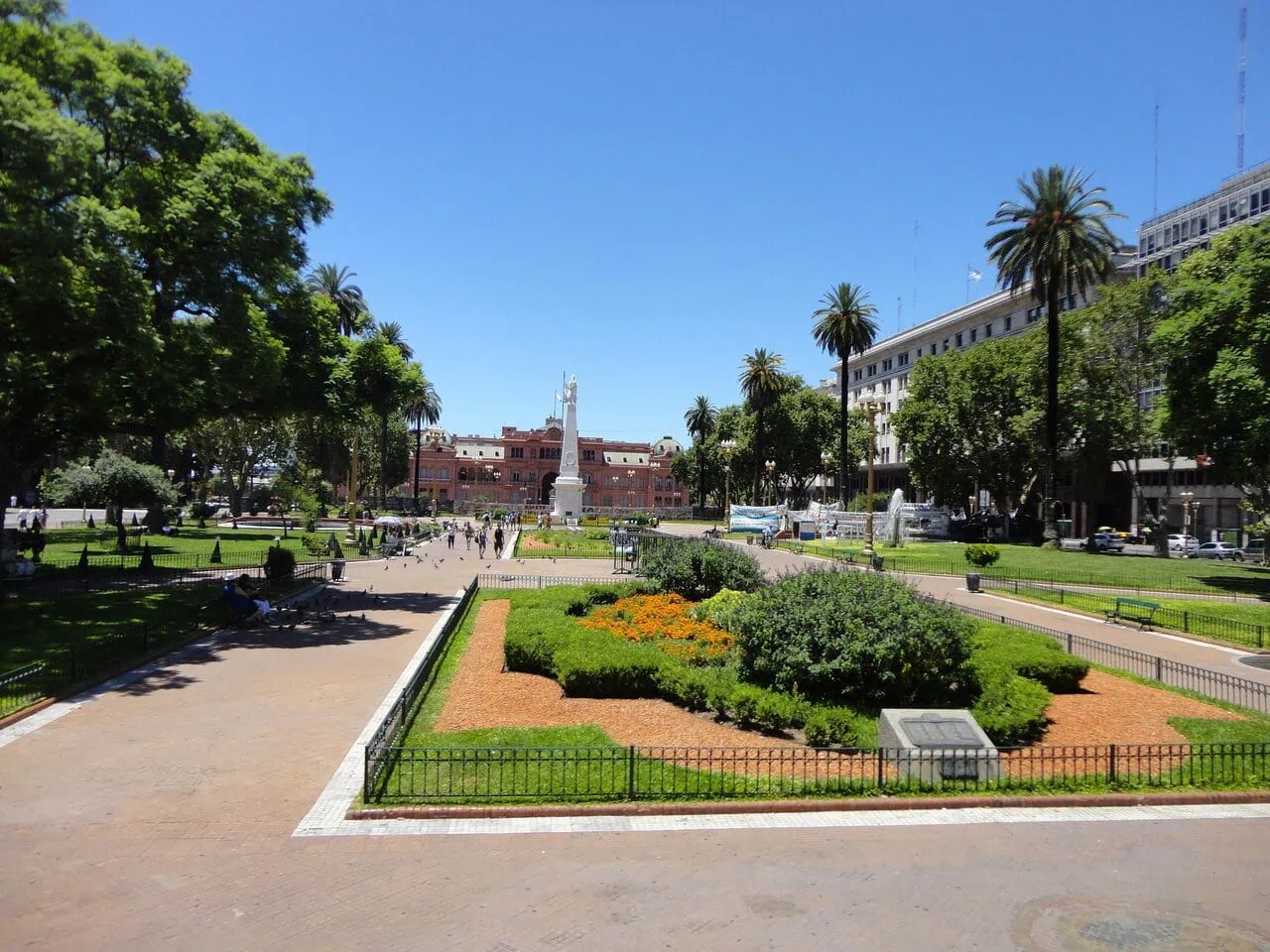
Another walking tour takes place around Plaza de Mayo, which is the historic and political centre of Buenos Aires. This tour usually includes the Cabildo, Metropolitan Cathedral, Casa Rosada, and surrounding historic buildings. This area is very important in Argentine history, and a guided walking tour helps explain the significance of the buildings and events that took place there.
There is also a walking tour in Recoleta, one of the most elegant neighbourhoods in Buenos Aires. This tour typically includes Recoleta Cemetery, Plaza Francia, the Recoleta Cultural Centre, and historic cafés such as Café La Biela. Recoleta is known for its architecture, parks, museums, and cultural attractions, so this walking tour is very popular.
Another walking tour is available in La Boca and Caminito, which is one of the most colourful and famous areas of Buenos Aires. This tour usually includes Caminito street, the Boca Juniors stadium area, the old transporter bridge, and local art areas. La Boca has a very different atmosphere from the rest of the city, and visiting with a guide helps explain the history of immigration and football culture in this area.
These free walking tours included with the hop-on hop-off bus make the ticket much more valuable, because you are not only getting transport around the city but also guided tours in several major neighbourhoods.
Bus Timetable, Frequency and Operating Hours
The Buenos Aires Hop-On Hop-Off Bus operates every day of the week, usually from morning until early evening, which allows visitors to use the bus throughout the day to move between attractions.
The buses normally start operating at around 9:30am, with the first buses leaving the main starting stops slightly earlier, and the service continues throughout the day until the late afternoon. The last buses usually depart around 5:30pm, and these last buses may only complete part of the route rather than the full loop, so it is important not to leave your final journey too late in the day.
One of the most important things to know is the frequency of the buses, which is usually every 25 minutes. This means that if you get off at a stop to explore an area, you normally only have to wait around 20 to 30 minutes for the next bus to arrive. This makes it easy to move between different neighbourhoods without long waiting times.
Because the buses run in a loop, you do not need to plan complicated routes. You simply get off where you want, explore the area, and then return to the same stop to catch the next bus.
The buses also offer free WiFi onboard and at some bus stops, which can be useful for checking maps, planning your next stop, or booking attractions while travelling around the city.
Overall, the hop-on hop-off bus timetable and frequency make it a convenient way to travel between major tourist areas in Buenos Aires without needing to use taxis or the metro.
Where to Start the Buenos Aires Hop-On Hop-Off Bus
One of the useful features of the Buenos Aires Hop-On Hop-Off Bus is that you can start the route at any official bus stop, so you do not have to travel to a specific starting point if there is a stop near your hotel.
However, there are two main starting locations that many visitors use. The first and most common starting point is Diagonal Norte (Av. Pres. Roque Sáenz Peña 728), which is located in the city centre near Avenida de Mayo, the Obelisco, and Plaza de Mayo. This is a convenient starting point for visitors staying in the city centre or near major attractions.
The second main starting point is Plaza San Martín (Av. Santa Fe 808), which is located in the Retiro area of Buenos Aires. This area is close to several hotels and transport connections, so some visitors prefer to start the tour here.
Because the bus runs in a continuous loop, you can also simply join the bus at the stop closest to your hotel and begin the tour from there. This flexibility is one of the reasons why the Buenos Aires Hop-On Hop-Off Bus is popular with visitors who want an easy and flexible way to explore the city.
Many travellers choose to start the route in the morning and stay on the bus for a full loop first, which gives a good overview of Buenos Aires, and then later they use the bus to travel between areas where they want to spend more time.
Is the Buenos Aires Hop-On Hop-Off Bus Worth It?
Whether the Buenos Aires Hop-On Hop-Off Bus is worth it depends on how long you are staying in the city and how you prefer to travel around.
Buenos Aires is a very large city, and the main tourist areas are spread out across different neighbourhoods. Travelling between areas such as La Boca, Palermo, Recoleta, Puerto Madero, and San Telmo can take time, and taxis or rideshare costs can add up over several days. For this reason, many visitors find that the hop-on hop-off bus is a convenient way to move between these areas while also learning about the city.
The bus is particularly useful for first-time visitors to Buenos Aires, because it gives you a good overview of the city and helps you understand where everything is located. Many travellers use the bus on their first day to get an overview and then explore specific neighbourhoods in more detail later.
The bus is also useful if you want transport between major tourist areas without using the metro, especially if you are not familiar with the city or do not speak Spanish.
However, if you are staying in Buenos Aires for a long time and are comfortable using public transport, you may not need the hop-on hop-off bus for several days. In that case, a 24-hour or 48-hour ticket is usually enough.
For most visitors, the Buenos Aires Hop-On Hop-Off Bus is worth it for the convenience, the audio guide, the walking tours included, and the ability to move easily between the main tourist areas of the city.
Tips for Using the Buenos Aires Hop-On Hop-Off Bus
If you are planning to use the Buenos Aires Hop-On Hop-Off Bus, there are a few tips that can help you get the most value from your ticket and make your sightseeing much easier.
One of the best ways to use the bus is to start early in the morning on your first day. Because the ticket is valid for 24, 48, or 72 hours from the first time you board, starting early gives you the maximum amount of time to use the bus. Many visitors start the route in the morning, stay on the bus for one full loop to get an overview of the city, and then begin hopping off at the areas they want to explore more.
It is also a good idea to plan which stops you want to get off at in advance. Buenos Aires is a large city, and if you try to stop everywhere, you may run out of time. Most visitors focus on areas such as San Telmo, La Boca, Puerto Madero, Recoleta, and Palermo, as these neighbourhoods have many of the main attractions, restaurants, and parks.
Another useful tip is to take advantage of the free walking tours included with the ticket. These tours add a lot of value and allow you to explore neighbourhoods such as Recoleta and San Telmo with a local guide, which helps you understand the history and culture of the city much better than just walking around on your own.
You should also remember that the last buses usually leave around late afternoon, so you should not rely on the hop-on hop-off bus for late evening transport. If you are staying out for dinner or nightlife, you will probably need to use a taxi, Uber, or public transport to return to your hotel.
Finally, the upper deck of the bus is great for views, but it can be hot in summer or windy in cooler weather, so it is a good idea to bring sunscreen, sunglasses, or a light jacket depending on the weather.
Overall, the best way to use the Buenos Aires Hop-On Hop-Off Bus is to treat it as both a sightseeing tour and a transport system between neighbourhoods rather than just staying on the bus all day.

Rupert’s Handy Travel Tips
Planning to use the Buenos Aires Hop-On Hop-Off Bus? Here are a few tips to make the most of it:
- Start your ticket early in the morning to get the full value of your 24, 48, or 72 hours.
- Stay on the bus for one full loop first to get a good overview of Buenos Aires.
- Use the bus to travel between Recoleta, Palermo, San Telmo, and La Boca instead of taxis.
- Take advantage of the free walking tours included with the ticket.
- Remember the last buses leave in the late afternoon, so plan your return journey.
Want to meet the reindeer behind our travel tips? Find out more in our page Who is Rupert?.
Frequently Asked Questions – Buenos Aires Hop-On Hop-Off Bus
How often does the Buenos Aires Hop-On Hop-Off Bus run?
The buses usually run every 25 minutes, so if you get off at a stop, you normally will not have to wait long for the next bus.
Where does the Hop-On Hop-Off Bus start?
You can start the tour at any official bus stop, but the main starting stop is Diagonal Norte in the city centre, and another common starting point is Plaza San Martín.
How long is the full Hop-On Hop-Off Bus route?
The full route usually takes around 3 hours if you stay on the bus for the entire loop without getting off.
Are walking tours included with the Hop-On Hop-Off Bus ticket?
Yes, the ticket usually includes free walking tours in areas such as San Telmo, Recoleta, Plaza de Mayo, and La Boca, although schedules may vary.
Is there WiFi on the Hop-On Hop-Off Bus?
Yes, there is usually free WiFi onboard the bus and at some bus stops, although the connection speed may vary.
Is the Hop-On Hop-Off Bus worth it in Buenos Aires?
For most first-time visitors, the Buenos Aires Hop-On Hop-Off Bus is worth it because it provides transport between major tourist areas, a city overview, and guided walking tours.
Further Reading & Related Guides
If you are using the hop-on hop-off bus to explore the city, our Buenos Aires Travel Guide is the best place to start. It covers neighbourhoods, transport, attractions, safety, and how to plan your time in the city properly.
Many travellers use Buenos Aires as a base for exploring nearby destinations, so our Day Trips from Buenos Aires guide includes popular excursions such as Tigre Delta and Colonia del Sacramento in Uruguay.
If you are planning to visit Uruguay during your trip, our Colonia del Sacramento Day Trip Guide explains how to take the ferry across the Río de la Plata and explore the historic UNESCO town in a single day.
If you are arriving by air, our Buenos Aires Airport Transfers Guide explains how to travel between the airport and the city safely and cheaply, which is useful before starting your sightseeing around Buenos Aires.
Many travellers also combine Buenos Aires with other destinations in Argentina, so you may want to read our Iguazu Falls Guide or our Things to Do in Ushuaia Guide to help plan a wider Argentina itinerary.
These guides together will help you plan a trip that includes Buenos Aires, Uruguay, Patagonia, and Iguazu Falls as part of one well-organised Argentina travel itinerary.
Last Updated
April 2026
We update our travel guides regularly to keep information accurate, including routes, timetables, ticket options, and visitor information.
Affiliate Disclosure
This page contains affiliate links. If you click through and make a purchase or booking, we may earn a small commission at no extra cost to you. This helps support our work and allows us to continue providing detailed, independent travel advice. We only recommend apps and services we personally use or have verified as high-quality.