Reviewed by our editorial team Updated
Why Use Belfast Ferry Terminal
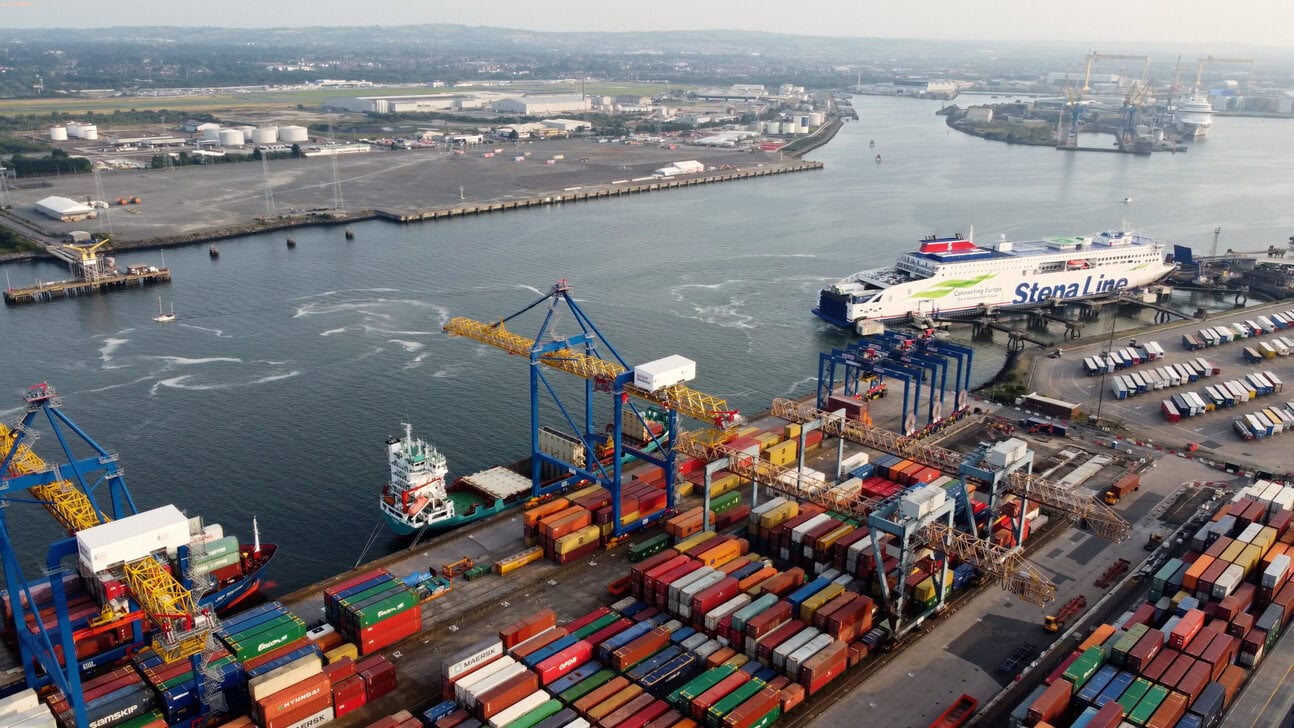
Belfast Ferry Terminal is one of the most important transport gateways on the island of Ireland, providing direct sea connections between Northern Ireland, Scotland, England, and the Isle of Man. Located within Belfast Harbour, the terminal handles millions of passengers every year and serves as a vital link between Ireland and Great Britain.
For many travellers, Belfast offers a convenient alternative to ferry ports in the Republic of Ireland. Its location on the north-east coast places it significantly closer to Scotland than ports such as Dublin or Rosslare, resulting in shorter crossing times and frequent sailings. This makes Belfast particularly attractive for travellers moving between Scotland and Ireland without flying.
The terminal is also exceptionally well connected. Passengers arriving by train can access the port via Belfast’s modern transport network, while road users benefit from excellent motorway links to destinations across Northern Ireland and beyond. The combination of sea, rail, road, and air connections makes Belfast one of the most accessible ferry terminals anywhere on the island.
For rail enthusiasts and slow travellers, Belfast plays an especially important role. It forms a natural connection point between Scotland’s rail network, Northern Ireland’s railway system, and the famous Enterprise service linking Belfast and Dublin. This allows passengers to build extensive rail-and-sail itineraries spanning multiple countries without ever needing to board an aircraft.
Belfast Ferry Terminal at a Glance
| Feature | Details |
|---|---|
| Location | Belfast Harbour, Northern Ireland |
| Main Operators | Stena Line, Isle of Man Steam Packet |
| Main Destinations | Cairnryan, Liverpool, Douglas |
| Public Transport Access | Excellent |
| Nearest Railway Stations | Grand Central, Lanyon Place |
| Parking Available | Yes |
| Passenger Facilities | Yes |
| Vehicle Facilities | Yes |
| Distance from City Centre | Approximately 5 km |
| Distance from Belfast City Airport | Approximately 4 km |
As Northern Ireland’s principal ferry gateway, Belfast Ferry Terminal serves both passenger and freight traffic throughout the year. The port plays a major role in connecting Northern Ireland with the wider United Kingdom and supports some of the busiest ferry routes operating anywhere in the Irish Sea.
One of Belfast’s greatest strengths is flexibility. Travellers can choose between fast crossings to Scotland, overnight services to England, and seasonal sailings to the Isle of Man. This variety allows the port to serve tourists, business travellers, freight operators, motorhome users, and rail passengers equally well.
The terminal’s location close to Belfast City Centre also makes it convenient for visitors. Unlike some ferry ports that are located in remote coastal areas, Belfast allows passengers to combine ferry travel with city sightseeing, accommodation, shopping, and onward transport connections without lengthy transfers.
Best for two or three nights. The widest choice of rooms, with filters for free cancellation and included breakfast.
View staysBest for longer stays. Whole apartments and houses, so you are not eating out three times a day.
View rentalsBest for double-checking. Runs the same Belfast search across several booking sites so you are not leaving money behind.
Compare pricesWhere is Belfast Ferry Terminal?
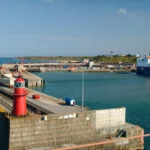
Belfast Ferry Terminal is located within Belfast Harbour, one of the largest and busiest ports in the United Kingdom. Situated on the northern side of Belfast Lough, the port occupies a strategic position close to both the city centre and the region’s main transport corridors.
The terminal lies approximately five kilometres from central Belfast, allowing passengers to travel between the ferry port and the city in a matter of minutes. This proximity is one of Belfast’s major advantages over many competing ferry terminals and helps make the port particularly attractive for foot passengers.
Road access is excellent thanks to connections with the M2 motorway, M3 motorway, and the wider Northern Irish road network. Travellers arriving from Derry, Antrim, Newry, Armagh, and even Dublin can generally reach the port without difficulty. The nearby motorway network also simplifies onward travel for passengers arriving from Scotland and England.
The port’s location close to George Best Belfast City Airport further enhances its connectivity. Passengers arriving by air can often reach the ferry terminal in less than fifteen minutes, creating convenient opportunities for combined air-and-sea itineraries.
| Destination | Approximate Distance |
|---|---|
| Belfast City Centre | 5 km |
| Belfast Grand Central Station | 6 km |
| Belfast Lanyon Place | 4 km |
| Belfast City Airport | 4 km |
| Belfast International Airport | 30 km |
| Dublin | 170 km |
A Brief History of Belfast Harbour
The history of Belfast Harbour is closely linked to the rise of Belfast itself. During the nineteenth century, the city developed into one of the most important industrial and maritime centres in the British Isles, with the harbour playing a central role in trade, shipbuilding, and passenger transport.
Perhaps the most famous chapter in the harbour’s history is its association with Harland & Wolff, the shipyard responsible for constructing the Titanic. The giant yellow cranes known as Samson and Goliath still dominate Belfast’s skyline and remain powerful reminders of the city’s maritime heritage.
Throughout the twentieth century, the harbour continued to evolve. Passenger ferry services expanded, freight traffic increased, and Belfast strengthened its position as Northern Ireland’s principal maritime gateway. Routes to Scotland and England became increasingly important, helping maintain economic and social links across the Irish Sea.
Today, Belfast Harbour combines its historic legacy with modern infrastructure. Advanced ferry terminals, efficient transport links, and substantial investment have helped transform the port into one of the most important passenger and freight hubs in the region. Its role as a gateway between Ireland, Scotland, England, and the wider United Kingdom remains as important as ever.
Ferry Routes from Belfast
The range of ferry services available from Belfast Ferry Terminal makes it one of the most strategically important ports in Ireland. While some ports focus primarily on either passenger travel or freight traffic, Belfast successfully combines both, supporting frequent crossings to Scotland, England, and the Isle of Man throughout the year.
The busiest route is undoubtedly the connection to Cairnryan in south-west Scotland. This short crossing has become one of the principal transport corridors between Ireland and Great Britain, carrying tourists, freight operators, business travellers, and holidaymakers in both directions. The route’s relatively short duration makes it particularly attractive for travellers seeking the quickest sea crossing between Ireland and Britain.
Longer sailings connect Belfast with Liverpool, providing direct access to northern England and the wider British transport network. These overnight services remain popular with passengers travelling with vehicles, motorhomes, caravans, bicycles, and pets. For many travellers, the ability to sleep during the crossing offers a more relaxed alternative to flying.
Seasonal sailings to the Isle of Man further expand Belfast’s route network. Although operating for a shorter period each year, these services provide access to one of the most distinctive destinations in the British Isles and are especially popular during the famous TT motorcycle races.
Together, these routes help position Belfast as a major maritime gateway, linking Northern Ireland with some of the most important transport hubs across the Irish Sea.
Cairnryan Ferry
The route between Belfast and Cairnryan is one of the busiest ferry crossings operating anywhere in Europe. Run by Stena Line, the service provides a fast and highly efficient connection between Northern Ireland and south-west Scotland, carrying millions of passengers and substantial freight traffic every year.
Crossing times are typically around 2 hours 15 minutes, making it one of the quickest sea routes between Ireland and Great Britain. Frequent departures throughout the day allow passengers considerable flexibility, whether travelling for business, leisure, or onward connections.
The route’s greatest strength is its position within the wider transport network. Although Cairnryan itself does not have a railway station, the port sits within easy reach of Glasgow, Ayr, Kilmarnock, and Scotland’s motorway network. Many passengers continue north towards the Scottish Highlands, Edinburgh, Aberdeen, or the ferry ports serving the Hebrides.
For Irish travellers, the route provides rapid access to Scotland without the need for air travel. Likewise, Scottish visitors can reach Belfast and continue onwards to destinations such as Derry, Portrush, Newry, and Dublin with relative ease. The combination of short crossing times and excellent onward transport links explains why the Cairnryan service remains Belfast’s flagship ferry route.
| Route | Belfast – Cairnryan |
|---|---|
| Operator | Stena Line |
| Crossing Time | Approximately 2 hrs 15 mins |
| Country Served | Scotland |
| Foot Passengers | Yes |
| Vehicles | Yes |
| Frequency | Multiple daily sailings |
| Main Connection Hub | Glasgow |
Belfast to Cairnryan Ferry Times & Departures
Use Ferryhopper to check live sailings between Belfast and Cairnryan in both directions. Select your travel date to compare scheduled ferry departures, sailing times and available tickets.
Select the date you want to travel. The times shown on the right-hand side are the scheduled departure and arrival times for each ferry.
Availability can change quickly, particularly during weekends and the summer season. Some sailings may stop accepting bookings a few hours before departure. If a timetable is blank, there may be no available sailings for today. Try moving to a later date to check future services.
This is the timetable for the outward direction. Use it to check sailings from Belfast to Cairnryan for the date you plan to travel.
This is a separate timetable for the opposite direction. It does not select a return ticket for the journey above. Use it to check sailings from Cairnryan to Belfast.
Want to compare different routes and other ferry options?
Compare routes, operators, sailing times and prices with Ferryhopper or Direct Ferries.
Liverpool Ferry
The overnight route between Belfast and Liverpool offers one of the most comfortable ways to travel between Ireland and northern England. Operated by Stena Line, the service connects Belfast with the Birkenhead terminal on the opposite side of the River Mersey, providing direct access to one of Britain’s largest metropolitan regions.
Unlike the short crossing to Cairnryan, the Liverpool service is designed as an overnight voyage. Most sailings take approximately eight hours, allowing passengers to board in the evening, enjoy dinner onboard, sleep in a cabin, and arrive the following morning. This makes the journey feel less like transport and more like the beginning of a holiday.
Liverpool’s location gives passengers access to a vast transport network. Major rail routes connect the city with Manchester, Leeds, Birmingham, York, Newcastle, London, and Scotland, while extensive motorway connections make onward travel straightforward for motorists. As a result, the route is particularly popular with travellers heading beyond north-west England.
The crossing also offers practical advantages over flying. Passengers can bring cars, motorcycles, campervans, pets, and substantial luggage without many of the restrictions associated with airlines. For long-distance travellers and families, this flexibility remains one of the route’s strongest selling points.
| Route | Belfast – Liverpool |
|---|---|
| Operator | Stena Line |
| Crossing Time | Approximately 8 hours |
| Country Served | England |
| Foot Passengers | Yes |
| Vehicles | Yes |
| Overnight Cabins | Available |
| Rail Connection | Excellent |
Belfast to Liverpool Ferry Schedules & Tickets
Check the current Belfast to Liverpool ferry schedule with Ferryhopper. Change the date to compare available crossings, departure times and bookable tickets for both directions.
Select the date you want to travel. The times shown on the right-hand side are the scheduled departure and arrival times for each ferry.
Availability can change quickly, particularly during weekends and the summer season. Some sailings may stop accepting bookings a few hours before departure. If a timetable is blank, there may be no available sailings for today. Try moving to a later date to check future services.
This is the timetable for the outward direction. Use it to check sailings from Belfast to Liverpool for the date you plan to travel.
This is a separate timetable for the opposite direction. It does not select a return ticket for the journey above. Use it to check sailings from Liverpool to Belfast.
Want to compare alternative ferry routes and more sailing options?
Compare routes, operators, sailing times and prices with Ferryhopper or Direct Ferries.
Isle of Man Ferry
The seasonal ferry service between Belfast and Douglas provides direct access to the unique and fascinating Isle of Man. Operated by the Isle of Man Steam Packet Company, the route connects Northern Ireland with an island famous for its heritage railways, coastal scenery, motorcycling culture, and independent identity.
Crossing times generally range between two and a half and three hours, depending on vessel type and weather conditions. Services are most frequent during the spring and summer months, when tourism to the island reaches its peak. Demand rises particularly sharply during the annual Isle of Man TT, one of the world’s most famous motorcycle events.
The Isle of Man offers attractions that appeal to a wide variety of travellers. Railway enthusiasts can explore the historic Manx Electric Railway, the Isle of Man Steam Railway, and the Snaefell Mountain Railway, while outdoor enthusiasts can enjoy dramatic coastlines, walking trails, and mountain scenery. The island’s combination of British and Celtic influences also creates a distinctive cultural atmosphere.
For passengers travelling from Belfast, the route offers one of the simplest ways to reach the island. The relatively short crossing time allows many visitors to travel comfortably without needing overnight accommodation, making the service particularly attractive for short breaks and event-focused travel.
| Route | Belfast – Douglas |
|---|---|
| Operator | Isle of Man Steam Packet Company |
| Crossing Time | Approximately 2.5–3 hours |
| Country Served | Isle of Man |
| Foot Passengers | Yes |
| Vehicles | Yes |
| Seasonal Service | Yes |
| Popular Event | Isle of Man TT |
Best if you can move a day either way. Shows how the fare to Belfast changes across the month.
Compare flightsBest if you want maps and messaging working the moment you switch your phone on.
See eSIM plansBest when public transport has stopped, or when you are travelling with children and bags.
Book a transferFerry Operators Serving Belfast
The success of Belfast Ferry Terminal is built upon a relatively small number of operators that provide extensive coverage across the Irish Sea. While Belfast does not have as many ferry companies as some larger European ports, the services that do operate from the harbour are well established, highly reliable, and play a critical role in connecting Northern Ireland, Scotland, England, and the Isle of Man.
The dominant operator at Belfast is Stena Line, which operates both the Cairnryan and Liverpool routes. The company carries millions of passengers annually and has invested heavily in modern vessels, upgraded terminals, and improved passenger facilities. Its Scottish route is particularly important, providing one of the fastest and most frequent sea links between Ireland and Great Britain.
The Isle of Man Steam Packet Company provides seasonal services between Belfast and Douglas. Although operating fewer sailings than Stena Line, the company has a unique role in connecting Northern Ireland with the Isle of Man and supports substantial tourism traffic during the summer months.
Together, these operators give Belfast excellent connectivity despite the relatively small number of routes. Frequent departures, modern ships, and strong onward transport links help ensure that Belfast remains one of the most important ferry gateways anywhere on the island of Ireland.
Understanding the Passenger Terminals
One of the advantages of using Belfast Ferry Terminal is its simplicity. Unlike some major ports where multiple terminals are spread across a large area, Belfast’s passenger facilities are relatively straightforward to navigate. Most travellers will use facilities operated by Stena Line, which handles the majority of passenger traffic passing through the port.
The main passenger terminal serves both the Cairnryan and Liverpool routes. Clear signage directs passengers from the road network to the correct check-in area, while separate processing facilities are available for foot passengers and vehicle traffic. The layout has been designed to accommodate large volumes of freight while still providing an efficient experience for leisure travellers.
Passengers travelling to the Isle of Man should always verify terminal information before departure, as seasonal services can occasionally operate from different areas of the harbour depending on operational requirements. Booking confirmations and operator communications will normally provide the latest guidance.
Despite handling substantial traffic volumes, Belfast’s terminal facilities remain relatively easy to navigate. For most travellers, arriving with sufficient time before departure is more than enough to ensure a smooth check-in experience. The compact layout also means walking distances are generally shorter than at many larger ferry ports elsewhere in Britain and Europe.
Facilities for Ferry Passengers
Modern Belfast Ferry Terminal offers a range of facilities designed to make the travel experience as comfortable as possible before boarding. Whether travelling on a short crossing to Scotland or an overnight sailing to England, passengers will find the essential services needed to begin their journey comfortably.
Inside the terminal, travellers have access to comfortable seating areas, information displays, check-in facilities, and waiting lounges. Digital departure boards provide real-time updates regarding sailings, boarding times, and operational announcements. These facilities are particularly useful during busy periods when multiple departures may be operating simultaneously.
Essential amenities including toilets, baby-changing facilities, and accessible services are available throughout the terminal. Passengers with reduced mobility can request additional assistance from ferry operators, while accessible parking and terminal facilities help ensure that travel remains straightforward for all users.
Food and drink options are available within the terminal area, although many passengers choose to make use of the more extensive facilities onboard their ferry. Modern vessels serving Belfast routes typically offer restaurants, cafés, bars, shops, lounges, children’s play areas, and private cabins. For passengers travelling to Liverpool, these onboard facilities become particularly important given the longer overnight crossing.
Perhaps the greatest facility Belfast offers is connectivity. The combination of nearby airports, railway stations, bus services, and major roads ensures that passengers can continue their journeys efficiently after arrival.

Parking and Drop-Off Areas
For passengers arriving by car, Belfast Ferry Terminal provides convenient access to parking, drop-off facilities, and vehicle processing areas. As one of the busiest ferry gateways in Ireland, the port has been designed to handle large numbers of cars, motorcycles, motorhomes, caravans, coaches, and freight vehicles throughout the year.
Most travellers simply use the designated drop-off zones located close to the passenger terminal. These areas allow drivers to unload passengers and luggage before leaving the port, making them particularly useful for foot passengers travelling without vehicles. The relatively compact nature of the terminal means that walking distances from drop-off areas are generally short.
Vehicle passengers follow clearly marked routes towards check-in lanes and marshalling areas. After completing check-in procedures, vehicles are directed to waiting areas before boarding begins. The system is designed to manage large traffic volumes efficiently while minimising congestion around the terminal.
Parking arrangements can vary depending on the length of stay and ferry operator requirements, so passengers intending to leave vehicles for extended periods should always check the latest information before travelling. During busy holiday periods, demand for parking and vehicle processing facilities can increase substantially, making early arrival particularly important.
| Parking Type | Availability |
|---|---|
| Passenger Drop-Off | Yes |
| Passenger Pick-Up | Yes |
| Short-Stay Parking | Available |
| Long-Stay Parking | Check latest arrangements |
| Motorcycle Parking | Yes |
| Motorhome Access | Yes |
| Coach Access | Yes |
| Disabled Parking | Available |
Checking In for Your Sailing
The check-in process at Belfast Ferry Terminal is designed to be straightforward, although procedures vary depending on whether passengers are travelling to Scotland, England, or the Isle of Man. Understanding the process before arrival can help ensure a smooth start to the journey and reduce unnecessary stress on the day of travel.
Passengers travelling with vehicles should normally arrive at least 60 to 90 minutes before departure. Upon entering the port, drivers follow clearly marked signs to the appropriate operator’s check-in booths, where travel documents, booking references, and identification are verified. Once checked in, vehicles are directed towards dedicated holding areas where they wait until boarding begins.
Foot passengers generally follow a separate route through the terminal. After presenting travel documents and completing any necessary security procedures, passengers enter the departure lounge before being called for boarding. The process is usually efficient, although peak summer sailings and major events can increase passenger numbers significantly.
International travel requirements should always be checked before departure. Passengers travelling between Northern Ireland, Scotland, England, and the Isle of Man should ensure they carry the appropriate identification and carefully review any operator-specific requirements before arriving at the terminal.
Arriving slightly earlier than the minimum recommended time is always sensible, particularly for first-time ferry travellers, families travelling with children, or passengers transporting vehicles, pets, or oversized luggage.
| Passenger Type | Recommended Arrival |
|---|---|
| Foot Passenger | 60–90 minutes before departure |
| Car Passenger | 90 minutes before departure |
| Motorhome or Caravan | 90–120 minutes before departure |
| Group Travel | Allow additional time |
| Peak Holiday Periods | Arrive earlier if possible |
Reaching the Port by Public Transport
One of the major advantages of Belfast Ferry Terminal is its excellent public transport connectivity. Unlike some ferry ports located in remote coastal locations, Belfast benefits from a modern urban transport network that makes reaching the harbour relatively straightforward for both local residents and visitors.
The city’s extensive bus network provides the easiest public transport option for many passengers. Services operated by Translink Metro connect much of Belfast with the harbour area, while the modern Glider rapid transit system provides fast links across the city. Depending on your starting point, a short taxi journey from a major station may also be the most practical solution.
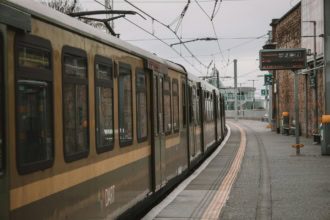
Passengers arriving by rail generally use either Belfast Grand Central Station or Belfast Lanyon Place Station before transferring to the port. Both stations are located within a short distance of the harbour and offer excellent connections throughout Northern Ireland and beyond.
Travellers arriving from Dublin benefit from the frequent Enterprise rail service, which links the two cities several times each day. This creates an effective rail-and-ferry combination for passengers travelling between the Republic of Ireland and destinations served from Belfast Harbour.
The port is also conveniently located for passengers arriving by air. George Best Belfast City Airport sits only a few kilometres away, while Belfast International Airport provides additional domestic and international connections. Taxi transfers from either airport are generally straightforward.
Best for solo travellers and anyone watching the budget. Dorm beds and private rooms in the same search.
Browse hostelsBest if you have ever given up on a claim. AirHelp checks whether the flight qualifies and pursues it for you.
See the benefitsBest for a day with a bag and nowhere to put it. Find a storage point near where you already are.
View storageDriving to the Port
For motorists, Belfast Ferry Terminal is one of the easiest ferry ports in Ireland to reach. The harbour benefits from excellent road connections and direct access to Northern Ireland’s principal motorway network, allowing passengers to travel from most parts of the island without difficulty.
The nearby M2 motorway provides the main northern approach to the port, linking Belfast with Antrim, Ballymena, Coleraine, and the spectacular Causeway Coast. Travellers arriving from northern counties typically use this route before following signs directly to the ferry terminal.
Passengers travelling from eastern and southern areas often use the M3 motorway and A2 corridor, which provide fast access to the harbour from destinations including Bangor, Newtownards, and Downpatrick. These routes are particularly useful for travellers arriving from coastal parts of County Down.
Those travelling from the Republic of Ireland generally approach via the M1 motorway and the A12 Westlink, creating a relatively straightforward route from Dublin, Drogheda, Dundalk, and other locations further south. The quality of the road network means Belfast is often one of the most accessible ferry ports on the island.
Traffic congestion can occur during commuter periods and around major holiday departures, but overall the harbour benefits from excellent infrastructure and well-designed access roads. Allowing additional time remains sensible, particularly when travelling with vehicles that require ferry check-in.
| Starting Point | Approximate Driving Time |
|---|---|
| Belfast City Centre | 15 mins |
| Belfast City Airport | 10 mins |
| Belfast International Airport | 35 mins |
| Bangor | 25 mins |
| Derry / Londonderry | 1 hr 45 mins |
| Newry | 1 hr |
| Dublin | 2 hrs |
Rail Connections and Nearby Stations
One of Belfast’s greatest strengths as a ferry gateway is its connection to the wider Northern Ireland rail network. While the ferry terminal itself does not have a railway station, nearby rail hubs provide excellent onward connections throughout both Northern Ireland and the Republic of Ireland.
The most important station for long-distance travellers is Belfast Grand Central Station. As Northern Ireland’s primary transport hub, it handles intercity rail services, regional trains, and extensive bus connections. Passengers arriving from the ferry can quickly connect to destinations across the region using Translink’s rail network.
Belfast Lanyon Place Station also plays a significant role. This station serves the famous Enterprise route between Belfast and Dublin, one of the most important rail corridors anywhere on the island. Travellers arriving by ferry can therefore continue directly towards Dublin and connect onwards to destinations including Cork, Galway, Limerick, Waterford, and Westport.
Northern Ireland’s rail network also provides direct services towards Derry / Londonderry, Bangor, Larne, Newry, and Portadown. Connections towards Portrush via Coleraine give visitors access to attractions such as the Giant’s Causeway, making rail travel an attractive option for tourists exploring the region.
The ability to combine ferry travel with efficient rail connections is one of the reasons Belfast remains such an important transport hub. Passengers can arrive from Scotland or England by sea and continue almost immediately by rail to destinations across Ireland.
| Station | Distance from Port | Main Routes |
|---|---|---|
| Belfast Grand Central | 6 km | Derry, Newry, Portadown, Bangor |
| Belfast Lanyon Place | 4 km | Dublin Enterprise, Bangor |
| Yorkgate | 3 km | Local Northern Ireland services |
| Portadown | 50 km | Dublin Enterprise connections |
| Coleraine | 95 km | Portrush and North Coast |
Rail & Sail Journeys
One of the strongest reasons to use Belfast Ferry Terminal is the ease with which ferry travel can be combined with rail travel. The port sits at the centre of a transport network that links Scotland, England, Northern Ireland, and the Republic of Ireland, allowing passengers to create surprisingly straightforward international journeys without flying.
A particularly popular option is travelling from Glasgow to Belfast. Passengers can take a train from central Glasgow to the south-west coast of Scotland, continue by ferry to Belfast, and arrive in Northern Ireland within a few hours. The route is popular with both tourists and business travellers, offering a comfortable alternative to airports and baggage restrictions.
Travellers from Edinburgh can follow a similar pattern, combining Scotland’s rail network with the frequent ferry service between Cairnryan and Belfast. Once in Northern Ireland, onward rail connections make it easy to reach destinations including Derry, Bangor, Newry, and Dublin.
Perhaps the most interesting journey is London to Belfast without flying. Travellers can take a train from London Euston to Glasgow or the south-west of Scotland, continue by ferry to Belfast, and arrive in Northern Ireland without ever entering an airport. While slower than flying, many travellers find the experience considerably more relaxing.
The connections also work in reverse. Passengers arriving from Scotland can continue directly to Dublin using the Enterprise service, opening up opportunities for rail-and-ferry adventures spanning both jurisdictions on the island of Ireland. Few ports offer such strong integration between rail and sea travel.

Where to Stay Before Your Sailing
Many passengers travelling through Belfast Ferry Terminal choose to spend a night in the city before departure, particularly when sailing early in the morning or arriving late in the evening. Fortunately, Belfast offers a wide range of accommodation options ranging from budget-friendly hotels to luxury city-centre properties.
The most convenient area for ferry passengers is often the Titanic Quarter and the surrounding harbour district. Staying here places travellers close to both the ferry terminal and attractions such as the world-famous Titanic Belfast museum. The area has undergone significant redevelopment in recent years and now offers several modern accommodation options.
The City Centre provides the widest choice of hotels. Areas around Donegall Square, Cathedral Quarter, and Great Victoria Street offer excellent access to restaurants, pubs, shopping, and transport links while remaining only a short taxi journey from the port. For visitors spending time in Belfast before their sailing, these districts are often the best choice.
Passengers arriving by train may also find accommodation near Belfast Grand Central Station or Belfast Lanyon Place particularly convenient. These locations simplify onward transport while still providing easy access to the harbour and city attractions.
| Hotel | Area | Approximate Distance to Port |
|---|---|---|
| Titanic Hotel Belfast | Titanic Quarter | 2 km |
| Premier Inn Titanic Quarter | Titanic Quarter | 2 km |
| Hilton Belfast | City Centre | 4 km |
| Leonardo Hotel Belfast | City Centre | 5 km |
| Maldron Hotel Belfast City | City Centre | 5 km |
| Europa Hotel | City Centre | 6 km |
Compare hotel prices in Belfast with Vio
Vio compares prices across major booking sites, including Booking.com, Expedia, Agoda and Hotels.com, so you can check whether the same stay is cheaper elsewhere before you book.
Other booking options
Hotel group websites
Click the map to open a larger interactive view and explore more accommodation options.
Major International Hotel Chains Nearby
Unlike smaller ferry ports such as Rosslare, Belfast offers excellent access to major international hotel brands. This is particularly useful for travellers who collect hotel loyalty points, prefer familiar accommodation standards, or require facilities such as business centres, executive lounges, and on-site restaurants.
The Hilton Belfast remains one of the best-known international hotels near the ferry terminal and benefits from a location close to both the city centre and major transport links. It is particularly popular with business travellers and passengers arriving on overnight ferry services.
Several IHG, Leonardo, and Maldron properties also operate within Belfast, providing a range of price points and accommodation styles. Many of these hotels are concentrated around the city centre, allowing guests to enjoy Belfast’s attractions before continuing their journey.
Travellers using loyalty schemes will find Belfast offers far more choice than most ferry ports in Ireland. Whether collecting points through Hilton Honors, IHG One Rewards, Radisson Rewards, or other programmes, there are multiple properties within easy reach of the terminal.
| Hotel Group | Presence Near Belfast Ferry Terminal | Example Property | Approximate Distance |
|---|---|---|---|
| Hilton | Yes | Hilton Belfast | 4 km |
| IHG | Yes | Holiday Inn Belfast City Centre | 6 km |
| Radisson | Yes | Radisson Blu Belfast | 5 km |
| Leonardo | Yes | Leonardo Hotel Belfast | 5 km |
| Maldron | Yes | Maldron Hotel Belfast City | 5 km |
| Premier Inn | Yes | Premier Inn Titanic Quarter | 2 km |
| Marriott | Limited | Nearest properties outside Belfast | Varies |
| Hyatt | No significant presence | Nearest in Dublin | 170 km |

Book Your Belfast Stay with Hotels.com
If you are arranging accommodation in Belfast, Hotels.com provides a straightforward way to compare available hotels and room prices.
This can be particularly useful when deciding between central locations, quieter neighbourhoods or accommodation close to transport links.
Scan to open
on your phone

Should You Choose Belfast Ferry Terminal?
For travellers heading to or from Scotland, Northern Ireland, or northern parts of England, Belfast Ferry Terminal is often the most logical ferry port on the island of Ireland. Its excellent route network, strong transport links, and relatively compact layout combine to create a travel experience that is both efficient and easy to navigate.
The terminal’s greatest strength is undoubtedly its proximity to Scotland. The short crossing to Cairnryan makes Belfast one of the fastest ferry gateways between Ireland and Great Britain, allowing passengers to reach Scotland in little more than two hours. For many travellers, this alone makes Belfast more attractive than ports further south.
The port also performs exceptionally well in terms of onward transport. Strong rail connections, nearby airports, excellent motorway access, and proximity to Belfast city centre make it easy to continue your journey after arrival. Few ferry terminals in Ireland offer such comprehensive connectivity.
The main limitation is route choice. Travellers heading directly to continental Europe will generally find more options at Rosslare Europort or Dublin Port. However, for journeys involving Scotland, Northern Ireland, or northern England, Belfast remains one of the strongest ferry terminals anywhere in Ireland.

Rupert’s Handy Travel Tips
Travelling through Belfast Ferry Terminal? Here are a few useful tips to make your journey smoother:
- Book early for Cairnryan sailings: Popular departures can become busy during summer holidays and major events.
- Use the Enterprise train if continuing to Dublin: It is one of the easiest and most comfortable ways to travel between Northern Ireland and the Republic.
- Allow extra time during the Isle of Man TT: Ferry demand can be exceptionally high when the famous races are taking place.
- Consider staying in the Titanic Quarter: It is close to the port and allows time to explore one of Belfast’s most famous attractions.
- Pack essentials separately for overnight crossings: Routes to Liverpool are much more comfortable when overnight items are easy to access.
Want to meet the reindeer behind our travel tips? Find out more in our page Who is Rupert?.





Frequently Asked Questions About Belfast Ferry Terminal
Where is Belfast Ferry Terminal located?
Belfast Ferry Terminal is located within Belfast Harbour on the north-eastern side of Belfast, approximately five kilometres from the city centre.
What ferry routes operate from Belfast?
Regular passenger services operate to Cairnryan in Scotland and Liverpool in England, while seasonal sailings connect Belfast with Douglas on the Isle of Man.
How long is the ferry from Belfast to Scotland?
The crossing between Belfast and Cairnryan typically takes around 2 hours 15 minutes, making it one of the fastest ferry routes between Ireland and Great Britain.
Can foot passengers use Belfast Ferry Terminal?
Yes. Foot passengers are welcome on Belfast ferry services and follow dedicated check-in procedures separate from vehicle traffic.
Does Belfast Ferry Terminal have a railway station?
No. However, Belfast Lanyon Place and Belfast Grand Central Station are located nearby and provide excellent rail connections throughout Northern Ireland and to Dublin.
How early should I arrive before departure?
Most operators recommend arriving between 60 and 90 minutes before departure, although passengers travelling with vehicles should allow additional time.
Is parking available at Belfast Ferry Terminal?
Yes. Parking, drop-off facilities, and vehicle marshalling areas are available, although arrangements may vary depending on the ferry operator.
Can I travel from Scotland to Dublin without flying?
Yes. Passengers can take a ferry from Cairnryan to Belfast and then continue by train on the Enterprise service to Dublin.
Which ferry company operates the Belfast to Liverpool route?
The route is operated by Stena Line using overnight ferry services between Belfast and Birkenhead near Liverpool.
Is Belfast Ferry Terminal accessible for passengers with reduced mobility?
Yes. The terminal provides accessible facilities and ferry operators can arrange additional assistance when requested in advance.
Further Reading & Related Guides
Planning a wider journey through Belfast, Northern Ireland or across the Irish Sea? Start with our Belfast Port Transfers Guide, which explains how to travel between the ferry terminal, Belfast city centre and onward transport links. If you are flying instead of sailing, our George Best Belfast City Airport Transfers Guide and Belfast International Airport Transfers Guide cover the two main airport gateways serving the city.
For onward travel around the island, our Ireland Rail Network Guide explains the main rail routes between Belfast, Dublin, Cork, Galway, Limerick and other key destinations. Rail pass users should also read our Interrail Ireland Guide, while visitors planning mobile data before arrival can compare providers in our eSIM Apps Guide.
If you are building a full Belfast trip, our Best Things to Do in Belfast Guide will help you plan the city itself, from historic districts and museums to waterfront attractions and day trip ideas.