
Explore Harry Potter Filming Locations London at Your Own Pace
A self-guided Harry Potter filming locations London route is the ideal way to explore the city if you want complete freedom and flexibility. Instead of following a fixed schedule or staying with a group, you can move at your own pace, spend more time at your favourite locations, and shape the experience around your day.
This approach works particularly well in London because many of the most recognisable Harry Potter locations are concentrated in central areas. That means you can turn a simple walk into a structured but flexible experience, combining filming locations with food stops, sightseeing, and other attractions along the way.
Compared to a guided tour, the biggest advantages are control and cost. You are not paying for a guide, and you are not restricted by timing. However, it is important to be realistic. You will not get the same level of storytelling, trivia, or behind-the-scenes insight that a guided experience offers. This is more about exploration than explanation.
If you are comfortable navigating London and want a budget-friendly, flexible way to see Harry Potter filming locations, this self-guided route is one of the most effective ways to do it.
Self-Guided Harry Potter Walking Route Overview
This harry potter filming locations london route has been designed to be simple, logical, and easy to follow, covering the most important locations without unnecessary backtracking.
The full route typically takes between two and four hours, depending on your pace and how long you spend at each stop. Because everything is located in central London, the walking distance is manageable and does not require advanced planning or specialist navigation.
The route begins near Borough Market, an area closely associated with the Leaky Cauldron filming location, before gradually moving west across the city. Along the way, you will pass a mix of filming locations, inspiration points, and major London landmarks, which keeps the experience varied and engaging.
This route is particularly well suited to travellers who prefer to explore independently, as well as those returning to London who want to experience the city in a different way. Because it is flexible, you can shorten it, extend it, or combine it with other activities depending on how much time you have available.
Map of Harry Potter Filming Locations London
Before starting your self-guided Harry Potter tour London, it is worth understanding how the route fits together across the city.
The locations are spread across central London but follow a clear and manageable path, making it easy to navigate even if you are unfamiliar with the area. Starting near the River Thames, the route moves through key central districts before finishing closer to the West End, ensuring you are always near transport links and busy, well-connected streets.
Using a mapping app is strongly recommended. By saving each location in advance, you can follow the route smoothly without needing to stop and search for directions at every stage. This also allows you to make quick adjustments if you decide to skip a stop or explore something nearby.
Because the route passes through popular areas, it is worth allowing extra time for crowds, particularly around markets and major landmarks. With a little planning, the route remains straightforward and enjoyable from start to finish.
Step-by-Step Harry Potter Walking Route
This is where the route becomes practical, immersive, and genuinely useful, rather than just a list of locations. As you follow this walk, you are moving through real London locations used in the films, where the wizarding world sits just beneath the surface.
Borough Market, Leaky Cauldron Scene – Stop 1
Start near Borough Market, just a short walk from London Bridge station, and make your way toward 7 Stoney Street.
This is where Harry, disoriented and exhausted after inflating Aunt Marge, is dropped off by the Knight Bus in Harry Potter and the Prisoner of Azkaban. In the film, this quiet London street becomes the entrance to the Leaky Cauldron, the hidden gateway between the Muggle world and Diagon Alley.
The exact storefront has changed since filming, so you will not see a perfect recreation. However, the tight street layout, brickwork, and tucked-away positioning still capture the feel of that moment. It is easy to picture Harry standing here, unsure what comes next, before being pulled back into the wizarding world.
This is one of the most easily missed stops on the route. Without context, it feels like just another street. With it, it becomes the true starting point of Harry’s return to magic.
Allow 20 to 30 minutes, especially if you want to explore Borough Market, which is one of London’s best food areas.
Walk: Borough Market to Millennium Bridge (10–12 minutes)
From Borough Market, head toward the River Thames and make your way to Millennium Bridge.
As you walk, you will pass close to Southwark Cathedral and see The Shard rising behind you. Following the river, you will also pass the area around Shakespeare’s Globe.
This stretch already mixes historic London with cinematic atmosphere, setting the tone for the rest of the walk.
Millennium Bridge, Death Eater Attack Scene – Stop 2
Millennium Bridge is one of the most instantly recognisable locations from the films.
In Harry Potter and the Half-Blood Prince, this is the bridge twisted and destroyed by Death Eaters, marking the return of Voldemort’s influence into the Muggle world. The calm structure you see today contrasts sharply with the violent, chaotic scene in the film.
Walk to the centre and face St Paul’s Cathedral to match the exact film angle. As you stand there, it is easy to imagine the bridge beginning to sway and collapse into the Thames.
This is one of the few stops where what you see closely matches what you remember from the film.
Allow 15 to 20 minutes.
Walk: Millennium Bridge to St Paul’s Cathedral (5 minutes)
Cross the bridge toward St Paul’s Cathedral.
Take a moment to look back across the Thames, where modern and historic London blend together, reinforcing how the wizarding world was layered onto real locations.
St Paul’s Cathedral, Divination Staircase Scene – Stop 3
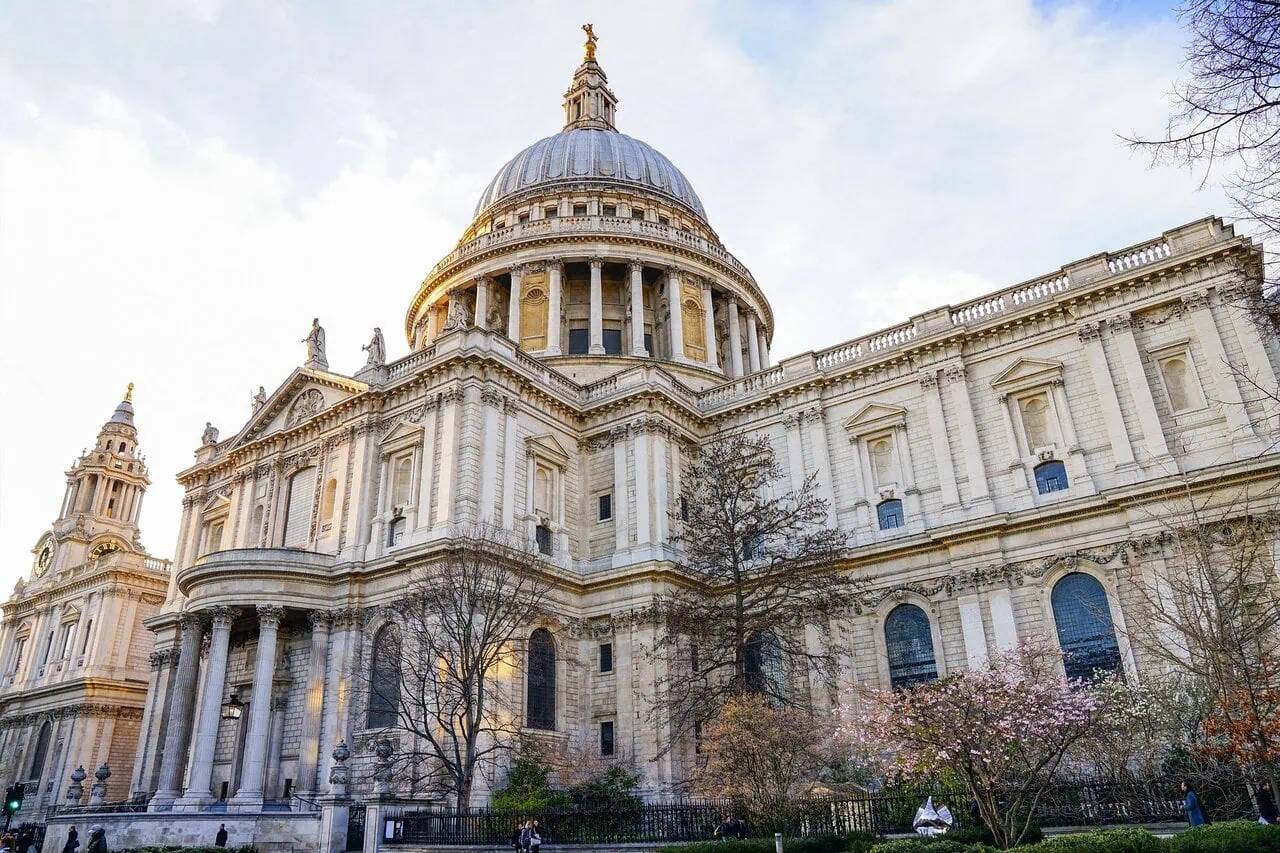
At first glance, St Paul’s Cathedral may not seem like a major Harry Potter location, but it has a key hidden connection.
Inside, the Geometric Staircase was used as the staircase leading to Professor Trelawney’s Divination classroom in Harry Potter and the Prisoner of Azkaban. This is the same staircase Harry climbs during his lessons.
Even from the outside, the scale and grandeur of the building help explain how real-world architecture influenced the design of Hogwarts.
Without context, this feels like a standard London landmark. With it, it becomes part of Hogwarts itself.
Allow 10 to 15 minutes outside, longer if you go inside.
Walk: St Paul’s to Great Scotland Yard (15–20 minutes)
Head west through central London toward Great Scotland Yard.
This section shifts from the financial district into political London, with occasional views toward the River Thames. It highlights the contrast between ordinary city life and the hidden magical world.
Great Scotland Yard, Ministry of Magic Entrance Scene – Stop 4
Great Scotland Yard is linked to the Ministry of Magic visitor entrance scenes in Harry Potter and the Order of the Phoenix.
In the film, Harry and Mr Weasley enter a red telephone box and descend into the Ministry. While the prop is no longer here, the setting represents where the wizarding government exists beneath London.
There is nothing visually magical about this location, which is exactly the point. It shows how the films place the wizarding world inside ordinary spaces.
This is also one of the clearest examples of where a self-guided route lacks explanation. Without context, it is just a street. With it, it becomes a hidden magical entrance.
Allow around 10 minutes.
Walk: Great Scotland Yard to Trafalgar Square (10 minutes)
Continue west toward Trafalgar Square.
You will pass near Whitehall, home to major government buildings, subtly reinforcing the Ministry of Magic connection.
Trafalgar Square, Central London Transition Point – Stop 5
While not a direct filming location, Trafalgar Square plays an important role in the route.
By now, you have moved from hidden backstreets into the centre of London, mirroring the shift from secret magical entrances to more open, public spaces.
It is a natural place to pause, reset, and take in your surroundings before continuing.
Allow 15 to 20 minutes.
Walk: Trafalgar Square to Leadenhall Market (15–20 minutes)
Head back toward the City of London and make your way to Leadenhall Market.
Depending on your route, you may pass near Covent Garden. As you move east again, the streets become more enclosed and historic, building anticipation for the final stop.
Leadenhall Market, Diagon Alley Entrance Scene – Stop 6
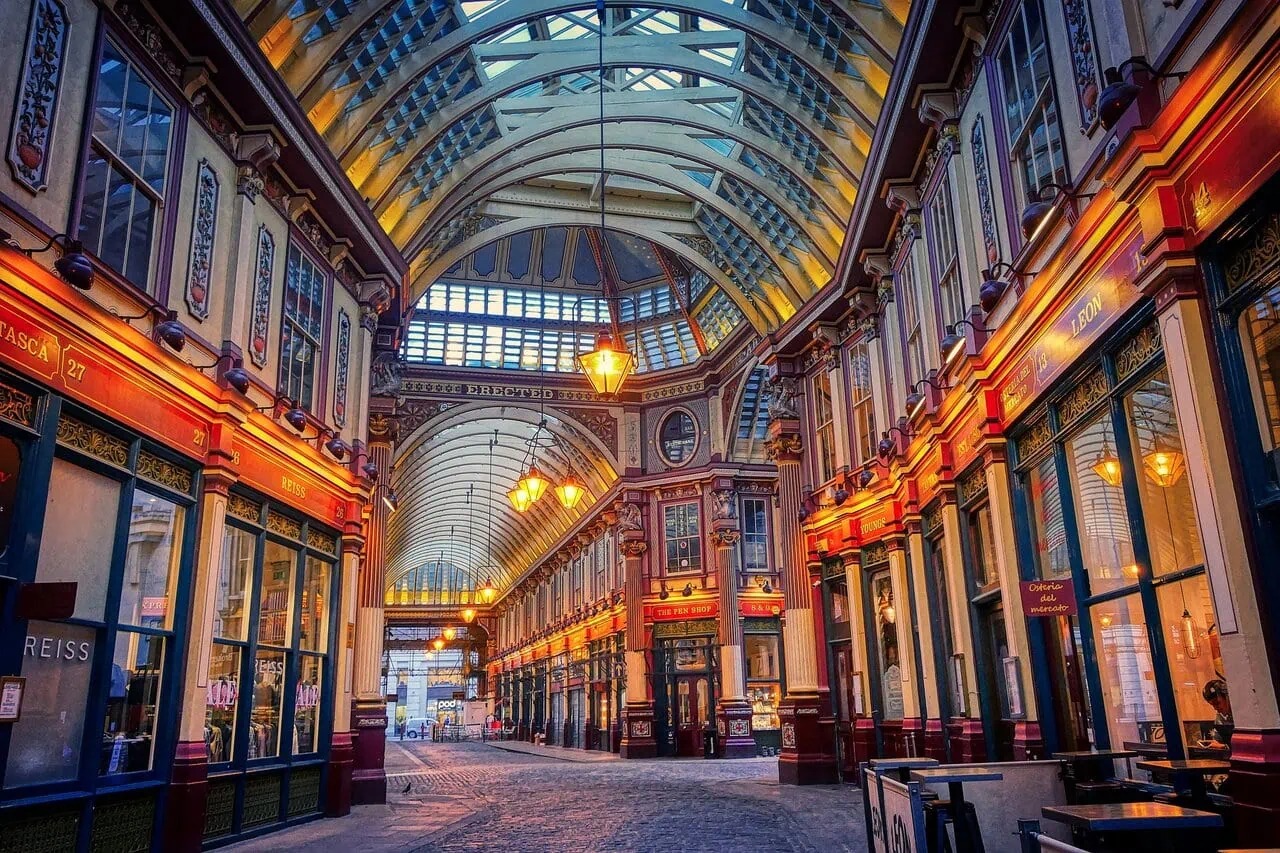
Leadenhall Market is one of the most iconic Harry Potter locations in London.
In Harry Potter and the Philosopher’s Stone, this was used as the entrance to Diagon Alley, including the exterior of the Leaky Cauldron. This is where Hagrid first leads Harry into the wizarding world.
Walk through slowly and take in the ornate roof, narrow passageways, and detailed shopfronts. Unlike other stops, this location already feels like it belongs in the films without needing major changes.
It is easy to see why it was chosen. This is the moment where London fully transforms into the wizarding world.
This is also one of the busiest stops, so visiting early or later improves the experience.
Allow 20 to 30 minutes.
Optional Extensions to Your Route
Once you have completed the main harry potter filming locations london route, there are several easy extensions that can enhance your day without requiring major detours.
One of the most popular additions is Platform 9¾ at King’s Cross Station, which is not part of the core walking route but remains one of the most recognisable Harry Potter spots in London. It is slightly further north, so it works best as a separate stop either before or after your main walk. For many visitors, this is a must-see photo opportunity and a natural way to round off the experience.
Another option is to revisit locations along the route at a slower pace, particularly Leadenhall Market, which can feel quite different depending on the time of day. Visiting early in the morning or later in the evening often provides a quieter, more atmospheric experience that better reflects its appearance as Diagon Alley.
You may also want to extend your route into nearby areas such as Covent Garden or Soho, which are packed with shops, cafés, and additional attractions. While not directly linked to Harry Potter, these areas allow you to turn your walk into a full half-day or even full-day London itinerary.
These extensions are optional, but they add flexibility and allow you to tailor the experience depending on how much time and energy you have.
How This Compares to a Guided Tour
A self-guided Harry Potter tour London offers a very different experience compared to a guided tour, and understanding that difference helps you decide which option is right for you.
The biggest advantage of going self-guided is freedom. You control the pace, the route, and the time spent at each location. You can stop for photos, take breaks, or explore nearby attractions without worrying about keeping up with a group. This makes it ideal for travellers who prefer a more relaxed and flexible approach.
However, this comes with a trade-off. Guided tours provide structure, storytelling, and context that you simply do not get when exploring on your own. A good guide brings locations to life by explaining how they were used in the films, sharing behind-the-scenes details, and adding interactive elements that keep the experience engaging.
If you are deciding between the two, it comes down to what you value more. A self-guided route is best if you want independence and a lower cost, while a guided experience is better if you want depth, entertainment, and expert insight.
For many visitors, the best approach is to combine both. You can use this route to explore at your own pace, then take a guided tour separately to gain a deeper understanding of the locations and their connection to the films.
Tips for Visiting Harry Potter Locations in London
Getting the most out of your harry potter filming locations london route comes down to timing, planning, and knowing what to expect from each stop.
One of the most important factors is timing your visit carefully. Popular locations such as Leadenhall Market and Borough Market can become very crowded during peak hours. Visiting early in the morning or later in the afternoon can make a significant difference to your experience, especially if you want clear photos.
Navigation is another key consideration. While the route is straightforward, London streets can be busy and occasionally confusing. Using a mapping app and planning your route in advance will help you move smoothly between locations without unnecessary detours.
Comfort is also important. This is a walking route that covers multiple areas, so comfortable footwear and weather-appropriate clothing will make the experience far more enjoyable. London weather can change quickly, so being prepared helps avoid disruptions.
Finally, it is worth managing expectations. Not all locations are clearly marked or preserved exactly as they appear in the films. Part of the experience is recognising how real-world locations were adapted for the screen. Approaching the route with that mindset makes it far more rewarding.
Suggested Half-Day Harry Potter Itinerary
A self-guided Harry Potter walking route London works best when structured as a half-day plan, allowing you to explore comfortably without rushing.
Start your day near Borough Market, where you can explore the area linked to the Leaky Cauldron and grab food or coffee before beginning the walk. From there, make your way toward the Millennium Bridge, taking time to enjoy the views and connect the location to its appearance in the films.
Continue across the river toward the St Paul’s Cathedral area, then move on through central London, passing key landmarks such as Great Scotland Yard and Trafalgar Square. This section of the route provides a mix of filming locations and major London sights.
Finish your walk at Leadenhall Market, where you can explore the Diagon Alley filming location and take photos. From here, you can either extend your day further into central London or head toward additional Harry Potter locations such as King’s Cross.
This structure keeps the route balanced, manageable, and enjoyable, making it easy to fit into a wider London itinerary.

Rupert’s Handy Travel Tips
Rupert’s been wandering central London for years (mostly following the scent of snacks), and he’s picked up a few clever tips to help you make the most of your self-guided Harry Potter route.
- Start early if you can – popular spots like Leadenhall Market are much quieter in the morning.
- Download your route in advance – phone signal can dip in busy areas, so having locations saved helps.
- Take your time at key stops – especially Millennium Bridge and Diagon Alley locations.
- Combine with other attractions – you’re already in central London, so make the most of it.
- Leave Platform 9¾ until the end – it works better as a separate stop rather than part of the walk.
Want to meet the reindeer behind our travel tips? Find out more in our page Who is Rupert?.
Frequently Asked Questions
Can you visit Harry Potter filming locations in London for free?
Yes, most Harry Potter filming locations London featured in this route are completely free to visit. Places like Millennium Bridge, Leadenhall Market, and Trafalgar Square are public spaces, meaning you can explore them without paying for entry. The only costs you may encounter are food, transport, or optional attractions nearby.
How long does a self-guided Harry Potter walking route London take?
Most self-guided routes take between two and four hours, depending on your pace and how much time you spend at each location. If you include optional extensions like King’s Cross or additional sightseeing stops, the route can easily become a half-day or full-day experience.
Are the Harry Potter locations close together in London?
Yes, one of the biggest advantages of this route is that the main locations are clustered within central London. While there is some walking involved, the route follows a logical path and does not require long travel distances between stops.
Is it worth doing a self-guided tour instead of a guided one?
A self-guided Harry Potter tour London is worth it if you value flexibility and independence. However, if you want deeper insight, storytelling, and a more interactive experience, a guided tour may be the better option. Many travellers choose to combine both approaches.
Can you combine this route with Platform 9¾?
Yes, but Platform 9¾ at King’s Cross Station is not on the main walking route and requires a short journey north. It is best visited before or after completing the route rather than trying to include it in the middle.
Further Reading & Related Guides
If you want to take your experience further, this self-guided route is just one part of a much bigger Harry Potter journey across London and the UK. Many visitors start with filming locations like these, then move on to more immersive experiences such as the Warner Bros. Studio Tour, where you can step inside the actual sets and see the props used in the films.
For a more structured experience within the city, a Harry Potter walking tour London adds storytelling, hidden details, and interactive elements that bring the locations to life in a different way. This is a strong option if you want more context after exploring independently.
If you are planning to go beyond London, a wider Harry Potter day trips from London guide helps you connect destinations like Oxford and other filming locations across the UK, allowing you to build a more complete and varied itinerary. Combining these guides gives you a mix of self-guided exploration, guided experiences, and full-day trips, creating a well-rounded Harry Potter adventure.
Last Updated
April 2026
Affiliate Disclosure
This page contains affiliate links. If you click through and make a purchase or booking, we may earn a small commission at no extra cost to you. This helps support our work and allows us to continue providing detailed, independent travel advice. We only recommend apps and services we personally use or have verified as high-quality.