
Llandudno is the grandest of Wales’s Victorian seaside resorts, built around a sweeping curved bay just a few minutes by train from Conwy. This guide brings together the best things to do in Llandudno, from the Pier and Promenade to the Alice in Wonderland trail, Venue Cymru and Mostyn Street shopping, with practical prices, opening times and route planning for every attraction, plus a first look at the Great Orme headland above the town.
The town took shape in the mid-19th century, when the arrival of the railway turned a quiet fishing hamlet into one of Britain’s most fashionable Victorian resorts. That heritage has survived remarkably intact, from the pastel-painted hotels along the Promenade to the ironwork of the pier itself.
Two very different beaches bookend the town, the busier North Shore facing open sea and the quieter West Shore looking across towards Conwy and Snowdonia. Between them sits a walkable centre with enough shops, cafes and attractions to fill anywhere from half a day to a longer stay.
Families are well catered for too, with the Alice in Wonderland trail turning a stroll into a treasure hunt and Happy Valley Gardens offering crazy golf alongside its formal planting. The Great Orme headland rising behind the town adds a genuinely different kind of day out, reached by tramway, cable car or on foot.
Llandudno also works as an easy base for exploring the wider North Wales coast, sitting directly on the railway line to Conwy, Bangor and Chester. This guide covers every one of the town’s attractions in turn, with practical detail on cost, timing and how to fit them together.
| Attraction | Best For | How Long to Allow | Cost |
|---|---|---|---|
| Llandudno Pier | Victorian ironwork & sea views | 30–60 minutes | Free (paid amusements) |
| Promenade & North Shore Beach | Strolling & family fun | 1–2 hours | Free |
| Llandudno War Memorial | Quiet reflection on the seafront | 5–10 minutes | Free |
| West Shore Beach | Quiet sand & views | 1–2 hours | Free |
| Little Orme & Angel Bay | Clifftop walking & seals | 1.5–2 hours | Free |
| Bodafon Farm Park | Farm animals for young children | 1–2 hours | Free |
| Alice in Wonderland Trail | Statues & family trail | 1–2 hours | Free |
| Venue Cymru | Theatre & live shows | 2–3 hours (show dependent) | Paid |
| Mostyn Street | Shopping & cafes | 1–2 hours | Free to browse |
| Oriel Mostyn Gallery | Contemporary art | 30–60 minutes | Free |
| Happy Valley Gardens | Gardens & crazy golf | 30–60 minutes | Free (paid golf) |
| Llandudno Museum | Local history & archaeology | 45–60 minutes | Paid |
| The Great Orme | Headland views, tramway & cable car | Half a day | Paid (attractions) |
| Victorian Extravaganza | Annual festival (May Bank Holiday) | A few hours to a full day | Free |
Walk Llandudno Pier
Llandudno Pier is the longest pier in Wales and one of the finest surviving examples of Victorian engineering on the British coast, opened in stages from 1877 and stretching around 700 metres out into the bay. Its ornate ironwork, cast-iron columns and wooden decking give it a genuinely grand feel that’s rare among British piers still standing today.
The structure has been carefully restored over the decades, and the effort shows in the intricate ironwork underfoot. The National Piers Society named it Pier of the Year in both 2005 and 2025, a rare double reflecting how well it’s been maintained.
Walking the full length is completely free, and it’s one of the best ways to get your bearings on arrival in Llandudno. The curve of the bay, the bulk of the Great Orme and, on a clear day, the Little Orme too, are all visible from the deck as you walk.
At the pier head, an amusement arcade, ice cream kiosks and a small shell shop keep things busy, with rides and games paid for individually rather than through a single admission fee. It’s a lively contrast to the quiet Victorian elegance of the walk out.
It’s worth being honest that the pier is a short visit rather than a full attraction, and most people are done in 30 to 60 minutes including a browse of the arcade. It’s best paired with a longer walk along the Promenade rather than treated as a destination alone.
The amusements and kiosks generally run from mid-morning to early evening, longer in peak summer, though the deck itself is open throughout the day. Benches along the way make a good spot to pause for photos back towards the town.
The entrance sits right where the Promenade begins its long curve around the bay, so it’s easy to fold both into the same walk. Combined, the two make for one of the best free half-days on the North Wales coast.
Stroll the Promenade and North Shore
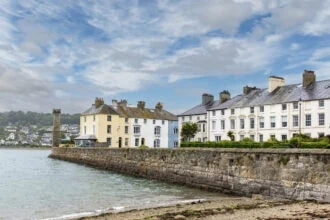
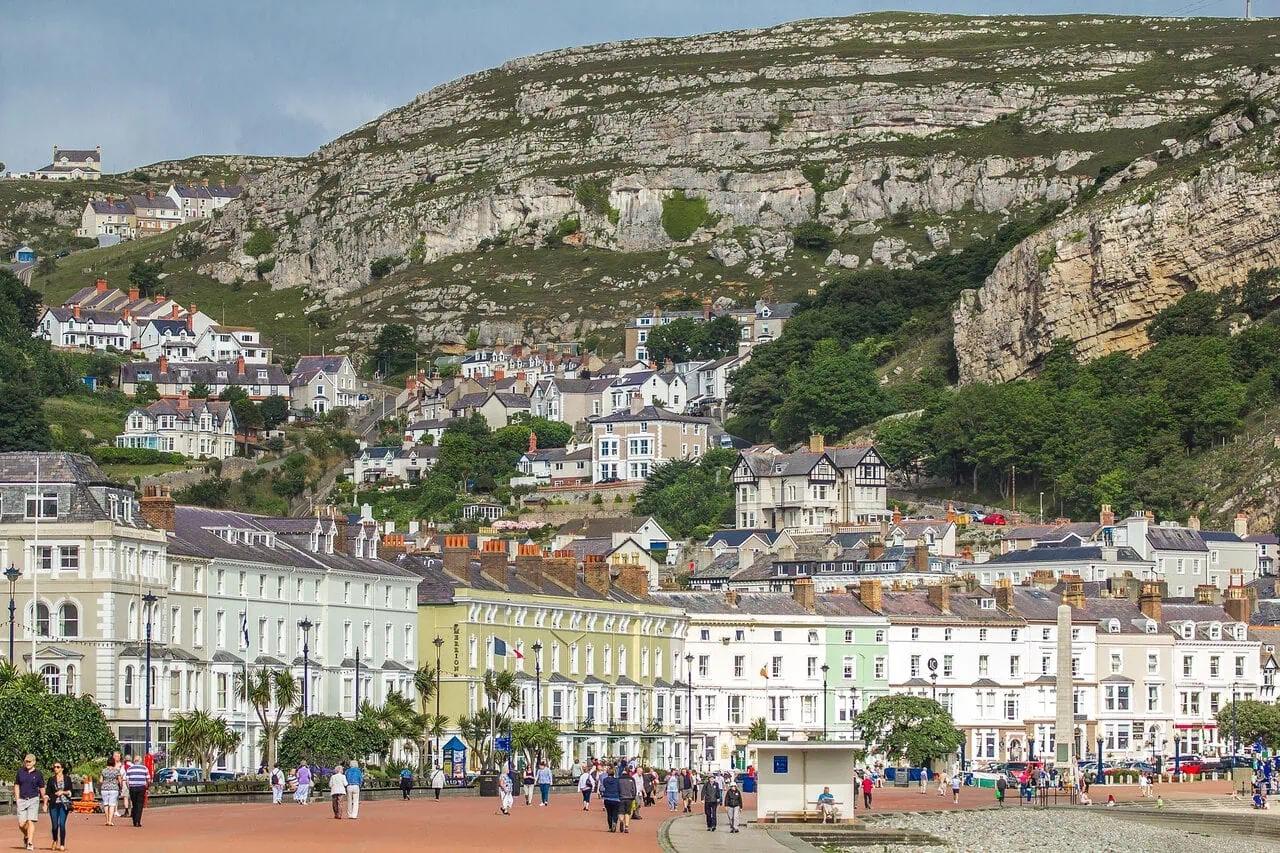
Llandudno’s Promenade curves for almost two miles around the bay between the Great Orme and the Little Orme, lined with Victorian hotels painted in pastel shades that have barely changed in well over a century. It’s the classic Llandudno view, the one most photographs of the town are built around.
Walking its full length gives a genuine sense of why the town became one of the most fashionable seaside resorts in Britain during the Victorian era. Few British seafronts keep such a uniform run of period architecture intact along their whole curve.
The North Shore beach runs the length of the Promenade, a mix of sand and shingle backed by a play area, paddling pool and deckchairs in summer. It’s the busier of Llandudno’s two beaches, and the natural first stop for anyone arriving with children in tow.
Being within easy reach of the Pier, the shops and plenty of cafes makes it the practical choice for a family day by the sea. Toilets and refreshment kiosks are dotted along the front, so it’s easy to settle in for a few hours.
The whole stretch is free to walk and sit on, with only deckchair hire carrying a cost. It’s at its best on a clear day, when the bay’s full curve is visible end to end.
It combines naturally with a walk out along the Pier, which juts out from roughly the midpoint of the curve, or a longer stroll on towards Happy Valley and the Great Orme cable car base station at the far end.
Browse hotels and accommodation for your journey.
View staysBrowse apartments, homes and self-catering accommodation.
Browse rentalsCompare prices from multiple hotel booking sites.
Check dealsSee the Llandudno War Memorial
Standing on South Parade beside North Shore beach, the Llandudno War Memorial is a striking granite obelisk, some 45 feet tall, that has watched over the seafront since the 1920s. It was designed by local architect Sidney Colwyn Foulkes, whose work shaped much of the town’s early twentieth-century character.
The Grade II listed monument carries bronze plaques recording over 200 names from the First World War and 100 from the Second, plus later losses from Korea and Iraq. Classical Greek carvings and Art Deco flourishes run up the plinth to an orb finial.
It’s a quiet, dignified stop rather than a headline attraction, and most visitors pause for only a few minutes on their way along the Promenade. That’s enough time to take in the scale of the names and the craftsmanship of the stonework.
A small memorial garden surrounds the base, with plaques dedicated to specific regiments and conflicts. Remembrance Sunday sees the largest gathering here, when more than a thousand people typically turn out for the town’s service.
There’s no charge to visit, and the memorial sits directly on the route most walkers take between the Pier and the far end of the Promenade towards Happy Valley. Allow five to ten minutes to read the inscriptions properly.
It’s easy to walk straight past without noticing how substantial the memorial is, so it’s worth building in a short, deliberate stop. Combined with a Promenade walk, it adds a moment of reflection to what’s otherwise a lively seafront stroll.
Relax at West Shore Beach
On the opposite side of the headland, West Shore is a quieter, sandier beach looking out towards Conwy, Anglesey and the mountains of Snowdonia rather than out to open sea. It has a completely different character to the North Shore, calmer and far less built up.
It’s popular with dog walkers and families wanting space rather than amusements, arcades or crowds. There’s no promenade of shops and cafes here, just sand, sea and the view across the estuary.
Low tide reveals a wide stretch of firm sand that’s ideal for a proper beach walk, with plenty of room even on a busy summer weekend. It’s worth timing a visit around the tide, since the sand narrows considerably as the water comes in.
West Shore also has a literary claim to fame. The Liddell family, whose daughter Alice inspired Lewis Carroll’s Alice’s Adventures in Wonderland, built their holiday home here in the 1860s, and the connection is explored in full on the town’s Alice trail back towards the centre.
There’s no admission charge, and it’s a genuinely peaceful counterpoint to the busier North Shore if you want an hour or two away from the crowds. Parking is available nearby, though spaces are more limited than around the main Promenade.
Explore the Little Orme and Angel Bay
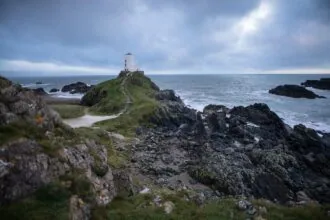
East along the coast from the Promenade, the Little Orme is a smaller, quieter headland that gets a fraction of the visitors its bigger neighbour attracts. Rising to around 140 metres, it’s protected in part as the Rhiwledyn Nature Reserve, run by North Wales Wildlife Trust.
A circular route of around 2.5 miles climbs through old limestone quarries now reclaimed by wildflowers, before reaching open clifftop views back over Llandudno bay and out towards Anglesey. It’s a proper walk rather than a stroll, with some steep sections underfoot.
The highlight for most visitors is Angel Bay, a small cove where grey seals haul out on the rocks below, often visible from the cliff path without needing to scramble down. Spring and early summer also bring nesting seabirds to the cliffs.
The walk is entirely free, and there’s no visitor centre or facilities on the headland, so it’s worth coming prepared with water and sturdy shoes. Limited parking is available near the roundabout at Penrhyn Bay.
Allow ninety minutes to two hours for the full circular route at an easy pace, longer with time spent watching for seals. It pairs naturally with a visit to nearby Bodafon Farm Park on the same side of town.
Compared with the tramway, cable car and crowds of the Great Orme, the Little Orme offers a genuinely peaceful alternative for anyone who prefers wildlife and quiet walking to organised attractions. It’s an easy addition for a second day rather than a rushed first visit.
Meet the Animals at Bodafon Farm Park
Tucked on the hillside between the town and the Little Orme, Bodafon Farm Park is a small family-run farm attraction with sweeping views back down over Llandudno bay and out to the Irish Sea. It’s a low-key, unpolished sort of place, and that’s very much part of its appeal.
A farm trail leads visitors past rabbits, ducks, donkeys, goats, deer, llamas and cattle, with pony rides typically available in summer. It’s aimed squarely at younger children rather than visitors looking for a polished attraction.
Admission is free, which is unusual for a farm park of this kind and makes it an easy add-on to a day otherwise spent on the seafront. An on-site restaurant serves drinks and snacks, including stone-fired pizza during busier periods.
There’s a small play area with toy diggers for younger children, and the farm occasionally hosts fairs and outdoor events through the summer. It’s worth checking what’s on before visiting if that appeals.
The site is open daily, with longer hours during the school summer holidays than the rest of the year. Parking is available on site, though the ground underfoot is more farmyard than manicured path.
Allow one to two hours for a relaxed visit, and combine it with a walk on the nearby Little Orme if you’re already on that side of town. It’s a straightforward, unpretentious stop, but a good one for families with young children.
Follow the Alice in Wonderland Trail
Alice Liddell, the real child who inspired Lewis Carroll’s books, spent childhood summers holidaying in Llandudno from the 1860s onwards. The town has embraced the connection ever since, turning it into one of its best-known family attractions.
A trail of statues and sculptures around the streets and gardens now traces characters from the books, including the White Rabbit, the Mad Hatter and the Cheshire Cat. Each one is tucked into a different corner of the town, rewarding anyone willing to hunt them down.
The trail is free to follow and starts near the town hall, taking in dozens of points of interest across the town centre and gardens. The Tweedledum and Tweedledee statues in Haulfre Gardens are among the highlights, set in one of the quieter corners of the trail.
A printed guide with a map is available from the tourist information centre for anyone who wants to track down every character rather than stumbling across them at random. It’s well worth picking up if children are along for the walk.
Allow around one to two hours to cover the main statues at an easy pace, longer if you’re determined to find every one. It combines naturally with a wander around Mostyn Street or a stop at West Shore, where the Liddell family’s own holiday home once stood.
Catch a Show at Venue Cymru
Venue Cymru is Llandudno’s theatre, conference centre and arena rolled into one, reopened in 2007 after a multi-million pound redevelopment of the old North Wales Theatre. It’s the town’s main cultural venue and one of the biggest of its kind anywhere in North Wales.
It hosts a genuinely varied programme, from touring West End musicals and comedy to concerts and business conferences. The main arena is capable of holding several thousand people for bigger shows, which brings a level of touring production rarely seen in a town this size.
Ticket prices vary hugely depending on what’s on, from modest fees for smaller local shows up to considerably more for major touring productions. It’s worth checking the Venue Cymru website directly for whatever’s showing during your visit, since programming changes throughout the year.
It’s not the kind of place you’d build a trip around without checking what’s on first, but a well-timed visit can turn a Llandudno stay into something more than a daytime seaside break. Booking ahead is worth it for anything popular, since seats do sell out.
The venue sits right on the Promenade, making it easy to combine an evening performance with dinner nearby or a walk along the seafront beforehand. Several restaurants and cafes along the front stay open to cover pre-show diners.
Search routes and flight options for your journey.
Search flightsChoose an Airalo eSIM and arrange mobile data before you arrive.
Browse eSIMsBook a private airport transfer in advance and have your ride planned before you arrive.
Check transfersShop on Mostyn Street
Mostyn Street is Llandudno’s main shopping street, running back from the Promenade with a mix of independent boutiques, Victorian-era arcades and high street names. It has a bit more character than a generic retail park, with genuine period architecture along much of its length.
The nearby Victoria Centre and the street’s covered arcades add a Victorian flourish that’s largely disappeared from equivalent streets in bigger towns. It’s worth ducking into the arcades even if you’re not planning to buy anything, just for the architecture.
It’s a pleasant way to fill an hour or two between the seafront attractions, particularly if the weather turns and an outdoor stroll loses its appeal. There’s a decent spread of cafes and tea rooms for a break partway through.
Charity shops and independent bookshops are also worth a browse for anyone after something a bit different from the usual chains. It’s not a destination in its own right, but a useful pocket of the town to fall back on.
Everything is free to browse, and the street is only a few minutes’ walk from both the Pier and the Promenade, making it easy to fold into the same visit without much extra walking.
See Contemporary Art at Oriel Mostyn Gallery
A short walk from Mostyn Street on Vaughan Street, Mostyn (formerly Oriel Mostyn) is widely regarded as Wales’s leading contemporary art gallery, a genuine surprise for a seaside town of this size. Its roots go back to 1901, when Lady Augusta Mostyn commissioned the original building for the Gwynedd Ladies’ Art Society.
A £5 million refurbishment completed in 2010 combined the original Edwardian red brick exterior with striking modern concrete galleries, winning the Gold Medal for Architecture at the National Eisteddfod of Wales in 2011. The result is a building worth seeing for the architecture alone.
Rather than a permanent collection, the gallery runs a changing seasonal programme of contemporary exhibitions, bringing work of a standard more usually associated with major city galleries to the North Wales coast. It’s worth checking what’s on before a visit.
Entry is completely free, and the light, airy galleries make for an easy, unhurried browse whatever the weather is doing outside. A cafe on site serves locally roasted coffee, alongside a shop selling Welsh-made jewellery and ceramics.
It’s open Tuesday to Saturday, 10.30am to 4.30pm, and closed on Sundays and Mondays, so it’s worth timing a visit for the right day. The building is fully accessible throughout.
Most visitors spend thirty to sixty minutes here, longer if a particular exhibition catches your attention. It combines naturally with a stroll down Mostyn Street or a stop at Llandudno Museum on the same side of town.
Explore Happy Valley Gardens
Happy Valley is a set of ornamental gardens on the lower slopes of the Great Orme, gifted to the town by Lord Mostyn in 1887 to mark Queen Victoria’s Golden Jubilee. What was once a working quarry is now one of the most peaceful corners of the town.
The gardens are landscaped with paths through trees and rockeries, climbing gently up the hillside with views back down over the bay. A stone circle within the gardens hosted the Welsh National Eisteddfod in both 1896 and 1963, a detail easy to miss without knowing to look for it.
The gardens themselves are free to walk, with a small charge for the crazy golf and putting green if you fancy a game. It’s a good spot to slow down for half an hour between busier attractions elsewhere in town.
It’s more of a pleasant stop than a destination in its own right, best combined with something else nearby rather than visited on its own. Benches along the paths make it an easy place to rest partway through a longer day.
The base station for the cable car up the Great Orme sits right alongside Happy Valley, so it’s a natural spot to combine with a trip up onto the headland. Allow 30 to 60 minutes for the gardens alone, longer with a round of crazy golf.
Compare hostels and budget-friendly places to stay.
Browse hostelsAccess compensation support, eligible lounge benefits and faster payouts.
See the benefitsUse convenient luggage storage between arrival, check-in and departure.
Check storageVisit Llandudno Museum
Llandudno Museum and Gallery packs a surprising amount into a small Victorian building on Gloddaeth Street, covering local history from Bronze Age copper mining on the Great Orme through to the town’s Victorian heyday as a resort. It’s an easy stop to underestimate from the outside.
Displays include archaeology, social history and a changing programme of art exhibitions in the gallery space. The copper mining material in particular gives useful context before heading up to the actual mines on the Great Orme itself.
It’s a compact museum rather than a sprawling one, and most visitors get round in 45 to 60 minutes without feeling rushed. That makes it an easy addition to a day that also takes in the Pier and Promenade.
Admission runs from £3.00 (€3.45/$3.81) for a child to £5.00 (€5.75/$6.35) for an adult. The museum is open Tuesday to Saturday, 10am to 4pm, and closed on Mondays and Sundays, so it’s worth timing a visit around the rest of the week.
It sits a short walk back from the seafront, making it easy to combine with the Alice in Wonderland trail or a stroll down Mostyn Street on the same visit.
Head Up onto the Great Orme
Towering above the town, the Great Orme is a huge limestone headland riddled with Bronze Age copper mines and now protected as a country park. It dominates the skyline from almost everywhere in Llandudno and is impossible to miss on arrival.
From the summit, sweeping views stretch back over Llandudno’s curved bay and out towards Anglesey and Snowdonia on a clear day. It’s the single biggest attraction in the area and easily worth a half day on its own.
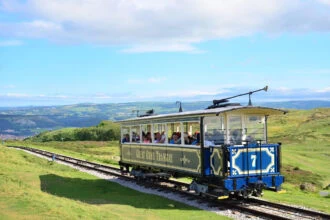
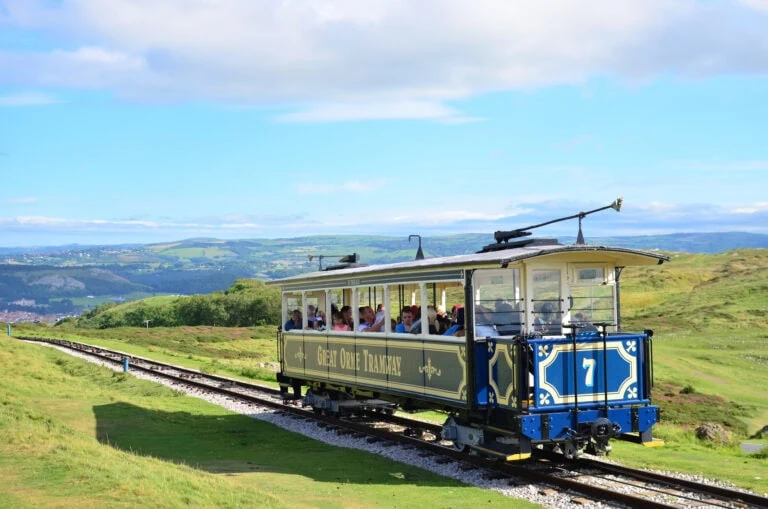
Two very different ways reach the summit. The Victorian Great Orme Tramway is Britain’s only cable-hauled street tramway, climbing through the streets of the town before opening out onto the headland proper.
The alternative is the cable car, running up from Happy Valley and said to be the longest passenger cable car system in the country. Both give completely different views of the climb, and it’s worth taking one up and the other back down if time allows.
Both operate seasonally with separate admission, and neither runs year-round, so it’s worth checking timings before building a visit around them, particularly outside the summer months. Queues can build quickly at peak times in August.
Beyond the tramway and cable car, the headland also holds the Bronze Age copper mines, a dry ski slope, a toboggan run and miles of walking trails across the country park. There’s far more detail on all of it in our dedicated guide to the Great Orme, the great limestone headland above the town.
Walk Through Haulfre Gardens
Tucked onto the lower slopes of the Great Orme, Haulfre Gardens provide one of Llandudno’s quieter walks and a useful link between the town centre, West Shore and the headland above.
The gardens climb gradually above the town, with paths running through trees, shrubs and landscaped sections rather than the more formal seaside planting found around the Promenade. As you gain height, gaps in the vegetation provide views across Llandudno and towards the surrounding coast.
One of the best-known routes through this area is the Invalids’ Walk, created as a relatively gentle way for Victorian visitors to enjoy the fresh air and elevated scenery without tackling the steeper paths higher on the Great Orme. The name is very much a product of its era, but the route remains an enjoyable alternative to simply walking along the roads.
Haulfre Gardens also feature on Llandudno’s Alice in Wonderland Trail, with the Tweedledum and Tweedledee sculptures providing another reason for families following the trail to explore this side of town.
Unlike the busier Happy Valley Gardens, Haulfre feels more like somewhere to wander through than a conventional visitor attraction. There are no tickets to buy and no particular route you need to complete.
Allow around 30 to 60 minutes, depending on how far you walk and whether you’re continuing towards the Great Orme. It’s particularly good for visitors who want some greenery and elevated views without committing to one of the headland’s longer walking trails.

Discover Llandudno’s Victorian Architecture
Llandudno’s Victorian character isn’t confined to its pier. Much of the town itself was deliberately developed as a Victorian seaside resort, and simply walking around the centre reveals how much of that original appearance survives.
The most obvious example is the sweeping line of Victorian hotels along the Promenade. Their uniform terraces and pastel-painted façades frame the entire bay and create the classic Llandudno view, with the Great Orme rising behind them.
Head inland and the architecture continues around Mostyn Street and the surrounding shopping streets, where ornate façades, covered arcades and period shopfronts survive among modern businesses. Looking above ground-floor level often reveals considerably more historic detail than you’d notice while browsing the shops.
The town’s layout is part of the story too. Llandudno expanded rapidly after the arrival of the railway during the 19th century, and much of what visitors see today resulted from the transformation of a much smaller settlement into a fashionable purpose-built resort.
Churches, hotels, villas and civic buildings all contribute to that Victorian streetscape, while the Pier and Promenade provided the grand public spaces expected by wealthy visitors arriving for a seaside holiday.
You don’t need to follow a formal architectural trail. Allow an extra hour for a slow walk around the centre, particularly the Promenade and streets behind Mostyn Street, and remember to look above the modern signs and shopfronts.
It’s also completely free, making the architecture one of the easiest ways to understand Llandudno beyond its individual attractions. The town isn’t simply somewhere that happens to contain Victorian buildings; its Victorian development is fundamental to why modern Llandudno looks the way it does.
Step Back in Time at the Home Front Museum
For a very different type of history from the Great Orme’s prehistoric mines, the Home Front Museum explores everyday British life during the Second World War.
Rather than concentrating on battles and military equipment, the museum focuses on what life was like for ordinary people at home. Displays recreate aspects of wartime houses, shops and community life, helping explain how rationing, air raids and shortages affected daily routines.
Period objects and memorabilia are used throughout, giving the museum a much more immersive feel than a straightforward collection of objects in display cases. It’s particularly interesting for younger visitors who may know about the war from school but have little idea how dramatically normal domestic life changed.
The museum also adds an important piece to Llandudno’s own 20th-century history. The town’s story didn’t stop when its Victorian resort boom ended, and the wartime period forms another layer of the history behind the modern seaside town.
It’s an independent indoor attraction, making it particularly useful when North Wales weather makes the beaches, gardens or Great Orme less appealing. Allow roughly an hour for a visit, although anyone particularly interested in social or wartime history could easily spend longer examining the displays.
Opening days, admission prices and seasonal arrangements can change, so check the museum’s current information before visiting rather than relying on older opening times. It combines easily with Llandudno Museum, Mostyn Street and the Alice trail because everything is within the central part of town.
Visit Llandudno Lifeboat Station
Llandudno’s relationship with the sea extends well beyond its Victorian pier. The town has a long association with the RNLI, and its modern lifeboat station provides a glimpse of the working maritime side of the resort.
The station houses lifeboat equipment used by volunteers responding to emergencies around the North Wales coast. That’s a very different side of the sea from the pleasure boats, beaches and amusements most visitors encounter elsewhere in Llandudno.
When visitor access is available, you may be able to learn more about the lifeboats, crews and rescues carried out from Llandudno. It’s particularly interesting for families with children fascinated by boats or emergency services.
Remember that this is first and foremost an operational lifeboat station, not a museum created solely for tourists. Access can therefore depend on operational requirements, volunteer availability and events taking place at the station.
There is normally no conventional attraction admission fee where public access is offered, although donations to the RNLI help support its lifesaving work.
Check current public opening arrangements before making a special journey. Even without going inside, incorporating the station into a seafront walk helps show that Llandudno’s connection with the sea is still very much alive rather than simply part of its Victorian history.
Walk from Llandudno to Conwy
Llandudno and Conwy are close enough that you don’t necessarily need a train or car to travel between them. The two towns can be connected on foot, turning what is normally a short journey into a proper North Wales coastal walk.
The most rewarding version incorporates the Great Orme, allowing you to leave Llandudno behind and climb onto the headland before continuing towards the Conwy side. It’s considerably more demanding than simply walking the Promenade, but the elevated views make it one of the best longer walks accessible directly from town.
From the Great Orme, the route eventually brings you towards the Conwy estuary, with views across the water and towards the mountains inland. The contrast between Llandudno’s Victorian seafront and Conwy’s medieval skyline makes the two ends of the walk feel remarkably different.
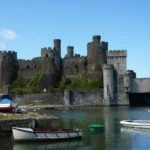
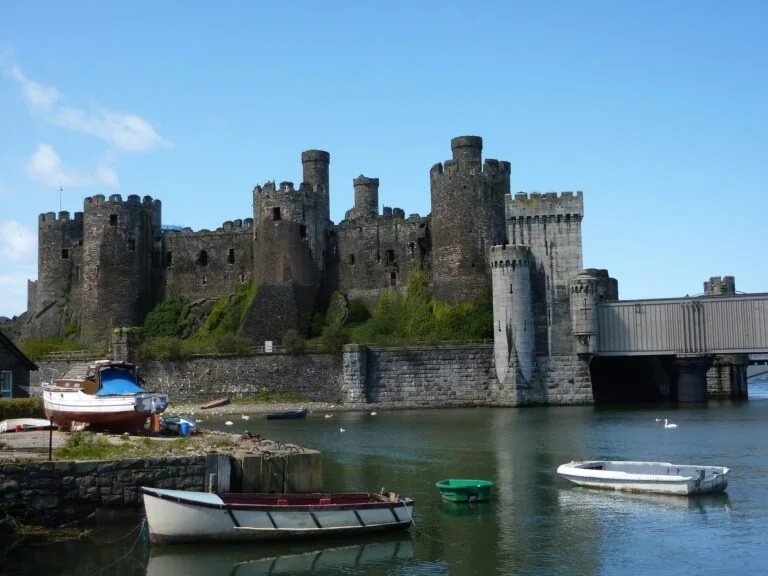
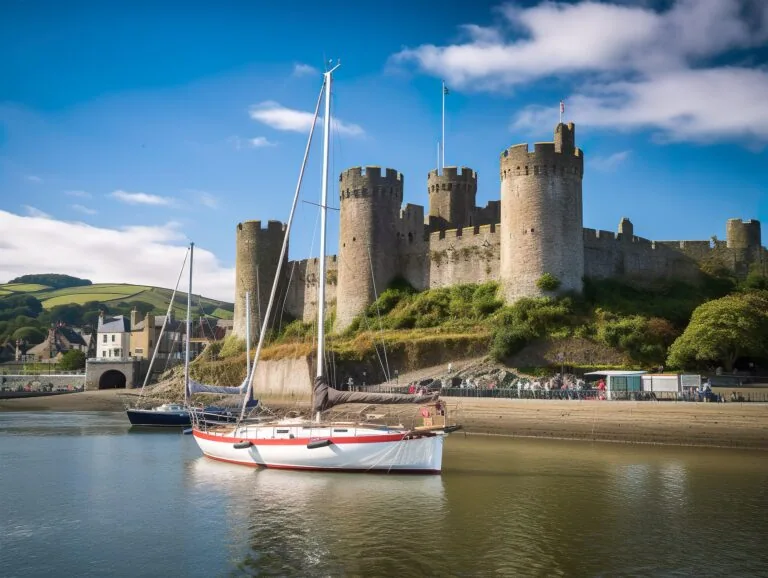
Reaching Conwy Castle and the town walls provides an excellent finish. You can spend a few hours exploring Conwy before returning to Llandudno rather than immediately retracing your steps.
The railway makes this particularly practical as a one-way walk. Llandudno and Conwy both have stations, so you can walk in one direction and use the train for the return journey if you don’t want to cover the distance twice.
Wear suitable footwear and allow several hours rather than treating this as a casual stroll between neighbouring towns. Weather on the Great Orme can also be considerably more exposed than conditions down at sea level.
Time Your Visit for the Victorian Extravaganza
Every year over the May Day Bank Holiday weekend, Llandudno turns its Victorian heritage into a three-day festival, with the main streets and Promenade closed to traffic for parades and stalls. It’s one of the largest events of its kind in Wales, drawing large crowds from across the region.
Locals and visitors alike dress in full Victorian costume, and daily parades feature vintage vehicles, steam engines and traditional fairground rides along the seafront. Shopfronts along Mostyn Street and the Promenade join in too, with many businesses dressing their windows for the occasion.
Free street entertainment runs throughout, including jugglers, magicians and musicians, alongside competitions like window dressing and sandcastle building. Stalls sell handmade crafts and local food, adding a market feel to the atmosphere.
Admission to the festival itself is free, though individual stalls, rides and refreshments are paid for separately as you go. It’s worth arriving early on the busiest days, since the town centre can get genuinely crowded.
The event has run since the 1980s and regularly coincides with the Llandudno Transport Festival, adding classic cars and vehicles to the mix of period costume and fairground rides. It’s a very different, livelier side of the town compared with a quiet midweek visit.
If your trip falls over the bank holiday weekend, it’s well worth building a visit around it rather than avoiding the crowds, since it’s one of the best chances to see Llandudno’s Victorian character brought to life. Outside that weekend, the rest of this guide’s attractions run as normal.
Best Things to Do in Llandudno With Children
Llandudno works well for families, with the free Pier and North Shore beach’s play area and paddling pool ready-made for younger children. There’s enough here to fill a full day without needing to plan too carefully.
The Alice in Wonderland trail turns a walk around town into a treasure hunt, which tends to hold children’s attention far longer than a straightforward stroll would. Picking up the printed map from the tourist information centre makes it easier still.
A ride up the Great Orme by tram or cable car is usually a highlight for children of any age, and the novelty of the journey often matters as much as the views at the top. It’s worth building time for both the ride and a wander at the summit.
Happy Valley’s crazy golf and the dry ski slope and toboggan run further up on the Great Orme give active options if the beach isn’t enough on its own. Both are good fallback plans on a day when the weather doesn’t quite cooperate.
Most of the town’s central attractions sit within easy walking distance of the Promenade, so a car isn’t essential once you’ve parked for the day. That makes Llandudno a genuinely low-stress choice for a family day out.

Best Free Things to Do in Llandudno
Llandudno is generous with free attractions for a town of its size. Walking the length of the Pier costs nothing, and it’s one of the best introductions to the town on arrival.
Strolling the Promenade, following the Alice in Wonderland trail and spending time on either North Shore or West Shore beach all cost nothing too. Between them, that covers most of what makes Llandudno distinctive.
Happy Valley Gardens are free to wander as well, with only the crazy golf carrying a small charge. It’s an easy add-on to a free day that also takes in the seafront.
Even the town’s Mostyn Street shops cost nothing to browse, and window shopping along the Victorian arcades is a good way to fill an hour if the weather turns. None of it feels like a consolation prize for skipping the paid attractions.
That’s easily enough to fill a full day without paying a single admission fee, before even factoring in the paid attractions on the Great Orme or a show at Venue Cymru. It makes Llandudno a genuinely affordable base for a longer stay too.
How Long Do You Need in Llandudno?
A focused visit taking in the Pier, Promenade and Mostyn Street can be done in half a day. That suits anyone combining Llandudno with Conwy or elsewhere on the coast in the same trip.
A full day allows time to add the Alice trail, the museum and a trip up the Great Orme. That’s a fuller and more satisfying way to see the town if you only have the one day to give it.
Llandudno also works well as a base for a couple of nights, particularly if you want to explore the Great Orme properly rather than rushing the tramway or cable car. Two nights gives enough slack for the weather to cooperate at least once.
A single overnight stay is enough to add an evening walk along the Promenade once the day-trippers have gone, when the seafront is at its quietest. It’s a different, calmer side of the town worth seeing if you can manage it.
Staying longer also opens up catching a show at Venue Cymru, or using the town as a springboard for day trips along the North Wales Coast Line. Either extends the visit well beyond a single day without much extra planning.
Getting to Llandudno
Llandudno railway station sits at the end of a short branch line just a few minutes from Llandudno Junction on the North Wales Coast Line. That makes the town an easy stop by train from Conwy, Chester and along the coast towards Bangor and Holyhead.
Trains run regularly enough that it’s rarely worth planning a trip around a specific departure, particularly during the day in summer. For the full route, connections and journey times, see our North Wales Coast Line guide.
Drivers can reach Llandudno via the A55 and A470, with several pay-and-display car parks around the town centre and along the Promenade. Rates rise in the summer season and spaces fill quickly on busy days, so arriving earlier in the day helps.
Parking directly on the Promenade puts you within walking distance of most of the town’s main attractions, which cuts down on needing the car again once you’ve arrived. It’s worth allowing a little extra time to find a space in peak season.
Llandudno also pairs naturally with a wider Wales itinerary. See our full Wales Travel Guide for how it fits alongside Snowdonia, the coast and the rest of North Wales.


Rupert’s Handy Travel Tips
Heading to Llandudno? Here are a few useful tips to help you make the most of your visit:
- Time West Shore for low tide: the sand there is at its best a couple of hours either side of low tide, so check tide times before heading over from the Promenade.
- Carry some cash: several attractions on the Great Orme and around the pier don’t reliably take card payments, so it’s worth having change on you.
- Check the museum’s opening days: Llandudno Museum is closed on Mondays and Sundays, so plan a visit for Tuesday to Saturday.
- Pick up an Alice trail map: the tourist information centre sells a printed guide, which makes it much easier for children to track down every statue.
- Pack a layer for the Promenade: the sea breeze along the seafront can be noticeably cooler than the town centre, even on a warm summer day.
Want to meet the reindeer behind our travel tips? Find out more in our page Who is Rupert?.
Frequently Asked Questions
Is Llandudno worth visiting?
Yes. Llandudno combines a genuinely grand Victorian seafront, the longest pier in Wales, two very different beaches and a limestone headland with tramway and cable car access, all within a compact and walkable town.
Is Llandudno or Conwy better to visit?
They suit different things. Llandudno has the Victorian seafront, pier and Great Orme, while Conwy has the castle and medieval town walls. Many visitors base themselves in one and visit the other as a short trip, since they’re only a few minutes apart by train or car.
How long do you need in Llandudno?
Half a day covers the Pier, Promenade and Mostyn Street, while a full day allows time for the Alice in Wonderland trail, the museum and a trip up the Great Orme.
Is entry to Llandudno Pier free?
Yes. Walking the length of the pier costs nothing, though the amusement arcade and rides at the pier head are paid for individually.
Is there parking in Llandudno?
Yes, several pay-and-display car parks sit around the town centre and along the Promenade. Rates are higher in the summer season, and spaces can fill quickly on busy days, so arriving earlier helps.
Is Llandudno good for a day trip from Chester or Manchester?
Yes. Llandudno sits on a branch of the North Wales Coast Line, making it an easy train journey from Chester and a manageable day trip from Manchester, particularly when combined with Conwy.
Further Reading & Related Guides
If Conwy Castle is part of your trip too, our dedicated guide covers the fortress in full depth, and our companion Things to Do in Conwy page rounds up the rest of that town’s attractions for an easy comparison with Llandudno. And our full Great Orme guide covers the tramway, cable car, copper mines and country park in far more depth than fits here.
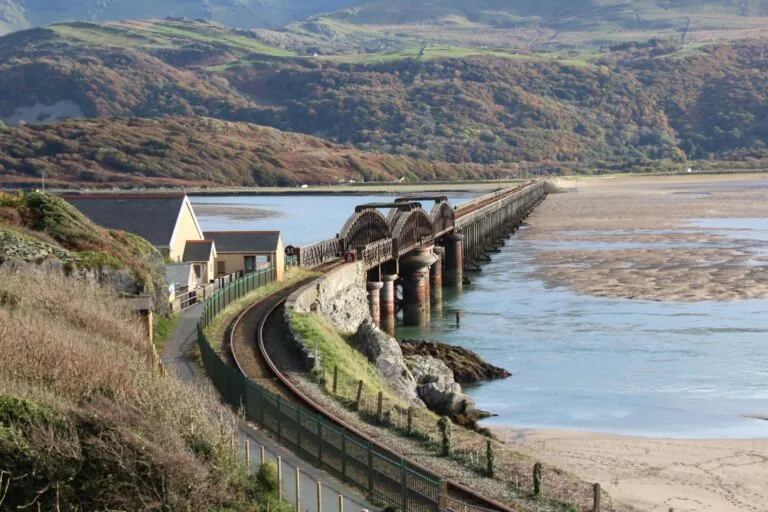
Llandudno sits right on the North Wales Coast Line, so if you’re planning a wider rail trip along the coast, that guide has full route, connection and journey time detail for getting here from Chester, Conwy or further along towards Bangor and Holyhead.
For the bigger picture of what else North Wales has to offer beyond the coast, our Wales Travel Guide brings together the national parks, castles and coastline that pair naturally with a visit to Llandudno, whether you’re here for a day trip or basing yourself for longer.