
What Is the London Cable Car and Is It Worth It
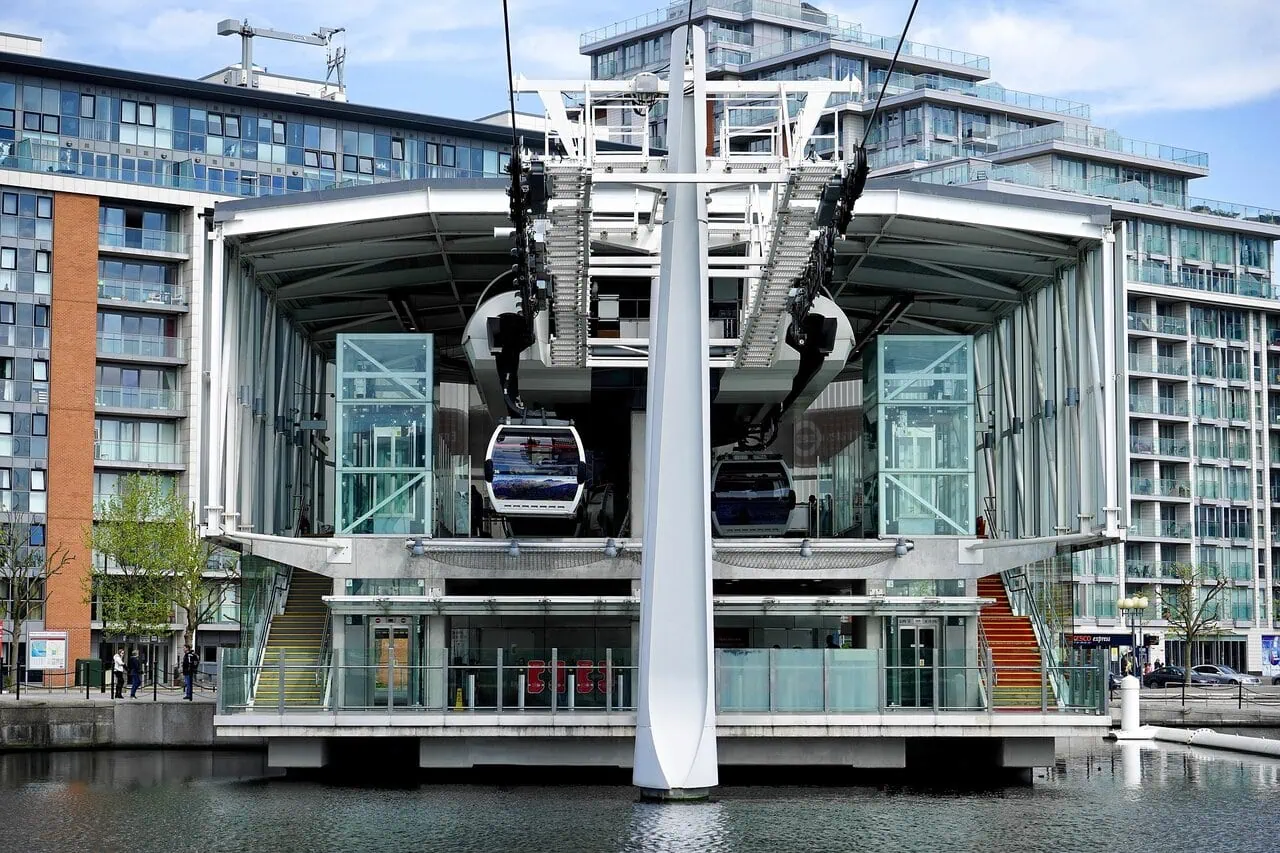
The London cable car, officially called the IFS Cloud Cable Car, is a cable car system that crosses the River Thames between Greenwich Peninsula and the Royal Docks area in East London. Many people still refer to it as the Emirates Cable Car London, which was its original name when it opened before the 2012 London Olympics. The cable car is both a tourist attraction and a practical river crossing, offering views across the Thames, Canary Wharf, the O2 Arena, ExCeL London, and London City Airport.
The cable car ride itself lasts around 10 minutes during quiet periods and around 5 minutes during busy periods, when the system runs faster to move more passengers. The cabins continuously move, similar to a ski lift, so you usually board while the cabin is still moving slowly. Each cabin can hold around 10 passengers, although it is often less crowded outside peak times.
Many visitors ask whether the London cable car is worth it, and the answer depends on what you want from it. If you are looking for a fast way across London, the Underground is quicker. However, if you want views of the Thames, Canary Wharf, and the London skyline, then the cable car is definitely worth doing, especially at sunset or at night when the city lights are visible. It is also a very unusual way to cross the river compared to trains, bridges, or boats.
The cable car is particularly popular with visitors going to the O2 Arena, ExCeL London, or London City Airport, as it connects the Jubilee Line and the DLR, which can save time compared with travelling into central London and back out again.
Route, Stations and What You See
The London cable car route runs across the River Thames between two stations. On the south side of the river is Greenwich Peninsula, located next to the O2 Arena, and on the north side of the river is Royal Docks, located near ExCeL London and London City Airport. The river crossing is just over 1 kilometre long, and at its highest point the cable cars reach around 90 metres above the River Thames, making it one of the highest viewpoints in London.
When travelling on the cable car, you can see a number of major London landmarks and areas. Looking west, you can see the Canary Wharf skyline, which includes some of the tallest buildings in London’s financial district. Looking east, you can see the Thames Barrier, one of the world’s largest movable flood barriers. Directly below you is the River Thames and the docks area that was once one of the busiest ports in the world.
If you start from the Greenwich Peninsula side, you get excellent views of the O2 Arena, Canary Wharf, and the river as you travel north. If you start from the Royal Docks side, you get views towards Greenwich, the O2, and the wider Thames Valley. Many visitors prefer travelling from Royal Docks to Greenwich because the approach towards the O2 Arena and Canary Wharf skyline is particularly impressive.
The cable car cabins move continuously throughout the day, and because the route is relatively short, you get a constant changing view across the river, docks, and skyline for the entire journey.
Tickets, Prices and How to Pay
One of the most important things to know about the London cable car tickets is that you can pay using Oyster card, contactless bank card, Apple Pay, or Google Pay, just like on London Underground and buses. This is usually the cheapest and easiest way to pay for the cable car.
Typical London cable car prices are approximately:
Adult single fare around £6, Child fare around £3, and return tickets slightly cheaper if purchased as a return. Prices can change slightly each year, so it is always worth checking before travelling, but Oyster and contactless fares are usually the best value.
Travelcards are not normally valid on the cable car, which surprises many visitors, because although it is part of the London transport system, it is priced more like a tourist attraction than a normal public transport route.
There are also Fast Track tickets available, which allow you to skip queues during busy periods such as weekends, school holidays, and evenings. These are more expensive but can be useful if queues are long, particularly on summer weekends.
If you are travelling with a family or planning a return journey, it is often cheaper to buy a return ticket rather than two single journeys, especially if you are using the cable car as an attraction rather than transport.
Many visitors don’t realise that the London cable car is also included with some London attraction passes, which can make it effectively free if you are already planning to visit multiple attractions. Depending on the pass you choose, the cable car may be included alongside major attractions such as the Tower of London, London Eye, river cruises, and hop-on hop-off buses. If you are planning a busy sightseeing itinerary, it is worth comparing passes carefully before buying individual tickets. Our London attraction pass comparison guide explains which passes include the cable car and when they offer good value.
Glass Floor Experience on the IFS Cloud Cable Car
The Glass Floor Experience on the IFS Cloud Cable Car is one of the newest and most unusual ways to cross the River Thames in London. Instead of the standard cabin floor, these upgraded cabins feature a transparent glass section beneath your feet, allowing you to look directly down at the river, boats, and docks as you travel approximately 90 metres above the Thames. It turns what is normally a short transport ride into more of an attraction and viewing experience.
The glass floor cabins operate on the same route between Greenwich Peninsula (The O2) and the Royal Docks (ExCeL London), but the experience usually includes fast-track boarding and a round trip rather than a single crossing. The full experience normally lasts around 25 to 30 minutes, depending on queues and boarding time, and gives you more time to enjoy the views in both directions.
From the glass floor cabin, you can see the Thames Barrier, Canary Wharf skyline, the Royal Docks, the O2 Arena, London City Airport, and on very clear days even central London landmarks such as The Shard and St Paul’s Cathedral. Looking down through the glass floor as boats pass underneath is the main highlight, and it is particularly impressive when the cable car is at its highest point over the middle of the river.
This experience is best suited to visitors who want something a bit different from the standard ride, as well as photographers and people who enjoy observation decks and viewpoints. It is also popular with families and visitors celebrating special occasions. Because the experience includes fast-track entry and a return journey, it is usually more expensive than a normal cable car ticket, but many visitors feel the upgraded experience and extra time in the air make it worthwhile.
Champagne Experience and Private Cabin on the IFS Cloud Cable Car
The Champagne Experience on the IFS Cloud Cable Car is one of the most unusual evening activities in London and is designed as a sunset and night-time skyline experience rather than a daytime attraction. This experience normally runs on Fridays and Saturdays between around 4pm and 9pm, when the cable car operates extended evening flights and the views over London become particularly impressive as the city lights begin to come on.
This experience includes a private cabin, fast-track boarding so you can skip the queues, and a round-trip journey across the Thames. Each guest receives a glass of Champagne or a soft drink, and the experience is designed for small groups, usually up to six people per cabin. Champagne is typically served from the Greenwich Peninsula terminal, so most experiences start from the O2 side of the river.
The evening flights are often the best time to ride the cable car because Canary Wharf and the Docklands skyline look particularly impressive after dark, and you can sometimes see planes landing at London City Airport below you as you cross the river. Sunset is especially popular, and on clear evenings you can see the skyline change from daylight to night lighting during the ride.
The Champagne and private cabin experience is often marketed as a special occasion activity and is popular for birthdays, anniversaries, date nights, and small group celebrations. Because the cabins are private and include fast-track entry, the experience feels very different from the standard cable car ride and is closer to a short aerial sightseeing experience than public transport.
Opening Hours and Best Time to Ride
The London cable car opening hours vary depending on the day of the week and time of year, but typically the cable car opens in the morning and runs until late evening. Opening hours are usually longer on weekends and during the summer months when more visitors use the cable car.
Typical opening hours are roughly:
Monday to Thursday around 07:00 to 21:00, Friday around 07:00 to 22:00, Saturday around 08:00 to 23:00, and Sunday around 09:00 to 21:00, although these times can change seasonally.
The best time to ride the London cable car depends on what you want to see. During the daytime you get clear views of the river, docks, and Canary Wharf skyline. Around sunset is one of the most popular times because you can see the city changing from daylight to evening lights. At night, the views of Canary Wharf, the O2 Arena, and the Thames are very impressive, and many people consider this the best time for the ride.
If you want to avoid queues, the best times to ride are usually weekday mornings or early afternoons. The busiest times are usually weekend afternoons and evenings, especially in summer and during events at the O2 Arena or ExCeL London.
Best Time to Ride the IFS Cloud Cable Car
The best time to ride the IFS Cloud Cable Car depends on what you want from the experience, as the views change quite a lot throughout the day. During the middle of the day, visibility is usually best, which means you are more likely to see landmarks such as Canary Wharf, the Thames Barrier, Maritime Greenwich, and sometimes even central London landmarks like The Shard and St Paul’s Cathedral in the distance on very clear days.
However, many visitors prefer riding the cable car in the late afternoon or evening. Around sunset, the light over the River Thames and Docklands can be very impressive, especially on clear days when the skyline turns orange and gold. After dark, the Canary Wharf skyline lights up and the Royal Docks area becomes illuminated, which makes the cable car feel more like a sightseeing attraction than transport. Evening flights are also often quieter than daytime rides, particularly outside peak tourist season.
If you want to avoid queues, the quietest times are usually weekday mornings and late evenings. Weekends, school holidays, and sunny days tend to be the busiest times, especially on the Greenwich Peninsula side near The O2. If you are planning to ride during summer or at sunset, it is often worth considering fast-track tickets to avoid waiting in line.
Weather is also important. On very foggy or rainy days, visibility can be limited, and you may not see much beyond the river and nearby buildings. Clear, dry days offer the best views, particularly in spring and autumn when the air is often clearer than in mid-summer.
Things to Do Near the Cable Car Stations
One of the advantages of the IFS Cloud Cable Car is that both ends of the route are located near attractions, so you can easily combine the cable car with other things to do in London rather than treating it as a standalone attraction.
At the Greenwich Peninsula station, the main attraction is The O2 Arena, which is not just a concert venue but also home to restaurants, bars, an outlet shopping area, and entertainment activities. One of the most popular activities here is Up at The O2, where visitors can climb over the roof of the arena for views across London. From this side, you can also travel easily to Greenwich, where you will find the Cutty Sark, the National Maritime Museum, Greenwich Park, and the Royal Observatory at the Prime Meridian.
At the Royal Docks station, the cable car arrives near ExCeL London, which is a large exhibition and events centre. This area is quieter than Greenwich but has some interesting places to visit, including the Thames Barrier Park, waterside walking routes, and views of London City Airport where you can watch planes take off and land very close to the river. The Royal Docks area is also connected by the DLR, making it easy to travel towards Canary Wharf, Stratford, or central London.
Because both stations are connected to London’s transport network, many visitors use the cable car as part of a longer sightseeing route rather than just riding back and forth.
Cable Car vs Thames River Cruise
Many visitors try to decide whether to ride the IFS Cloud Cable Car or take a Thames River Cruise, but the two experiences are actually very different and many travellers end up doing both.
The cable car is a short aerial crossing that takes only around 10 minutes each way, and the main attraction is the view from above the river and the Docklands area. It is more of a viewpoint experience than a transport journey, and most of the landmarks you see are modern London, including Canary Wharf, the Royal Docks, and the Thames Barrier.
A Thames River Cruise, on the other hand, usually travels through central London and passes major landmarks such as the Houses of Parliament, London Eye, Tower Bridge, Tower of London, St Paul’s Cathedral, and the Shard. River cruises are longer, usually between 30 minutes and two hours depending on the route, and many include commentary about London’s history and landmarks.
If you are choosing between the two, the river cruise is generally better for first-time visitors who want to see London’s famous landmarks, while the cable car is better for views, photography, and a unique experience. Many visitors ride the cable car when visiting Greenwich or The O2, and take a river cruise on a different day as part of central London sightseeing.
Is the IFS Cloud Cable Car Worth It?
Whether the IFS Cloud Cable Car is worth visiting depends on what you expect from it. If you are expecting a major London attraction like the London Eye or The Shard, you may find it quite short, as the crossing itself only takes around 10 minutes each way. However, if you treat it as a viewpoint experience and a unique way to cross the Thames, many visitors find it very enjoyable.
The cable car is particularly worth it if you are already visiting The O2, Greenwich, Canary Wharf, or the Royal Docks, as it is easy to include in your itinerary. It is also popular with photographers, aviation enthusiasts watching London City Airport, and visitors looking for something different from the usual tourist attractions.
The experience becomes more worthwhile if you ride at sunset or at night, when the skyline is lit up, or if you book one of the upgraded experiences such as the glass floor cabin or the Champagne private cabin. These turn the cable car from a short ride into more of a sightseeing experience.
For most visitors, the cable car is best treated as a short attraction that you combine with other things to do nearby rather than travelling across London just to ride it. If you are in the area or planning a Greenwich or O2 visit, it is definitely worth adding to your itinerary.

Rupert’s Handy Travel Tips
Planning to ride the IFS Cloud Cable Car? Rupert has a few tips to help you get the best experience:
- Ride around sunset or after dark for the best skyline views and city lights.
- Start from Greenwich Peninsula if you want easy access to The O2 and better transport connections.
- On clear days you can see Canary Wharf, the Thames Barrier, and sometimes central London landmarks.
- Weekday mornings and late evenings are usually the quietest times with the shortest queues.
- Combine the cable car with a Greenwich visit, Thames Barrier Park walk, or Canary Wharf trip.
Want to meet the reindeer behind our travel tips? Find out more in our page Who is Rupert?.
Further Reading & Related Guides
If you are planning to ride the London Cable Car, it is usually part of a wider trip exploring Greenwich, Canary Wharf, or other London attractions. Planning your itinerary in advance can help you group nearby attractions together and avoid unnecessary travel across the city.
If this is your first trip to the capital, start with our London Attractions Guide, which covers the main sights, museums, viewpoints, and experiences across the city. You may also find our London Itinerary Guide, London in 2 Days, and London in 3 Days guides helpful when planning your trip.
Because the cable car is part of the London transport network and connects the Jubilee Line and DLR, you may also want to read our Getting Around London guide and our Oyster vs Contactless guide, which explain the cheapest and easiest ways to travel around the city.
The cable car is also one of the best viewpoints in East London, so you may want to compare it with other viewpoints such as The Shard and Sky Garden, which offer views over central London from much higher observation decks.
Some visitors also combine the cable car with a Thames river cruise, which is one of the best ways to see London’s famous landmarks such as Tower Bridge, the Houses of Parliament, and St Paul’s Cathedral from the river.
If you are planning to visit multiple attractions in London, our London Attraction Pass Comparison Guide explains which sightseeing passes include the cable car and when they offer good value compared to buying individual tickets.
Reading these guides together will help you plan your London itinerary more efficiently, group nearby attractions together, and make the most of your time in the city.
Last Updated
This guide to the IFS Cloud Cable Car London was last updated in April 2026. Prices, opening times, and ticket options can change, so always check official websites before travelling.
Affiliate Disclosure
This page contains affiliate links. If you click through and make a purchase or booking, we may earn a small commission at no extra cost to you. This helps support our work and allows us to continue providing detailed, independent travel advice. We only recommend apps and services we personally use or have verified as high-quality.