
Why Visit Bergamo?
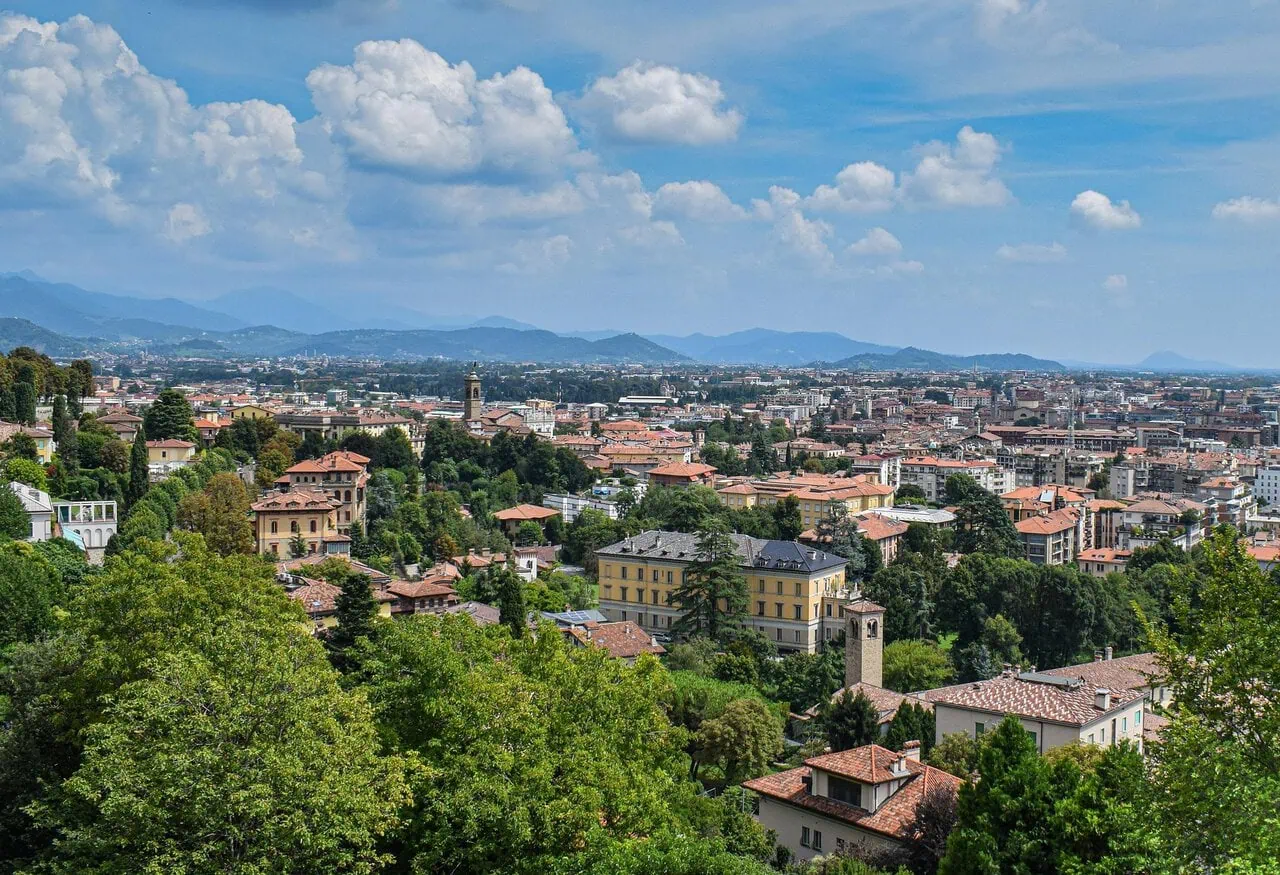
Overlooked by many travellers in favour of nearby Milan or the famous resorts of Lake Como, Bergamo is one of Northern Italy’s most rewarding city break destinations. Rich in history, culture and spectacular views, the city effortlessly combines a beautifully preserved medieval hilltop settlement with an elegant modern centre, giving visitors two very different experiences within a single destination.
At the heart of Bergamo lies the magnificent Città Alta (Upper Town), a maze of cobbled streets enclosed by imposing 16th-century Venetian Walls that today form part of a UNESCO World Heritage Site. Behind these ancient fortifications you’ll find grand churches, Renaissance palaces, lively piazzas, independent shops and family-run restaurants serving traditional Lombard cuisine. It feels remarkably authentic, with locals still going about their daily lives amongst buildings that have stood for hundreds of years.
Descending into Città Bassa (Lower Town) reveals a completely different side of Bergamo. Wide boulevards lined with cafés, fashionable boutiques, museums and theatres create a lively modern city that contrasts beautifully with the peaceful medieval streets above. The two areas are connected by Bergamo’s famous funicular railway, making it incredibly easy to explore both in a single day without relying on taxis or long uphill walks.
One of the city’s greatest attractions is simply its atmosphere. Unlike some of Italy’s busiest tourist hotspots, Bergamo rarely feels overwhelmed by visitors. You can enjoy a leisurely coffee in a historic square, browse artisan food shops, admire spectacular architecture and stroll along ancient city walls without constantly battling crowds. The pace of life encourages visitors to slow down and appreciate the details, whether that’s a hidden courtyard filled with flowers, a centuries-old fountain or the sound of church bells echoing across the rooftops.
Bergamo is also an outstanding base for exploring Lombardy. Fast and frequent trains place Milan, Brescia, Verona, Lake Como, Lecco and Lake Iseo within easy reach, making it ideal for travellers who want to combine several destinations during a Northern Italy holiday. Many people arrive expecting a quick stop before moving on elsewhere, only to discover that Bergamo becomes one of the highlights of their trip.
Whether you’re interested in history, architecture, art, food or simply wandering through one of Italy’s most picturesque medieval cities, Bergamo offers an experience that feels both authentic and refreshingly relaxed. It’s a destination that rewards curiosity, inviting you to look beyond its famous airport and discover one of Italy’s true hidden gems.
Explore Città Alta
If there is one place that defines Bergamo, it is Città Alta. Rising above the modern city on a rocky hilltop, this beautifully preserved medieval quarter has been the heart of Bergamo for more than a thousand years. Protected by enormous stone walls and entered through impressive city gates, it immediately transports visitors into a world of winding cobbled streets, elegant stone buildings and charming piazzas that seem almost untouched by time.
The Upper Town was once the entire city, long before Bergamo expanded into the plains below. During the 16th century, when Bergamo belonged to the Republic of Venice, vast defensive walls were constructed around the settlement to protect this strategically important frontier city. Stretching for more than five kilometres and featuring bastions, gates and panoramic terraces, these fortifications remain one of the finest examples of Venetian military architecture anywhere in Europe.
Today, Città Alta is wonderfully pedestrian-friendly. Cars are heavily restricted throughout much of the historic centre, allowing visitors to wander at their own pace without the noise and traffic found in larger Italian cities. Every narrow alley seems to reveal another hidden treasure, whether that’s an ancient church, a traditional bakery, a small artisan workshop or a quiet courtyard overflowing with flowers.
Unlike destinations where attractions are spread across many miles, Bergamo’s historic centre is remarkably compact. This means you can comfortably explore on foot, moving between famous landmarks such as Piazza Vecchia, Basilica di Santa Maria Maggiore, Cappella Colleoni, Bergamo Cathedral and the Campanone without ever feeling rushed. Along the way you’ll discover countless cafés and restaurants serving local specialities, making it easy to pause and soak up the atmosphere.
Although many visitors arrive during the middle of the day, Città Alta is particularly magical in the early morning and evening. Before the day-trippers arrive, the streets are wonderfully peaceful, while after sunset the warm glow of street lamps illuminates the ancient stone buildings, creating one of the most romantic settings in Northern Italy. If your schedule allows, staying into the evening is one of the best ways to experience the true character of Bergamo.
Visit Piazza Vecchia
At the very centre of Città Alta lies Piazza Vecchia, a square so elegant that the famous architect Le Corbusier reportedly described it as one of the most beautiful in Europe. For centuries it has been the political, social and cultural heart of Bergamo, and today it remains the natural meeting point for both locals and visitors exploring the historic centre.
Surrounded by magnificent Renaissance architecture, the square immediately impresses with its sense of balance and harmony. Unlike many Italian piazzas that have evolved organically over centuries, Piazza Vecchia feels remarkably unified, with each building complementing the next to create a space that is both grand and welcoming. Outdoor cafés spill across the paving stones, locals stop to chat beneath elegant arcades, and visitors linger over coffee while admiring the remarkable surroundings.
Standing proudly at the centre of the square is the beautiful Contarini Fountain, gifted to Bergamo during Venetian rule in the eighteenth century. Decorated with sphinxes and lions, it has become one of the city’s most recognisable landmarks and provides a popular gathering point throughout the day. During the warmer months, the gentle sound of flowing water adds to the relaxed atmosphere that makes Piazza Vecchia such an enjoyable place to spend time.
The square is framed by several of Bergamo’s most important historic buildings. The impressive Palazzo della Ragione, dating back to the 12th century, is one of Italy’s oldest surviving town halls and reflects the city’s medieval importance as a centre of trade and government. Opposite stands the elegant Palazzo Nuovo, now home to the Angelo Mai Library and its remarkable collection of historic manuscripts and rare books.
Rather than simply passing through on your way to other attractions, it’s worth allowing yourself time to enjoy Piazza Vecchia properly. Order an espresso at one of the cafés, watch the world go by and appreciate the remarkable surroundings. It’s one of those places where Bergamo’s relaxed pace of life becomes immediately apparent, and many visitors find themselves returning several times during their stay.
Browse hotels in Italy
Compare hotels and other places to stay in Italy.
Check availabilityBook your own place in Italy
Browse apartments, holiday homes and self-catering stays in Italy.
View rentalsCompare Italy hotel prices
Compare hotel deals in Italy from multiple booking sites.
Compare pricesRide Bergamo’s Historic Funicular
One of the most enjoyable things to do in Bergamo is ride the city’s historic funicular railway, which has been carrying passengers between Città Bassa (Lower Town) and Città Alta (Upper Town) since 1887. While it remains an important part of the city’s public transport network, it’s also one of Bergamo’s most iconic attractions and a memorable experience in its own right.
The lower funicular station is located at Viale Vittorio Emanuele II, just a 10 to 15-minute walk from Bergamo railway station or only a few minutes from the main shopping streets of the Lower Town. Clear brown tourist signs point towards the station, making it easy to find even if it’s your first visit. If you’re arriving from Milan, the station is conveniently positioned between the railway station and the entrance to the historic centre, making it a natural first stop before exploring Città Alta.
The journey itself is relatively short, taking around two to three minutes, but the steep climb makes it far more enjoyable than walking uphill with luggage or during the hottest summer months. As the traditional red carriage climbs the hillside, increasingly impressive views open across the rooftops of the Lower Town and out towards the Lombardy plain. Watching the medieval walls gradually come into view is all part of the experience.
The funicular forms part of Bergamo’s public transport system, so standard ATB tickets are valid and there’s no need to purchase a separate tourist ticket. Services generally run every 10 to 15 minutes, although frequencies may increase during busier periods. Because it’s used by both residents and visitors, it can become busy during the middle of the day, particularly at weekends and during the summer holiday season.
Many visitors don’t realise there is actually a second funicular that climbs even higher. From Colle Aperto, at the north-western edge of Città Alta, the San Vigilio Funicular continues up to the peaceful hilltop district of San Vigilio. This second journey takes just two to three minutes, but transports you away from the busiest tourist streets to one of Bergamo’s most tranquil areas.
At the top you’ll find Castello di San Vigilio, the remains of an ancient hilltop fortress that once protected Bergamo long before the Venetian Walls were built. Today, visitors come for the spectacular panoramic views, which stretch across the entire city, the Lombardy countryside and, on clear days, all the way to the Italian Alps. The area also offers quiet walking paths, gardens and far fewer crowds than the Upper Town itself, making it an excellent place to escape for an hour or two.
If you only have time for one ride, the Lower Town to Città Alta funicular is an essential Bergamo experience. However, if your itinerary allows, continuing on to San Vigilio rewards you with some of the very best viewpoints in Northern Italy and a side of Bergamo that many day-trippers never discover.
Walk Along the Venetian Walls
Encircling the entire Città Alta, Bergamo’s magnificent Venetian Walls are among the city’s most impressive landmarks and are recognised as part of the UNESCO World Heritage Site ‘Venetian Works of Defence between the 16th and 17th Centuries’. Built by the Republic of Venice between 1561 and 1588, the walls were designed to protect one of Venice’s most important frontier cities from invasion. Remarkably, despite their immense size, they were never tested in battle.
Stretching for more than five kilometres, the walls feature enormous bastions, defensive platforms, gateways and lookout points that still dominate the skyline today. Construction was an enormous undertaking that required the demolition of hundreds of homes, churches and even monasteries to create enough space for the fortifications. The result is one of the finest surviving examples of Renaissance military engineering anywhere in Europe.
Today, the walls provide one of the best free things to do in Bergamo. Wide pedestrian walkways follow much of the route, allowing visitors to enjoy spectacular panoramic views across the modern city, the fertile plains of Lombardy and, on clear days, the distant peaks of the Italian Alps. Sunrise and sunset are particularly beautiful, when the city below is bathed in golden light and photographers gather at the most popular viewpoints.
Several of the original city gates remain in use, each offering a different way into the Upper Town. Porta San Giacomo, built from elegant white marble, is undoubtedly the most photographed and provides a dramatic entrance across its stone bridge. Porta Sant’Alessandro, Porta San Lorenzo and Porta Sant’Agostino are equally impressive and each reflects a different side of Bergamo’s history.
Rather than simply walking a short section, it’s worth setting aside an hour or two to explore more of the walls. The route is mostly level and suitable for visitors of all ages, with benches dotted along the way for anyone wanting to pause and admire the views. You’ll also discover information panels explaining the city’s military history, while numerous viewing terraces provide fantastic opportunities for photographs.
If you’re visiting Bergamo for the first time, the Venetian Walls offer the perfect introduction to the city. They not only provide breathtaking scenery but also help you understand the relationship between the medieval Upper Town and the modern streets that spread out beneath it.
Visit Basilica di Santa Maria Maggiore
Hidden behind a relatively plain exterior, Basilica di Santa Maria Maggiore is one of the greatest artistic treasures in Bergamo and is widely regarded as the city’s most beautiful church. Construction began in 1137, although the magnificent building seen today reflects centuries of additions and decoration, creating an extraordinary blend of Romanesque, Gothic and Baroque architecture.
Unlike many churches, the basilica has no traditional front entrance. Instead, visitors enter through elaborate side doorways protected by richly decorated porches supported by carved red marble lions. It’s an unusual feature that immediately hints at the remarkable building waiting inside.
The interior is breathtaking. Every surface appears covered with intricate decoration, from the richly gilded ceilings and elaborate frescoes to the magnificent tapestries hanging along the walls. Sunlight filtering through the windows illuminates an astonishing collection of artwork that reflects Bergamo’s prosperity throughout the medieval and Renaissance periods. Even visitors who don’t usually seek out churches often find themselves spending far longer here than expected.
One of the basilica’s most significant connections is with the celebrated composer Gaetano Donizetti, who was born in Bergamo in 1797. His tomb lies inside the church, making the basilica an important pilgrimage site for lovers of Italian opera as well as those interested in the city’s cultural history.
Entry to the basilica is free, although donations are appreciated to help preserve this extraordinary building. As it remains an active place of worship, visitors should dress respectfully and remain mindful of religious services taking place throughout the day. Photography is generally permitted, but flash photography may be restricted.
Whether you’re interested in architecture, history, religion or simply beautiful interiors, Santa Maria Maggiore is an essential stop during any visit to Bergamo. Together with the neighbouring cathedral and Cappella Colleoni, it forms one of the most remarkable religious complexes in Northern Italy.

Admire the Spectacular Cappella Colleoni
Standing beside the Basilica di Santa Maria Maggiore is the magnificent Cappella Colleoni, one of the finest examples of Italian Renaissance architecture. Built during the second half of the 15th century as the mausoleum of the famous military commander Bartolomeo Colleoni, the chapel is impossible to miss thanks to its striking façade of pink, white and cream marble.
The exterior alone is worth lingering over. Every inch of the façade is richly decorated with intricate geometric patterns, carved columns, statues and decorative medallions that showcase the wealth and ambition of the man who commissioned it. The colourful marble work stands in dramatic contrast to the neighbouring basilica and has become one of Bergamo’s most recognisable landmarks.
Inside, the chapel is smaller than many visitors expect, but no less impressive. Beautiful frescoes decorate the walls and ceilings, while the richly sculpted tomb of Bartolomeo Colleoni dominates the interior. Nearby rests his daughter Medea, whose own tomb adds another layer to the family’s remarkable story.
Local legend suggests that rubbing the Colleoni family coat of arms, displayed on the decorative gates outside, brings good luck. Whether or not you believe the superstition, you’ll often see visitors pausing to follow the tradition before continuing their exploration of Bergamo.
Because the chapel stands immediately beside Santa Maria Maggiore and Bergamo Cathedral, it’s easy to visit all three together without needing to walk more than a few steps. Together they represent one of the most architecturally impressive corners of the entire city and should feature on every visitor’s itinerary.
Visit the Campanone Bell Tower
Towering above Piazza Vecchia, the Campanone, officially known as the Civic Tower (Torre Civica), has watched over Bergamo for almost 900 years. Standing at 52 metres (171 feet) tall, it is one of the city’s most recognisable landmarks and offers some of the best panoramic views in Bergamo.
Originally built during the 12th century by the influential Suardi family, the tower was later incorporated into the city’s civic buildings as Bergamo grew in importance. Over the centuries it served as a defensive lookout, a symbol of civic pride and, perhaps most famously, as the home of the enormous bell that still rings every evening.
Visitors don’t need to climb hundreds of medieval steps to reach the top. A modern lift carries visitors almost all the way to the viewing platform, making the attraction accessible to far more people than many of Italy’s historic towers. Those who prefer can still tackle the staircase for a more traditional experience.
Once at the top you’ll be rewarded with 360-degree views across Città Alta, the Venetian Walls, Città Bassa, the surrounding Lombardy countryside and, on clear days, the distant Italian Alps. Looking down into Piazza Vecchia from above also gives you an entirely different perspective on one of Italy’s most beautiful Renaissance squares.
One experience many visitors deliberately plan around is the 10:00 pm bell ringing. Every evening the great bell sounds 100 times, continuing a tradition that dates back centuries when the ringing announced the closing of Bergamo’s city gates. Originally, residents had 100 bell strikes to return safely within the walls before they were locked for the night. Today the tradition survives as one of Bergamo’s most distinctive customs and can be heard across much of the city.
If you’re looking for the best photography spot in Bergamo, the Campanone should be high on your list. Morning light illuminates the rooftops of the Upper Town beautifully, while sunset often bathes the city in warm golden colours. Even if you’ve already admired the views from the Venetian Walls, seeing Bergamo from its highest historic tower provides an entirely different experience.
Discover Accademia Carrara
While Bergamo is best known for its medieval streets and historic architecture, it is also home to one of Italy’s finest art museums. The Accademia Carrara houses an extraordinary collection of paintings spanning more than 500 years, making it an essential stop for anyone interested in Renaissance and Baroque art.
Founded in 1796 by the collector Count Giacomo Carrara, the gallery contains more than 1,800 paintings, although only a carefully curated selection is displayed at any one time. The collection features masterpieces by some of Italy’s greatest artists, including Botticelli, Raphael, Bellini, Titian, Canaletto, Mantegna and Moroni, alongside important works from Northern European painters.
Unlike the vast museums of Florence or Rome, Accademia Carrara is refreshingly manageable. Most visitors spend around 90 minutes to two hours exploring its elegant galleries, allowing plenty of time to appreciate the artwork without feeling overwhelmed. Information panels are well presented, and the museum’s layout follows the development of Italian art through the centuries, making it enjoyable even for visitors with little previous knowledge of art history.
The gallery sits in Città Bassa, approximately a 20-minute walk from Piazza Vecchia, making it easy to combine with other attractions in the Lower Town. Immediately opposite you’ll also find GAMeC, Bergamo’s contemporary art museum, offering an interesting contrast between classical masterpieces and modern exhibitions.
If you only plan to visit one museum during your stay, Accademia Carrara is undoubtedly the best choice. It consistently ranks among Italy’s most important regional art galleries, yet remains far less crowded than many of the country’s more famous museums, allowing visitors to enjoy world-class artwork in a peaceful setting.
Visit Palazzo Moroni
Hidden behind elegant stone walls in Città Alta, Palazzo Moroni remains one of Bergamo’s best-kept secrets. While many visitors focus solely on the city’s churches and piazzas, this magnificent 17th-century Baroque palace offers an intimate glimpse into the lives of one of Bergamo’s wealthiest noble families.
The palace has been beautifully restored by FAI (Fondo per l’Ambiente Italiano) and today visitors can explore a series of lavishly decorated state rooms filled with original furniture, magnificent ceiling frescoes, antique paintings and ornate chandeliers. Each room tells part of the Moroni family’s story, showcasing the wealth, influence and artistic tastes of Bergamo’s aristocracy during the Baroque period.
Highlights include the elegant Ball Room, the colourful Yellow Room, and the beautifully decorated Chinese and Turkish Rooms, reflecting the fascination with exotic styles that swept across Europe during the 17th and 18th centuries. Before entering the palace itself, visitors are shown a short introductory film explaining its history and the extensive restoration work that brought the building back to life.
For many visitors, however, the greatest surprise lies outside. Palazzo Moroni’s gardens are the largest private gardens in Città Alta, covering around two hectares behind the palace. Carefully landscaped terraces, ornamental flower beds, vineyards, ancient trees and peaceful walking paths create a tranquil escape from the busy streets nearby. From several points within the gardens you’ll also enjoy lovely views across Bergamo’s rooftops and towards the surrounding hills.
Allow around one to two hours to explore both the palace and its gardens at a relaxed pace. Whether you’re interested in history, architecture or simply looking for a quieter corner of Bergamo, Palazzo Moroni offers a completely different experience from the city’s more famous landmarks and is well worth including in your itinerary.
Planning to visit Palazzo Moroni? Booking your ticket in advance guarantees entry and allows you to explore one of Bergamo’s finest Baroque palaces and its spectacular gardens at your own pace.
Wander Through Città Bassa
While the medieval streets of Città Alta capture most visitors’ attention, Città Bassa (Lower Town) deserves plenty of time in its own right. Developed largely during the 19th and early 20th centuries, this elegant part of Bergamo offers a completely different atmosphere, with wide tree-lined boulevards, impressive public buildings, stylish boutiques and bustling cafés replacing the narrow cobbled lanes of the Upper Town.
The main thoroughfare, Viale Papa Giovanni XXIII, links Bergamo railway station with the city centre and is often the first part of the city visitors encounter. Lined with hotels, restaurants and cafés, it’s a convenient place to stop for breakfast or a coffee before heading uphill. From here, attractive streets radiate in every direction, making it easy to explore on foot.
One of the best shopping streets is Via XX Settembre, where you’ll find a mixture of Italian fashion brands, independent boutiques, jewellers and specialist food shops. The area has a noticeably local feel, with Bergamo residents browsing the shops alongside visitors. Whether you’re looking for designer clothing, handmade gifts or regional delicacies to take home, this is one of the city’s best places to browse.
Città Bassa is also home to many of Bergamo’s cultural attractions, including Accademia Carrara, GAMeC, the Donizetti Theatre and numerous galleries and exhibition spaces. Beautiful squares such as Piazza Matteotti provide pleasant places to sit and watch everyday life unfold, while elegant historic buildings remind visitors that Bergamo continued to flourish long after the medieval period.
The Lower Town also offers an excellent selection of restaurants, wine bars and gelaterias, many of which are less expensive than those in the Upper Town. It’s a great place to enjoy a leisurely lunch, sample local wines or simply experience a more modern side of Bergamo that many day-trippers overlook.
Rather than treating Città Bassa as somewhere to pass through on the way to the funicular, allow yourself a few hours to explore. It provides an interesting contrast to the medieval centre and offers a glimpse into the everyday life of a thriving Italian city beyond its historic landmarks.
Discover Bergamo on the City Red Bus
If you’re visiting Bergamo for the first time, the City Red Bus sightseeing tour is an excellent way to familiarise yourself with the city before exploring on foot. Combining a traditional road train and a 100% electric minibus, the service covers many of Bergamo’s best-known attractions while providing an informative audio guide in six languages, including English, Italian, French, German, Spanish and Portuguese.
The sightseeing service operates on Mondays, Thursdays, Fridays, Saturdays, Sundays and public holidays, with no services on Tuesdays or Wednesdays. Tours normally run between 10:00 am and 5:00 pm, although there is no 1:00 pm departure as both routes pause for a lunch break. As operating days and times can occasionally change, it’s always worth checking the latest timetable before your visit.
There are two circular routes to choose from. The Red Route uses a charming road train to explore both Città Bassa and Città Alta. Starting on Via XX Settembre, it stops at the lower station of the Città Alta Funicular, continues to Colle Aperto, before returning to the city centre. It’s an excellent option if you want a relaxed overview of Bergamo’s two distinct halves without covering long distances on foot.
The Blue Route is operated by a 100% electric minibus and focuses on the historic Upper Town and Bergamo’s museums. Beginning beside the upper funicular station, it travels through Piazza Duomo, passes the outstanding Accademia Carrara and GAMeC (Gallery of Modern and Contemporary Art), continues to Colle Aperto, and then returns to its starting point. It’s particularly well suited to visitors interested in Bergamo’s history, art and architecture.
A complete circuit takes around 50 minutes, making it easy to fit into even a short visit. Unlike a traditional hop-on, hop-off bus, you can leave the vehicle once during the day and rejoin later, although reboarding is subject to seats being available on the next service.
One of the biggest advantages is that your ticket also includes one journey on either the Città Alta Funicular or the San Vigilio Funicular, allowing you to continue exploring independently after your sightseeing tour. If you’re arriving from Milan Bergamo Airport, only have one day in the city, or simply want an easy introduction before exploring on foot, the City Red Bus offers a comfortable and informative way to discover many of Bergamo’s highlights.
Sample Bergamo’s Traditional Food
No visit to Bergamo would be complete without trying some of the city’s traditional Lombard cuisine. While pizza and pasta are available everywhere, Bergamo has developed its own regional specialities that reflect centuries of local traditions and ingredients. Many restaurants proudly serve recipes that have been passed down through generations, making dining one of the highlights of any visit.
Perhaps the city’s most famous dish is Casoncelli alla Bergamasca. These delicate stuffed pasta parcels are traditionally filled with a mixture of meat, breadcrumbs, cheese and herbs before being served with melted butter, crispy pancetta and fresh sage. Rich, comforting and full of flavour, they’re considered Bergamo’s signature dish and appear on menus throughout the city.
Another local favourite is Polenta Taragna, a hearty variation of traditional polenta made using a mixture of cornmeal and buckwheat flour. Blended with generous amounts of local cheeses and butter, it’s particularly popular during the cooler months and perfectly reflects the mountain influences of nearby Alpine communities.
Cheese lovers should also look out for Taleggio, one of Lombardy’s best-known cheeses, along with Strachitunt, a rich blue cheese produced in the valleys north of Bergamo. Many restaurants feature these regional cheeses on antipasto boards alongside locally cured meats and freshly baked bread.
For dessert, don’t miss the opportunity to try Stracciatella gelato. While now enjoyed around the world, this much-loved flavour was actually invented in Bergamo in 1961 at La Marianna, a café and restaurant in Città Alta. Combining creamy milk gelato with thin shards of crisp chocolate, it remains one of Italy’s most famous ice cream flavours and is almost a rite of passage for first-time visitors.
To accompany your meal, consider ordering a glass of wine from the nearby Valcalepio wine region, which produces excellent reds, whites and sparkling wines. Alternatively, finish your evening with a traditional Italian aperitivo, where drinks are served alongside small snacks as locals gather to unwind after work.
Exploring Bergamo through its food is every bit as rewarding as visiting its historic attractions. From family-run trattorias hidden down medieval alleyways to elegant restaurants overlooking lively piazzas, the city offers countless opportunities to discover the flavours that have shaped Lombardy’s culinary heritage.
Enjoy the Best Views from San Vigilio
Although many visitors stop after exploring Città Alta, those who continue to San Vigilio are rewarded with some of the most spectacular views in Bergamo. Perched on a hill above the Upper Town, this peaceful neighbourhood feels a world away from the busier tourist streets below and is one of the city’s most underrated attractions.
Reaching San Vigilio is part of the experience. From Colle Aperto, simply board the second funicular, which climbs steadily through wooded slopes before arriving at the quiet hilltop station just a couple of minutes later. The journey is included within Bergamo’s public transport network and provides another charming ride on one of the city’s historic railways.
The main attraction is Castello di San Vigilio, the remains of an ancient fortress that once guarded the approaches to Bergamo long before the Venetian Walls were built. Although much of the castle now survives as atmospheric ruins, visitors are free to wander around its old defensive walls, towers and grassy terraces while enjoying uninterrupted views across the surrounding landscape.
From the castle you’ll be treated to panoramic views over Città Alta, the Venetian Walls, the rooftops of Città Bassa, the fertile Lombardy plains and, on clear days, the snow-capped Italian Alps stretching across the horizon. It’s an outstanding location for photography, particularly during sunrise or sunset, when the changing light transforms the city below.
San Vigilio also offers a quieter side of Bergamo. You’ll find peaceful walking paths, small cafés and leafy viewpoints where it’s easy to escape the crowds and enjoy a slower pace of life. Many visitors spend an hour or two here simply relaxing before returning to the Upper Town.
If you’re planning a full day in Bergamo, don’t stop at the first funicular. Continuing on to San Vigilio provides one of the city’s most memorable experiences and a perspective of Bergamo that many visitors never get to see.
Check Italy hostel options
Compare hostels and lower-cost places to stay in Italy.
Search hostelsProtect your flight to Italy
Flying to Italy? Get fast compensation payouts, eligible lounge benefits and expert help when flights go wrong.
See AirHelp+ benefitsMake the most of your time in Italy
Leave your luggage somewhere convenient and enjoy Italy hands-free.
View storageFree Things to Do in Bergamo
Exploring Bergamo doesn’t have to be expensive. In fact, many of the city’s best attractions are completely free, making it an excellent destination for travellers looking to experience the beauty of Northern Italy without spending a fortune. From medieval streets and panoramic viewpoints to historic churches and UNESCO-listed fortifications, it’s easy to fill an entire day while spending very little.
One of the highlights is simply wandering through Città Alta. The historic centre is like an open-air museum, where every narrow alleyway, stone archway and quiet square reveals another glimpse into Bergamo’s long history. Rather than rushing between attractions, allow yourself time to explore the back streets, browse artisan shop windows and discover hidden corners that many visitors walk straight past.
A walk along the Venetian Walls is another fantastic free experience. Stretching for over five kilometres, the walls provide uninterrupted views across the city and surrounding countryside while offering an insight into Bergamo’s military history. Whether you stroll a short section or complete the full circuit, you’ll enjoy some of the best viewpoints in Bergamo without paying an entrance fee.
Many of the city’s beautiful churches can also be admired free of charge. While donations are always appreciated, visitors are welcome to enter Bergamo Cathedral and Basilica di Santa Maria Maggiore to admire their magnificent interiors. Remember that these remain active places of worship, so respectful clothing and quiet behaviour are expected during your visit.
Don’t miss Porta San Giacomo, the most elegant of Bergamo’s four historic city gates. Built from striking white marble and approached via a graceful stone bridge, it’s one of the city’s most photographed landmarks and offers wonderful views back towards the modern city below.
If you’re prepared for a slightly steeper walk, head towards San Vigilio. Even if you choose not to take the funicular, the walking routes reward you with increasingly impressive views as you climb higher above the city. Once at the top, you’ll find peaceful viewpoints and castle ruins that are free to explore.
Finally, spend some time simply soaking up the atmosphere in Piazza Vecchia. Watching locals meet friends, children play around the fountain and cafés come to life throughout the day is one of the simplest and most enjoyable ways to experience Bergamo. Sometimes the best memories come not from ticketed attractions but from slowing down and appreciating the city’s everyday rhythm.
Best Time to Visit Bergamo
Thanks to its location in Northern Italy, Bergamo is a destination that can be enjoyed throughout the year, although each season offers a slightly different experience. Choosing the best time to visit largely depends on whether you prefer sightseeing, outdoor dining or avoiding the busiest tourist periods.
Spring (March to May) is one of the finest times to visit. Temperatures are generally mild, gardens begin to bloom and the streets of Città Alta feel lively without becoming overcrowded. It’s an excellent season for walking along the Venetian Walls, exploring the city’s churches and enjoying long lunches in outdoor cafés.
Summer (June to August) brings warm, often hot weather, with temperatures regularly climbing above 30°C. While Bergamo never experiences the same tourist numbers as Venice or Florence, popular attractions can become busier, particularly during weekends and school holidays. Early mornings and evenings are the most pleasant times to explore, while outdoor dining and evening aperitivos create a wonderful atmosphere throughout the city.
Many travellers consider autumn (September to November) to be the ideal time to visit Bergamo. The summer crowds begin to fade, temperatures remain comfortable for sightseeing and the surrounding hills take on beautiful autumn colours. It’s also an excellent season for enjoying Lombard cuisine, with seasonal mushrooms, truffles and hearty local dishes appearing on restaurant menus.
Winter transforms Bergamo into a quieter destination. Although temperatures can be chilly, particularly in December and January, the city has a cosy atmosphere, with festive lights illuminating the streets during the Christmas period. If you’re visiting Northern Italy for Christmas markets, winter sports or Alpine holidays, Bergamo makes an attractive stop before heading into the mountains.
Whenever you choose to visit, try to spend at least one evening in Città Alta. After many day visitors have returned to Milan, the medieval streets become noticeably quieter, allowing you to experience a more authentic side of the city as locals fill the restaurants and cafés.
How Long Should You Spend in Bergamo?
Although Bergamo is often visited as a day trip from Milan, the city deserves far more than a few hurried hours. Its combination of medieval history, excellent food, panoramic viewpoints and relaxed atmosphere rewards visitors who slow down and explore beyond the main sights.
If you have just one day, it’s possible to experience many of Bergamo’s highlights. Begin by taking the funicular to Città Alta, explore Piazza Vecchia, visit Santa Maria Maggiore, admire Cappella Colleoni, climb the Campanone, walk part of the Venetian Walls, enjoy lunch in the historic centre and finish with the second funicular to San Vigilio for spectacular views.
A stay of two days allows for a much more relaxed visit. You can spend one day discovering the Upper Town before exploring Città Bassa, Accademia Carrara, Palazzo Moroni, local shops and restaurants on the second day. You’ll also have time to enjoy Bergamo’s café culture without constantly watching the clock.
If you’re using Bergamo as a base, three to four days opens up a wealth of opportunities for exploring Lombardy. Excellent rail connections make it easy to visit Milan, Brescia, Lake Como, Lecco, Lake Iseo and even Verona, all while returning to Bergamo each evening.
Many visitors arrive expecting Bergamo to be little more than the city served by the airport. By the time they leave, they often wish they had planned a longer stay. The city’s greatest charm lies not just in its famous landmarks, but in its welcoming atmosphere, slower pace of life and the ease with which you can simply enjoy being there.


Is Bergamo Worth Visiting?
Absolutely. While it may not enjoy the same international reputation as Milan, Venice or Florence, many travellers leave Bergamo wondering why it isn’t talked about more often. The city combines everything people love about Italy—historic architecture, excellent food, beautiful views, welcoming cafés and centuries of history—without the overwhelming crowds that can sometimes detract from more famous destinations.
One of Bergamo’s biggest strengths is its variety. In a single day you can wander through medieval streets, admire Renaissance churches, climb historic towers, enjoy panoramic views from ancient city walls, explore world-class art galleries and finish with dinner overlooking a lively piazza. Few cities of this size offer such a diverse range of attractions within such a compact and walkable area.
Bergamo also rewards travellers who enjoy discovering places that feel genuinely lived in. Unlike some destinations that cater almost entirely to tourists, the city retains a strong local identity. Markets continue to serve residents, neighbourhood bakeries open early each morning, and evening aperitivos are just as likely to be enjoyed by locals as visitors.
For those arriving via Milan Bergamo Airport, the city provides the perfect introduction to Northern Italy. Instead of heading straight to another destination, consider spending at least a day exploring Bergamo itself. Many travellers find it becomes one of the unexpected highlights of their trip.
Whether you’re visiting for a weekend, using it as a base for exploring Lombardy, or simply stopping on a wider Italian itinerary, Bergamo offers an experience that feels authentic, relaxed and surprisingly memorable.

Rupert’s Handy Travel Tips
Planning a visit to Bergamo? Here are a few tips that will help you make the most of your time in this beautiful Lombardy city.
- Take both funiculars: Most visitors ride the first funicular to Città Alta, but don’t miss the second line to San Vigilio for some of the finest views in Bergamo.
- Visit early or stay late: The Upper Town is at its quietest before the day-trippers arrive and becomes wonderfully atmospheric once many visitors have returned to Milan.
- Wear comfortable shoes: Expect plenty of cobbled streets, uneven surfaces and some steep hills, particularly if you’re exploring on foot.
- Book the Campanone early: If you’re visiting during summer or weekends, arriving early helps avoid queues for the lift to the top of the bell tower.
- Try the local specialities: Don’t leave without tasting Casoncelli alla Bergamasca and an authentic Stracciatella gelato, which was invented right here in Bergamo.
- Allow more time than you think: Many people arrive expecting to spend a few hours here, only to discover Bergamo is one of the highlights of their Northern Italy itinerary.
Want to meet the reindeer behind our travel tips? Find out more in our page Who is Rupert?.
Frequently Asked Questions
Is Bergamo worth visiting?
Yes. Bergamo is one of Northern Italy’s most underrated cities, offering a wonderful combination of medieval streets, UNESCO-listed Venetian Walls, magnificent churches, excellent food and spectacular viewpoints. Many visitors arrive expecting little more than a stop between the airport and Milan, only to discover that Bergamo becomes one of the highlights of their Italian holiday.
How many days do you need in Bergamo?
You can comfortably see the main attractions in one full day, but two days allows you to explore both Città Alta and Città Bassa at a much more relaxed pace. If you’re planning day trips to Lake Como, Milan or Brescia, consider staying three or four days.
Is one day enough for Bergamo?
Yes. One day gives you enough time to ride the historic funicular, explore Città Alta, visit Piazza Vecchia, Basilica di Santa Maria Maggiore, Cappella Colleoni, walk along the Venetian Walls and continue to San Vigilio for spectacular views across the city.
Is Bergamo walkable?
Very much so. Città Alta is largely pedestrianised, while Città Bassa has wide pavements and attractive shopping streets. Although there are some steep hills, Bergamo’s two funicular railways make it easy to move between the different parts of the city.
Do you have to pay to use the Bergamo Funicular?
Yes, but the funicular is part of Bergamo’s public transport network, so you don’t need a separate tourist ticket. A valid ATB transport ticket can be used on both funicular lines as well as local buses during its validity period.
Can you walk up to Città Alta instead of taking the funicular?
Yes. Several well-signposted walking routes connect Città Bassa with Città Alta, with the climb usually taking 20 to 30 minutes. Many visitors choose to ride the funicular uphill before walking back down through the historic streets.
What is Bergamo famous for?
Bergamo is best known for its medieval Upper Town, UNESCO-listed Venetian Walls, historic funicular, Piazza Vecchia, Basilica di Santa Maria Maggiore, Cappella Colleoni, and for being the birthplace of Stracciatella gelato.
What food should I try in Bergamo?
Be sure to try Casoncelli alla Bergamasca, Polenta Taragna, local cheeses such as Taleggio and Strachitunt, and finish with an authentic Stracciatella gelato, which was first created in Bergamo.
Is Bergamo a good base for exploring Northern Italy?
Absolutely. Frequent rail services make it easy to visit Milan, Brescia, Verona, Lecco, Lake Como and Lake Iseo, making Bergamo one of the best bases for exploring Lombardy without changing hotels.
When is the best time to visit Bergamo?
Spring (March to May) and autumn (September to October) generally offer the best weather for sightseeing. Summer is perfect for outdoor dining and long evenings, while winter is quieter and ideal if you’re combining Bergamo with a trip to the nearby Alps.
Further Reading
Planning to explore more of Bergamo? Our Bergamo Airport to Bergamo City Centre Guide explains the quickest ways to reach both Città Bassa and Città Alta, while our Day Trips from Bergamo Guide showcases the best excursions to Milan, Lake Lecco, Lake Iseo, Verona, Brescia and other destinations across Lombardy.
If you’re continuing your journey to Italy’s fashion capital, our Bergamo Airport to Milan Guide compares all the available transport options, including coach, train and taxi connections, helping you choose the best route for your itinerary.
Travelling onwards by rail? Our Trenitalia Pass Guide explains who can benefit from Italy’s national rail pass, while our Italia in Tour Pass Guide covers one of the country’s best-value regional rail passes for exploring Lombardy and beyond. If you’re travelling across Europe, our Interrail Italy Guide explains reservations, supplements and how to make the most of your pass while visiting Italy.
Finally, don’t forget to stay connected during your trip. Our eSIM Apps Guide compares the leading eSIM providers, helping you find the best option for affordable mobile data while travelling around Bergamo, Lombardy and the rest of Italy.